When your digestion is constantly acting up, it feels like your body is keeping secrets from you. I spent years fighting chronic fatigue and an unpredictable stomach before realizing the answer was not another restrictive diet. It was about rebuilding the foundation.
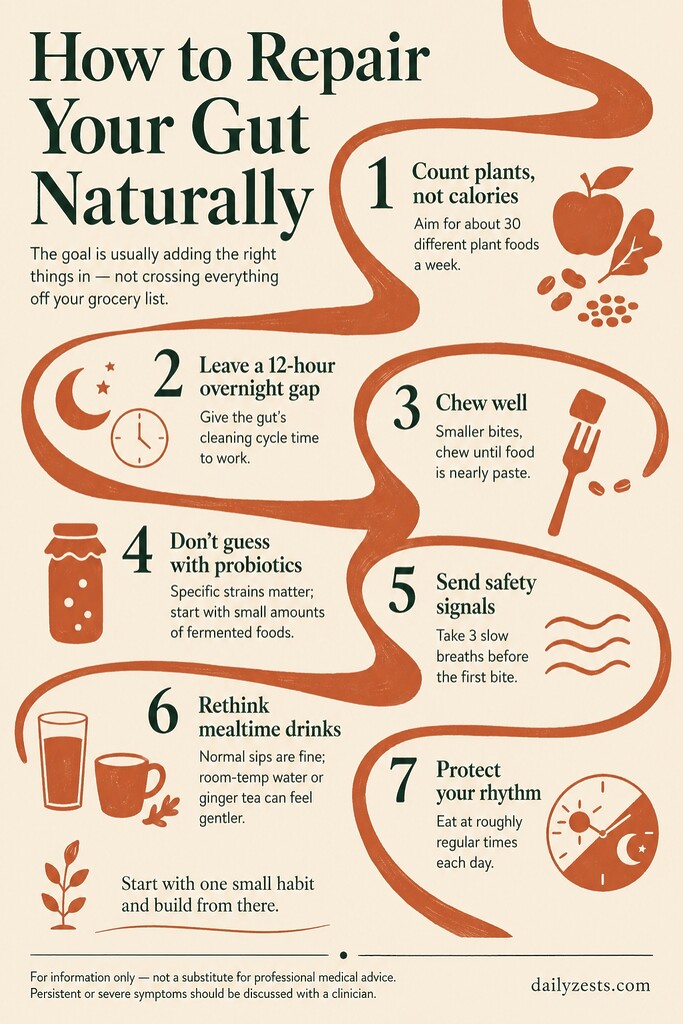
A lot of wellness advice online pushes extreme elimination diets the moment you complain about a stomach ache. We are told to cut out dairy, gluten, sugar, and joy. Taking away food long-term often leaves the microbiome starved and less resilient. To improve gut health naturally, the goal is usually adding the right things in, rather than crossing everything off your grocery list.
1. Count your plants instead of your calories
The microbes in your digestive tract thrive on variety. Instead of eating the exact same three vegetables every single day, try aiming for thirty different plant foods a week. That sounds like a massive number until you realize exactly what qualifies. Nuts, seeds, spices, and whole grains all count toward the total.
A dash of cinnamon on your morning oatmeal is one plant. A handful of pumpkin seeds on your salad is another. By shifting your focus to diversity, you naturally feed different strains of beneficial bacteria without having to micromanage your meals.
2. Give your digestion time to sweep the floors
Your gut has a built-in cleaning cycle called the migrating motor complex. It sweeps leftover food and bacteria through your digestive tract to keep things moving. This system only turns on when you are fasting. If you graze from the moment you wake up until you go to sleep, that internal cleaning crew never gets to run.
Leaving a simple twelve-hour window overnight between dinner and breakfast gives your body a much-needed chance to reset. It is a quiet background habit that pays massive dividends for your energy levels the next day.
3. Chew until it becomes a habit, not a chore
This step sounds too simple to matter, but skipping it causes endless trouble. Digestion begins in the mouth, and your stomach does not have teeth. Swallowing large, unchewed pieces of food forces the rest of your system to work overtime, which often leads to heavy fermentation and gas.
Wait, I should clarify something. You do not need to count to thirty chews per bite like a robot. Just make sure the food is close to a paste before you swallow. Taking smaller bites makes this happen naturally.
4. Stop guessing with random probiotics
Walking down the supplement aisle is overwhelming. When your stomach hurts, it is highly tempting to grab the most expensive bottle with the highest billion-count and hope it fixes everything. Throwing a random high-dose probiotic into a highly sensitive gut can actually trigger more bloating.
Research suggests that targeting specific bacterial strains matters far more than the sheer volume of bacteria in a capsule. Before buying another supplement, focus on introducing small amounts of fermented foods like kefir, sauerkraut, or miso into your weekly routine.
5. Send safety signals to your nervous system
The gut-brain connection is incredibly literal. Your digestive system physically slows down or halts entirely when you are stressed. If you eat lunch while answering urgent emails or rushing out the door, your body remains in fight-or-flight mode.
Taking three deep, slow breaths before taking your very first bite shifts your nervous system into rest-and-digest mode. It costs nothing. It takes five seconds. It fundamentally changes how your stomach handles the meal you are about to eat.
6. Rethink your liquids around mealtime
Chugging a massive tumbler of ice water right before or during a meal can make some people feel uncomfortably full, but normal sips of water with meals do not dilute digestive juices or stop digestion. Your stomach requires a highly acidic environment to properly break down dense proteins and absorb nutrients.
Try sipping room-temperature water or warm ginger tea while eating. You can save the heavy hydration for the hours between your meals.
7. Protect your circadian rhythm
Our bodies love predictability. Eating your meals at roughly the same times each day helps regulate your circadian rhythm, which is deeply tied to the behavior of your microbiome. When I was dealing with severe fatigue, eating dinner at wildly different hours every night was constantly confusing my system.
Establishing a steady, reliable rhythm is one of the quietest but most effective ways to support long-term digestive recovery.
Because we are talking about physical health, I want to add a quick note. These steps are supportive practices that made a difference for me, but they never replace professional medical guidance. If you are experiencing severe pain, sudden weight changes, or chronic issues, please talk to a doctor to rule out anything serious.
Rebuilding the foundation takes a little patience. You do not need to implement all seven of these steps tomorrow morning. Just pick one. Buy a new vegetable, take a breath before lunch, or chew your dinner a little more thoroughly today.
Kristina Hanson is an independent wellness researcher and the founder of DailyZests. She specializes in translating nutritional science into simple, delicious recipes that fit into real life. When she isn’t in the kitchen, you’ll find her hiking the trails or enjoying a slow morning coffee with her Golden Retriever, Barnaby. Read her full story.






 This post may contain affiliate links.