If you have ever felt like your body is playing by a completely different set of rules when it comes to the scale, you are not imagining things. PCOS changes how we process energy, which means standard weight-loss advice often just leaves us exhausted, hungry, and frustrated.
When I was first diagnosed with Polycystic Ovary Syndrome, I spent years fighting my body. I counted every calorie, tried the intense bootcamp workouts, and wondered why the scale refused to budge while my energy completely tanked. It felt like a personal failure.
It wasn’t. It was just a biological mismatch.
Research suggests that a significant percentage of women with PCOS also deal with underlying insulin resistance. Our bodies naturally produce more insulin to process the food we eat, and high insulin levels send a direct signal to our cells to store fat, especially around our midsection. We aren’t failing at the standard calorie-in, calorie-out math. Our hormones are simply running a different equation.
The good news is that we can change the inputs. By stepping away from the punishing diets and focusing on how our bodies actually function, we can start to turn the ship around.
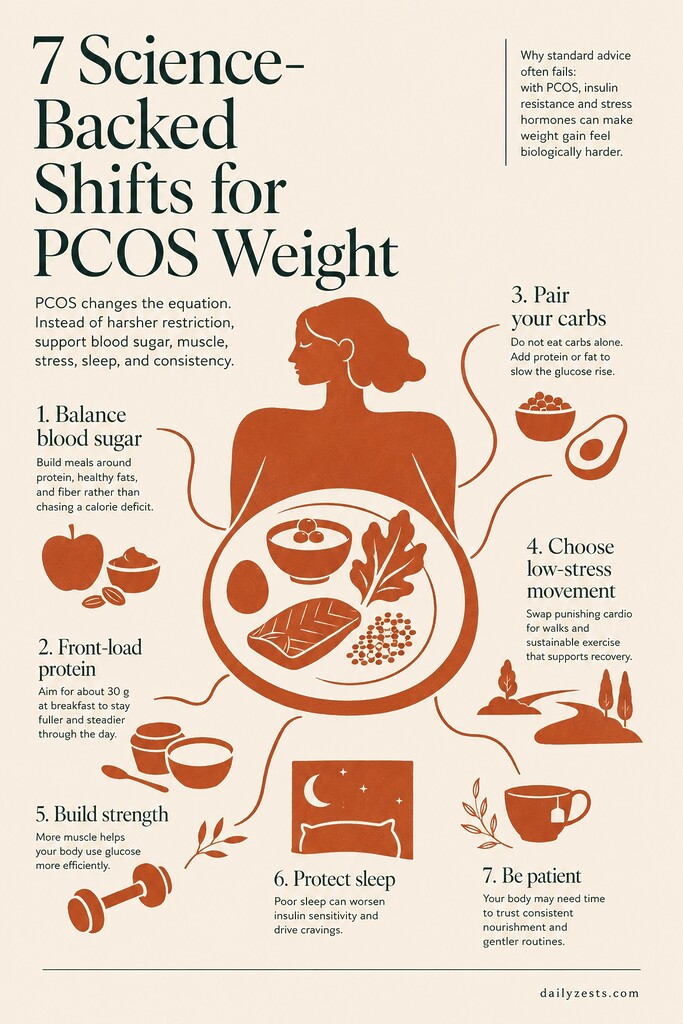
7 Gentle Strategies to Manage PCOS Weight
These are the shifts that helped me stop fighting my physiology and start supporting it. Think of them as gentle invitations to try something new, rather than strict rules you have to follow perfectly.
1. Eat for your blood sugar, not just a calorie deficit
If you only take one thing away from this list, let it be this: balancing your blood sugar is the foundation of PCOS weight management. When our blood sugar spikes, our body pumps out excess insulin. Over time, keeping those spikes to a minimum allows our insulin levels to settle, which signals the body that it is safe to release stored energy.
Instead of looking at a plate and asking, “How many calories is this?”, try asking, “Will this keep my blood sugar steady?” You do this by making sure every meal has a solid source of protein, healthy fats, and fiber. It is a much kinder, more sustainable way to eat.
2. Front-load your protein early in the day
Many of us grew up eating a quick bowl of cereal or a piece of toast for breakfast. But starting the day with a heavy dose of plain carbohydrates sets off a blood sugar rollercoaster that leaves us craving sugar by the afternoon.
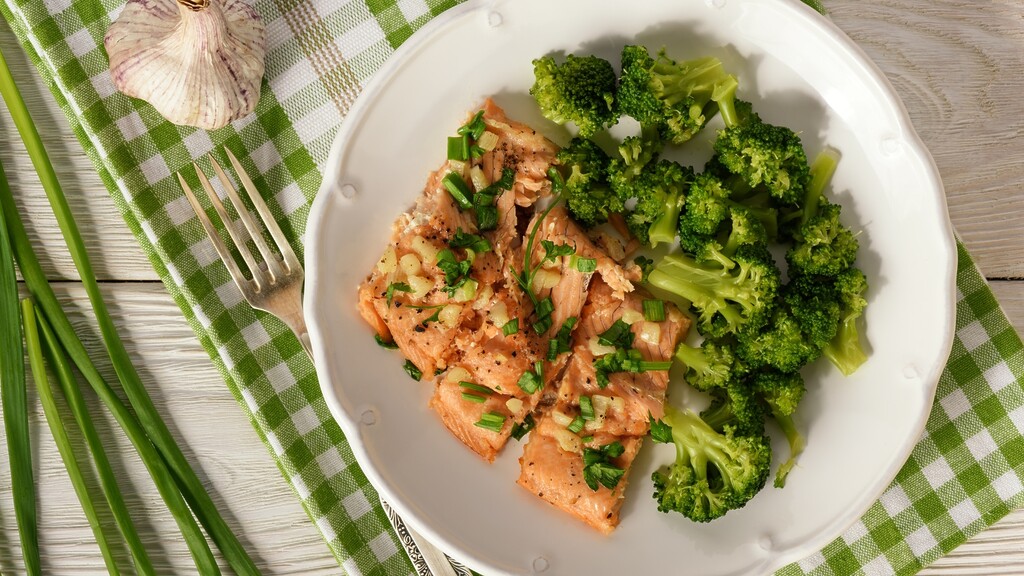
Aiming for roughly 30 grams of protein at breakfast can change the trajectory of your day. In one breakfast study, meals in that range helped lower post-meal glucose and insulin compared with a low-protein breakfast and kept people comfortably full for hours. A three-egg scramble with some leftover roasted chicken, or a heavy scoop of Greek yogurt with hemp hearts, can make a real difference in how steady and satisfied you feel.
3. Pair your carbohydrates (never eat them naked)
A huge worry I hear from women with PCOS is, “Do I have to give up bread and fruit forever?” The answer is no.
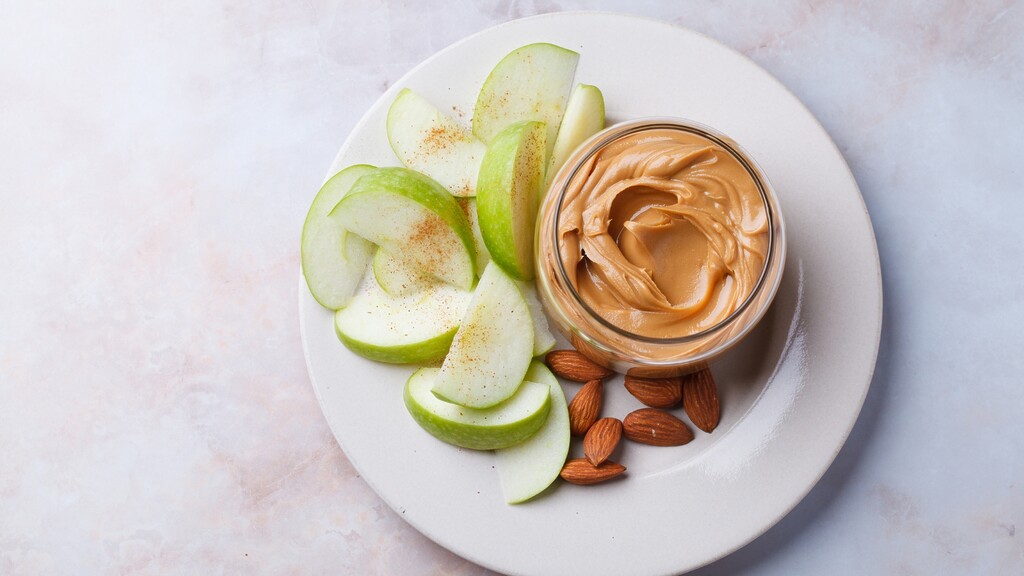
Carbohydrates alone aren’t the enemy, but how fast they hit your bloodstream matters. If you eat an apple by itself on an empty stomach, the natural sugars digest rapidly. If you eat that same apple with a handful of almonds or a scoop of peanut butter, the fat and protein slow down the digestion process. The sugar enters your system at a slow, manageable drip instead of a rush. You still get to enjoy the foods you love, you just give them a little “clothing” first.
4. Swap chronic cardio for cortisol-friendly movement
I used to think that if I wasn’t leaving the gym completely drenched in sweat, the workout didn’t count. But high-intensity interval training (HIIT) and long, grueling runs do not have to be the only path for women with PCOS; PCOS exercise guidance supports choosing movement you can sustain.
These intense workouts can spike cortisol, our primary stress hormone. When stress and recovery are constantly out of balance, weight management can feel harder. Switching my routine to slow, weighted workouts and long, rambling walks with my dog, Barnaby, did more for my waistline than sprinting on a treadmill ever did.
5. Build a consistent strength foundation
If you are trying to manage insulin, muscle is your best friend. Muscle tissue is essentially a sponge for the sugar in your blood. The more muscle you have, the more places that glucose can go without needing excess insulin to shuttle it around.
You do not need to become a bodybuilder. Simple, functional movements like squats, lunges, and modified push-ups are highly effective. I started by just doing a few sets of bodyweight squats in the kitchen while my morning coffee brewed. Keep it accessible so you actually do it.
6. Protect your sleep like a metabolic necessity
Here is an unpopular opinion in the wellness space: an extra hour of high-quality sleep will do more for your PCOS weight management than waking up at 5 AM to force a workout you are too tired for.
Just one night of poor sleep can temporarily reduce your insulin sensitivity the next day. If you are chronically exhausted, your body will constantly crave fast-digesting carbs for quick energy. Guard your wind-down routine fiercely. Keep the bedroom cool, dim the screens an hour before bed, and let your body restore itself.
7. Give your body time to trust you again
This isn’t a diet tip, but it might be the most important strategy on the list. When we have spent years putting our bodies through crash diets, extreme restriction, and high-stress workouts, our nervous systems get stuck in a state of alert.
When you start eating nourishing, balanced meals and moving gently, your body might take a few weeks to realize that the famine is over. The scale might not move immediately. That is incredibly normal. Stay the course, focus on how your energy levels feel in the afternoon, and give your biology the grace and time it needs to heal.
Frequently Asked Questions
Why is PCOS belly fat so hard to lose?
Weight carried specifically around the midsection is closely tied to insulin and cortisol levels, both of which are often elevated in women with PCOS. Standard diets usually focus on cutting calories, which doesn’t address the hormonal root cause. Once you shift your focus to stabilizing your blood sugar and managing your stress, that stubborn midsection weight often becomes much easier to manage.
Do I need to go entirely gluten-free or dairy-free?
You will see a lot of aggressive advice online claiming that everyone with PCOS must eliminate gluten and dairy. My take is a bit milder: unless you have a known allergy, intolerance, or notice that those foods trigger joint pain or bloating, you likely don’t need to ban them completely. Many women find success simply by focusing on whole foods and blood sugar balance without cutting out entire food groups.
As a quick reminder, I am a researcher and a fellow traveler on the PCOS journey, not a licensed medical professional. The strategies above are based on current research and what genuinely worked for me. Always check with your doctor before making major changes to your diet or exercise routine.
Kristina Hanson is an independent wellness researcher and the founder of DailyZests. She specializes in translating nutritional science into simple, delicious recipes that fit into real life. When she isn’t in the kitchen, you’ll find her hiking the trails or enjoying a slow morning coffee with her Golden Retriever, Barnaby. Read her full story.


 This post may contain affiliate links.