The first week of December usually brings a familiar knot to the stomach if you watch your blood sugar closely. Between neighborhood parties and family buffets, the season often feels like a month-long obstacle course of sugar crashes waiting to happen. You do not have to choose between protecting your health and eating a slice of your grandmother’s pie.
The trick is understanding how your body handles what you eat, rather than fighting a war of willpower at the dessert table.
The old magazine advice was always to “save up” your calories for the big holiday dinner. If you deal with insulin resistance, you probably already know exactly how that story ends. Fasting all day before a massive, carb-heavy meal sets the stage for a sharp glucose spike, followed quickly by a crushing mid-afternoon crash on the couch.
Going into a party hungry makes it nearly impossible to make choices that actually feel good in your body. I learned this the hard way after years of skipping lunch on Thanksgiving, only to feel exhausted and sick by 4 PM.
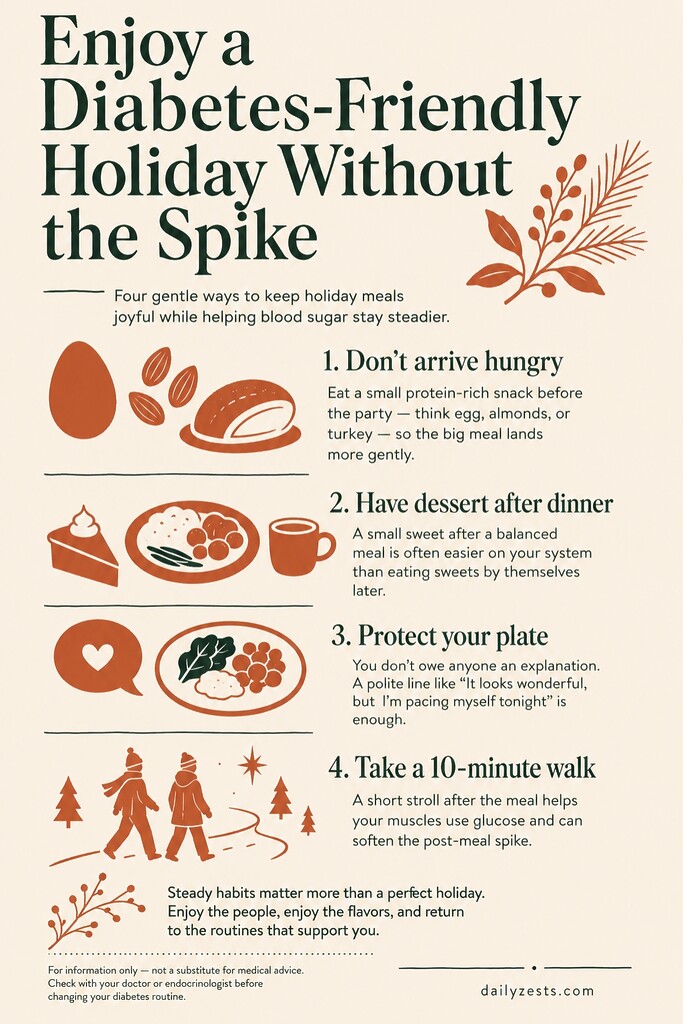
Having a small, protein-rich snack an hour before you leave the house changes the entire trajectory of the evening. A hard-boiled egg, a handful of salted almonds, or a few slices of turkey provides a baseline of protein and fat. This simple buffer slows down how quickly your body absorbs the carbohydrates you eat later, keeping your energy steady when the appetizer trays start circulating.
Rethinking the Dessert Plate
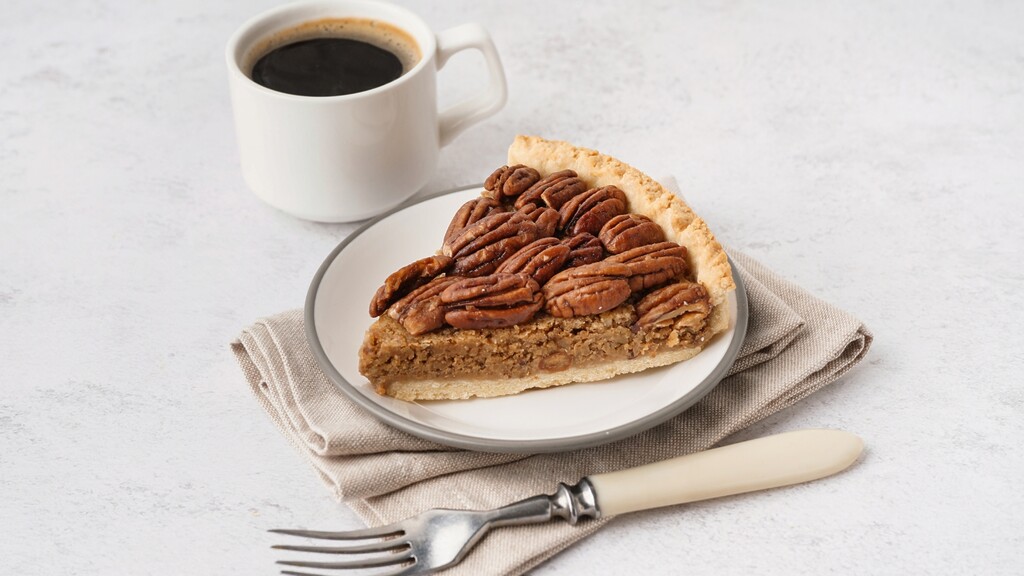
A common misconception is that a diabetes-friendly holiday means skipping dessert entirely. Complete restriction usually just breeds resentment and stress, and stress itself can elevate blood sugar.
Eating a carbohydrate completely on its own sends glucose rushing straight into your bloodstream. Pairing that same carbohydrate with a protein or fat physically slows down the digestion process. If you want the gingerbread or the potato latkes, have them right after your main meal of turkey and roasted vegetables.
When you eat sweets at the end of a balanced meal, the fiber, fat, and protein from your dinner act like a net. They catch the sugars and release them slowly into your system. Having a cookie right after dinner often results in a much smoother blood sugar response than eating that exact same cookie completely by itself two hours later.
Handling the Social Pushback
Food is intensely personal, and holidays amplify the pressure to eat exactly what the host prepared. You will inevitably encounter an aunt or a well-meaning friend who insists you take a second helping of candied yams or a larger slice of cake.
You might worry about offending them. The instinct is often to explain your medical history or apologize for your diet, which only invites more questions and debates about nutrition. You owe no one a defense of your plate.
Keep your boundaries polite but entirely closed to discussion. “It looks wonderful, but I am pacing myself tonight” is a complete sentence. If they push, offering a genuine compliment about the food usually redirects the conversation nicely. People just want their cooking acknowledged, and a warm comment about how lovely the table looks is often enough to move the spotlight off your choices.
The Power of the Post-Meal Walk
Once the plates are cleared, the temptation to slump into an armchair is strong. This is precisely the moment when your blood sugar is climbing toward its peak.
Research suggests that taking a short walk right after eating is one of the most effective ways to blunt a blood sugar spike. When you walk, your muscles require immediate energy. They pull glucose directly out of your bloodstream to fuel that movement, partly bypassing the usual insulin pathway.
This does not need to be a sweaty, cardiovascular workout. A quiet ten-minute stroll around the block to look at the neighborhood lights can be enough to help your body process the meal. Invite a cousin to join you, or just take a few minutes of quiet time for yourself in the crisp air.
A Quiet Start to the Season
Managing your health during the holidays is a practice, not a perfect science. Some meals will spike your sugar despite your best efforts. A single high reading will not undo all your hard work, and punishing yourself for enjoying a holiday favorite only ruins the memory.
As a researcher sharing what helps me navigate my own insulin resistance, I always recommend finding a quiet anchor to your day before the chaos begins. For me, that means a slow morning coffee on the porch with my dog Barnaby before the first relatives arrive. Find your own small routine that grounds you. Enjoy the people, enjoy the flavors, and trust the steady habits you have built all year.
A quick reminder: I am a researcher sharing lifestyle strategies that support my own health. Always check with your primary care doctor or endocrinologist before making changes to how you manage your diabetes, as everyone’s metabolic needs are different.
Kristina Hanson is an independent wellness researcher and the founder of DailyZests. She specializes in translating nutritional science into simple, delicious recipes that fit into real life. When she isn’t in the kitchen, you’ll find her hiking the trails or enjoying a slow morning coffee with her Golden Retriever, Barnaby. Read her full story.





 This post may contain affiliate links.