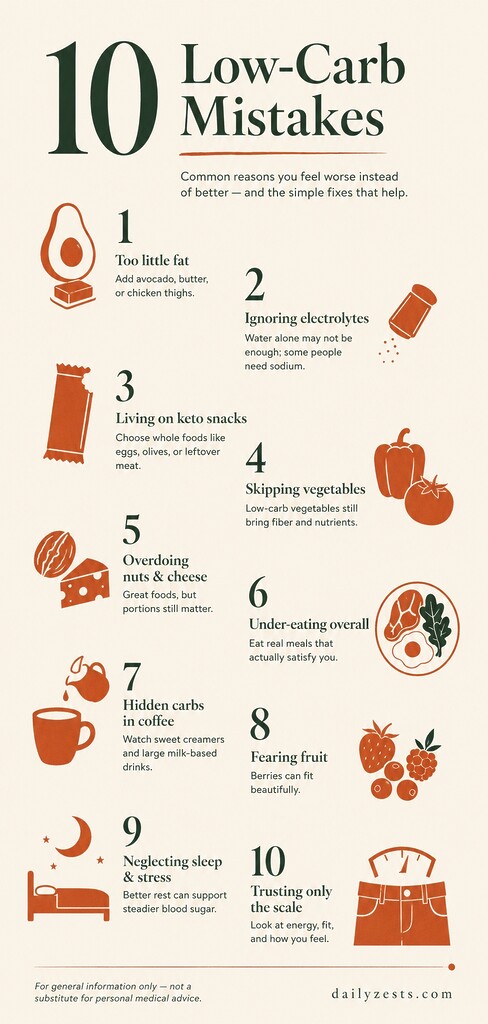
We usually start cutting carbs with high hopes, only to find ourselves completely exhausted by Thursday afternoon. If you are feeling worse instead of better, your body is probably just asking for a slight adjustment. Here is a look at the most common low carb diet mistakes, and how to fix them without stressing yourself out.
Changing how you fuel your body is a major shift. It is completely normal to hit a few speed bumps along the way. Most of these hurdles come down to missing just one or two small details.
1. Dropping carbs but staying afraid of fat
You cleared out the bread and pasta, but you are still eating dry chicken breasts and plain steamed broccoli. This is the fastest route to a midday energy crash. The human body needs a primary fuel source. When you remove carbohydrates from your plate, dietary fat has to step up and take its place.
If you remove the carbs and avoid the fat, you are essentially asking your body to run on empty. Try adding half an avocado to your lunch, cooking your vegetables in real butter, or choosing chicken thighs instead of breasts.
2. Ignoring your electrolytes
That dull headache you get on day three is not a sign your body needs a bagel. It is usually a sign you need salt. When you eat fewer carbohydrates, your insulin levels naturally drop. That signals your kidneys to release stored water, and electrolytes like sodium and potassium can drop right along with it.
Okay, with one caveat. If you take medication for high blood pressure, you should always check with your doctor before adding salt to your routine. But for many of us, dissolving a small pinch of quality sea salt in a morning glass of water makes a massive difference in our energy levels.
3. Living on packaged “keto” snacks
A protein bar with a bright net carbs label feels like a safe bet. Turn it around, and the ingredient list is often a paragraph of heavily processed fibers and artificial sweeteners. These ingredients can upset your stomach, especially when sugar alcohols pile up in one snack.
Whole foods will always be your best baseline. Hard-boiled eggs, a few olives, or a slice of leftover steak are much kinder to your digestion than a factory-made snack bar.
4. Skipping vegetables to save a few carbs
I see people completely cut out tomatoes, onions, and bell peppers because they contain a few natural sugars. We need to look at the bigger picture here. Vegetables provide the fiber that keeps your digestion moving and your gut microbiome fed.
A half-cup of cherry tomatoes will not ruin your progress, but missing out on all those vitamins and protective antioxidants certainly will not help your health.
5. Grazing on nuts and cheese all day
A small handful of walnuts is a brilliant snack. Four handfuls of walnuts while answering emails is an easy way to stall your progress entirely. This was a classic low carb beginner mistake I made early on.
Nuts and cheese are incredibly dense in energy. Because they are low in carbohydrates, it is easy to assume they are a free pass. Try measuring out one ounce in a small bowl, putting the bag away, and sitting down to actually enjoy it.
6. Not eating enough food overall
Diet culture has trained us to believe that eating less is always better. When you first cut out starches, your appetite often drops. You might find yourself naturally skipping meals or eating bird-sized portions.
Chronically under-eating can push your metabolism to slow down as your body works to conserve energy. Make sure you are eating complete meals that actually leave you feeling satisfied, not just surviving on lettuce and willpower.
7. Letting hidden carbs sneak into your morning coffee
Sitting on the porch with my dog Barnaby and a hot cup of coffee is my favorite part of the morning. But my old routine used to include a heavy splash of flavored creamer that quietly spiked my blood sugar before 8 AM.
Milk contains lactose, which is a natural sugar. A large latte can easily pack around 19 grams of carbohydrates before you even add syrup. Swapping regular milk for unsweetened almond milk or a small splash of heavy cream keeps your morning ritual intact without the sugar crash.
8. Fearing fruit completely
You do not have to say goodbye to fresh fruit. It is true that a large banana or a bowl of tropical fruit packs a dense sugar load. However, berries are a completely different story.
Raspberries, blackberries, and strawberries are incredibly rich in fiber and antioxidants while remaining very low in sugar. A small handful of berries mixed into plain, full-fat Greek yogurt is a wonderful way to enjoy something bright and sweet.
9. Forgetting about sleep and stress
You can eat a perfectly balanced plate of salmon and asparagus, but if you are running on five hours of sleep, your body will still struggle. When I was figuring out my own insulin resistance, I was shocked to learn how much a poor night of rest elevated my morning blood sugar.
Stress and sleep deprivation can raise cortisol, a hormone that nudges your liver to release more glucose into your bloodstream. Sometimes, the most powerful adjustment you can make to your diet is simply going to bed an hour earlier.
10. Judging your progress solely by the scale
It is genuinely frustrating to put in the effort all week and see the number on the scale stay perfectly still. The bathroom scale is a terrible lie detector. Weight fluctuates daily based on hydration, hormones, and digestion.
Pay attention to the quieter signals instead. Notice if your energy feels steady at 3 PM. Notice if your favorite jeans button a little easier, or if your joints feel less stiff in the morning. Those are the real metrics of healing.
Changing how you eat is a process of learning your own baseline. Pick one or two of these adjustments to start with, give your body a week to catch up, and see how you actually feel.
Kristina Hanson is an independent wellness researcher and the founder of DailyZests. She specializes in translating nutritional science into simple, delicious recipes that fit into real life. When she isn’t in the kitchen, you’ll find her hiking the trails or enjoying a slow morning coffee with her Golden Retriever, Barnaby. Read her full story.



 This post may contain affiliate links.