Most mornings, I sit on the porch with black coffee and my dog, Barnaby, just letting the day start. I am not rushing to eat, and I am not starving. Combining a low-carb approach with intermittent fasting gently changed how I experience mornings.
Years ago, my days were ruled by the 3 PM blood sugar crash. I would hit a wall of exhaustion that only a heavy carbohydrate snack could fix. Learning to balance my meals helped tremendously, but discovering how to build a simple fasting window was the shift my body actually needed to find steady energy.
If you are tired of thinking about food all day long, you are in the right place.
Why Fasting and Low-Carb Support Each Other
You can certainly do intermittent fasting without changing what you eat. You can also eat low-carb without ever skipping a meal. But when you put them together, they act like two tools doing the exact same job: keeping your blood sugar stable.
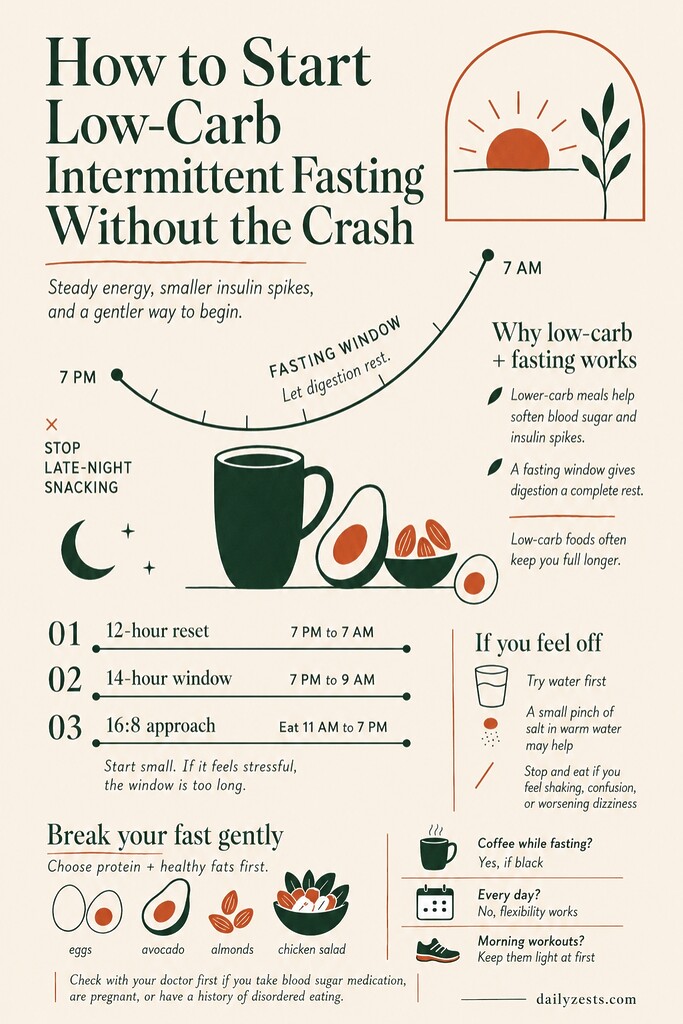
When we eat foods high in carbohydrates, our blood sugar rises, and the body releases insulin to manage it. If we are eating heavy carbs from morning until midnight, our system never really gets a break. Research suggests that lowering your carbohydrate intake helps keep those insulin spikes smaller and softer. Intermittent fasting takes that a step further by giving your digestion a complete rest for a set number of hours.
Because low-carb eating naturally keeps you fuller for longer, stretching the time between meals suddenly stops feeling like a punishment.
Three Gentle Schedules to Try
I strongly believe that fasting should never feel like white-knuckling your way to the next meal. If you are constantly staring at the clock and fighting your own body, your fasting window is simply too long. Start small.
The 12-Hour Reset
This is the most natural place to begin. You simply stop eating after dinner and do not eat again until breakfast twelve hours later. If you finish dinner at 7:00 PM, your next meal is at 7:00 AM. It requires almost no effort, and it stops late-night snacking completely.
The 14-Hour Window
Once twelve hours feels entirely normal, you can push breakfast back just a little bit. A 14-hour fast might mean finishing dinner at 7:00 PM and eating breakfast at 9:00 AM. Many find this schedule fits perfectly into a normal workweek without causing any stress.
The 16:8 Approach
This is the most common fasting schedule you will hear about. It involves fasting for 16 hours and eating all your meals within an 8-hour window. For example, you might eat between 11:00 AM and 7:00 PM. You essentially skip traditional breakfast and go straight to an early low-carb lunch.
Navigating the First Few Weeks
You might be worried that skipping breakfast will leave you shaking, tired, or dizzy by ten in the morning. That is a completely normal hesitation, especially if you are used to eating as soon as you wake up.
When you first combine these two approaches, your body has to learn how to switch from burning dietary sugar to burning stored energy. This transition takes a little time. If you feel a dull headache or a wave of fatigue, your body may be looking for hydration or electrolytes, but shaking, confusion, or worsening dizziness are signs to stop and eat.
A practical tip that saved my mornings: start with water, and if your doctor has not told you to limit sodium, dissolve a small pinch of pink Himalayan salt in a few ounces of warm water. Drink it down like a tiny savory tea. It may help a fasting headache feel less intense and settle a rumbling stomach.
How to Break Your Fast
When your eating window finally opens, the temptation is to eat everything in sight. But breaking a fast requires a little bit of care. If you overload your empty stomach with heavy food, you will likely feel sluggish all afternoon.
Focus on protein and healthy fats first. A plate of scrambled eggs with avocado, a handful of almonds, or a scoop of leftover chicken salad are wonderful options. They provide immediate, lasting energy without spiking your blood sugar.
A Quick Note on Safety
Please remember that I am a researcher sharing my own routine and what supportive habits look like in my kitchen. Fasting is not meant for everyone. Always check with your doctor before changing your eating schedule, especially if you take medications for blood sugar, are pregnant, or have a history of disordered eating.
Common Fasting Questions
Can I drink coffee while fasting?
Yes. Black coffee, plain tea, and water will not break your fast. In fact, a cup of black coffee may help some people feel a little less hungry during the final hours of your fasting window. Just avoid adding milk, cream, sugar, or artificial sweeteners until your eating window opens.
Do I have to fast every single day?
Not at all. You can fast three days a week, only on weekdays, or just when you naturally feel like it. Flexibility is what makes this a sustainable lifestyle rather than a rigid diet.
Can I still work out in the morning?
Many people love exercising in a fasted state and find they have plenty of energy. If you are just starting out, keep your morning workouts light (like a walk or gentle stretching) until you see how your body handles the new routine.
Listen to your body, give yourself grace during the transition, and remember that real health is about finding a rhythm that makes you feel good in your own skin.
Kristina Hanson is an independent wellness researcher and the founder of DailyZests. She specializes in translating nutritional science into simple, delicious recipes that fit into real life. When she isn’t in the kitchen, you’ll find her hiking the trails or enjoying a slow morning coffee with her Golden Retriever, Barnaby. Read her full story.


 This post may contain affiliate links.