For years, I assumed my heavy, chronic fatigue and dull complexion were just the reality of getting older. I was drinking water and taking expensive probiotics, but nothing shifted. Then I found out I was starving the very bacteria I was trying to cultivate.
We hear a lot about probiotics. They are the friendly bacteria that keep our digestive system running smoothly. But bacteria are living organisms, and like any living thing, they need to eat. That is where prebiotics come in.
Prebiotics are essentially indigestible plant fibers. Because our human stomachs cannot break them down, they travel straight to the lower digestive tract. Once there, they become a buffet for your good gut bugs.
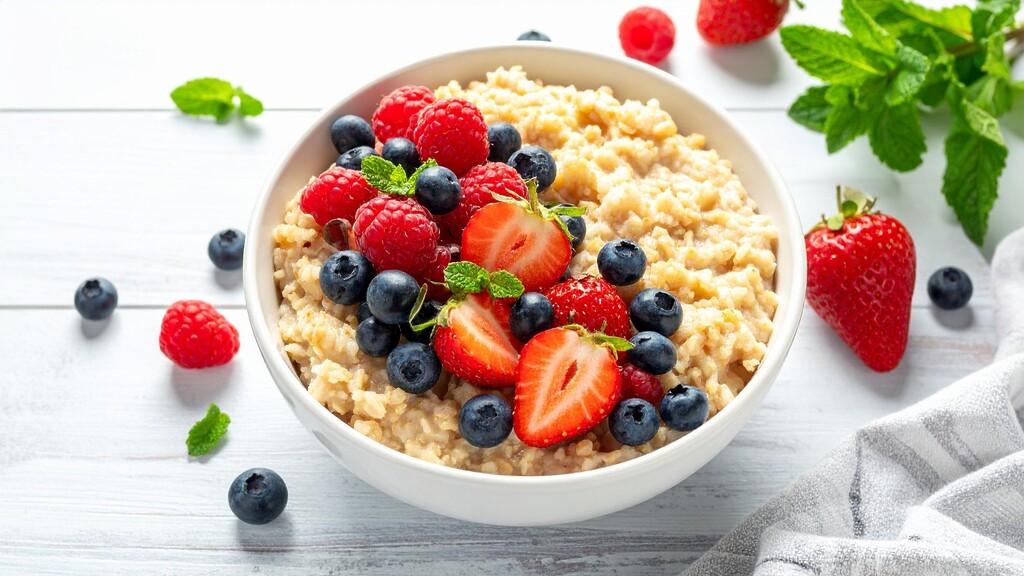
The supplement industry would love for you to believe you need a forty-dollar powder to get these fibers. I strongly believe you don’t. A slightly green banana, a handful of oats, or some cooked and cooled potatoes will often do the job just as well, and for pennies.
When I started intentionally adding prebiotic foods to my meals, I expected my digestion to improve. What I did not expect were the secondary effects that rippled through my entire body.
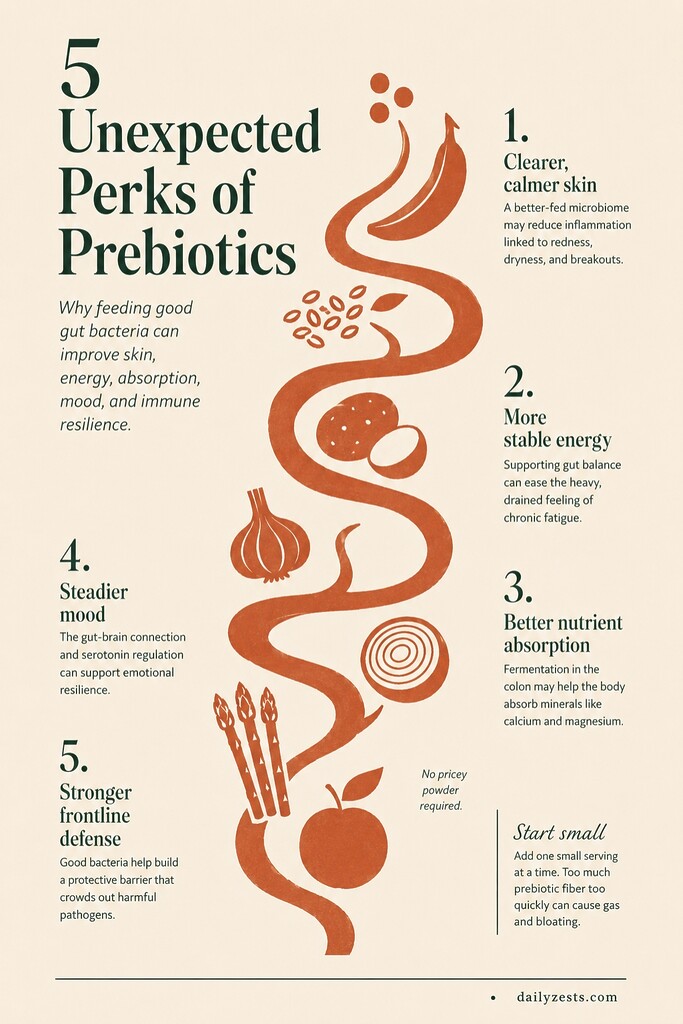
1. A Noticeably Clearer, Calmer Complexion
I used to think vitamin C serums were the only way to fix surface dullness. Okay, with one caveat (they absolutely do help), but what happens on your face is heavily influenced by what is happening in your digestive tract.
Researchers refer to this as the gut-skin axis. When your microbiome is out of balance, it can trigger systemic inflammation. For many of us, that internal irritation shows up externally as redness, dry patches, or breakouts.
By focusing on prebiotics for skin health, I was essentially giving my gut the tools to calm itself down. Feeding the good bacteria encourages them to produce short-chain fatty acids. These compounds help reinforce the gut lining, which keeps unwanted particles from leaking out and sounding the body’s inflammatory alarm. Within a few months of eating more garlic, onions, and asparagus, the persistent redness in my cheeks finally faded.
2. Lifting the Fog of Chronic Fatigue
For a long time, my mornings felt like wading through wet cement. I would sleep for eight hours and still wake up feeling completely drained. It turns out that gut health can influence inflammation and energy metabolism in ways researchers are still trying to untangle.
When you optimize prebiotics for gut health, you help the digestive process run efficiently. The body may also feel less weighed down by difficult digestion or the low-grade inflammation linked with an unbalanced microbiome. I slowly noticed that I was walking my dog, Barnaby, with a much lighter step, and I actually had the stamina to stay awake through an entire evening movie.
3. Better Absorption of Essential Nutrients
You are not simply what you eat. You are what you absorb.
You can eat the most nutrient-dense spinach salad in the world, but if your gut lining is compromised, those vitamins and minerals will pass right through you. Prebiotics can stimulate fermentation in the colon. That process appears to support your body’s absorption of crucial minerals like calcium and magnesium.
If you are spending money on quality food or supplements, making sure your body can actually capture those nutrients is a very practical next step.
4. A Quieter, Steadier Mood
The gut and the brain are in constant communication via the vagus nerve. If the gut is distressed, it sends distress signals straight to your head.
Most of the body’s serotonin is made in the gut, and gut bacteria can help regulate that process; serotonin is often called the happy chemical. When those bacteria are not well supported, mood regulation may feel harder for some people. Feeding them well is a foundational way to support your own emotional resilience.
5. A Stronger Frontline Defense
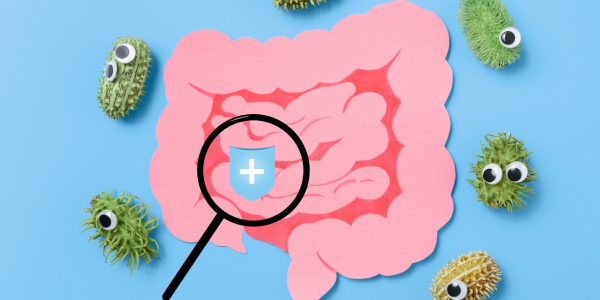
A staggering percentage of your immune system lives right in your gut. The helpful bacteria act like a microscopic defense wall, crowding out harmful pathogens so they cannot take root and multiply.
When prebiotics fuel the good bugs, that defense wall grows thicker and stronger. It is a very quiet benefit, but you might notice it the next time a seasonal cold sweeps through your office and you somehow manage to avoid catching it.
A Quick Note on Starting Out
If you are reading this and planning to immediately eat three bowls of oats and a raw onion, your stomach will likely rebel. That is the number one mistake people make when transitioning to a high-fiber lifestyle.
If you introduce too much prebiotic fiber too quickly, the bacteria will ferment it rapidly, leading to trapped gas and uncomfortable bloating. I recommend adding just one small serving of a prebiotic food to your day. Give your system a week to adjust before adding more.
Caring for your body does not have to be a rigid project or a restrictive list of rules. Sometimes, it is just as simple as slicing an apple with your afternoon tea and knowing you are feeding a trillion little helpers that are working hard to keep you well.
Kristina Hanson is an independent wellness researcher and the founder of DailyZests. She specializes in translating nutritional science into simple, delicious recipes that fit into real life. When she isn’t in the kitchen, you’ll find her hiking the trails or enjoying a slow morning coffee with her Golden Retriever, Barnaby. Read her full story.



 This post may contain affiliate links.