Years ago, navigating heavy chronic fatigue and weight gain I couldn’t explain, I bought every expensive probiotic in the store. I assumed fixing my digestion was a matter of swallowing the right pill. That assumption cost me time, money, and unnecessary frustration.
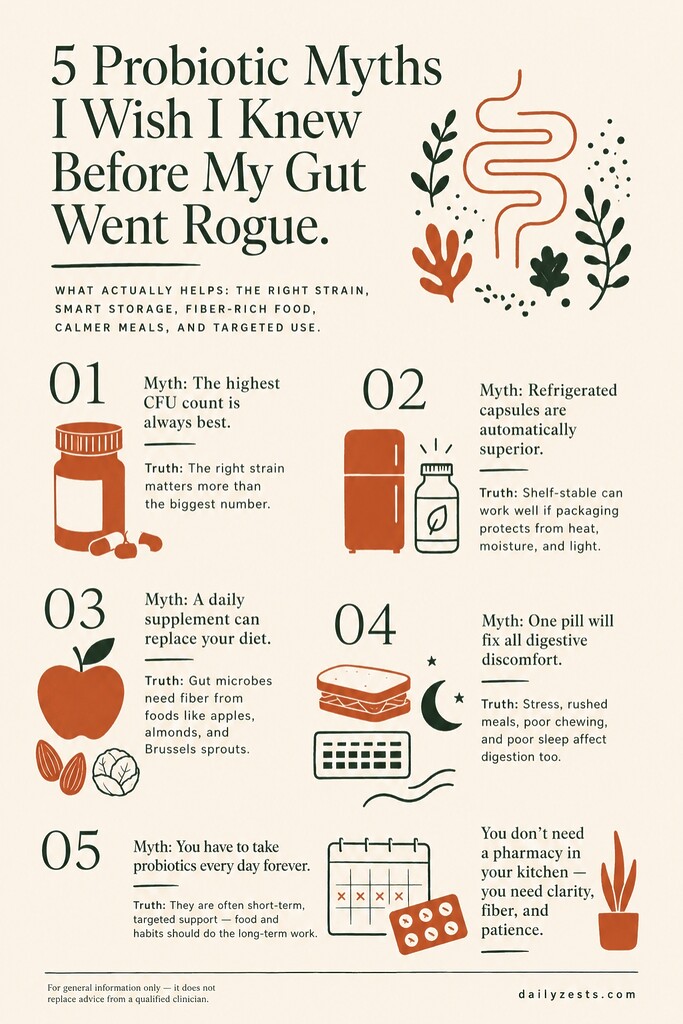
Myth 1: The highest CFU count is always the best choice
Standing in the supplement aisle, I used to reach straight for the bottles advertising 50 or 100 billion Colony Forming Units. It feels logical to assume that a higher number equals a stronger, faster result. But digestion is not a simple numbers game.
Your microbiome operates more like a diverse forest. Taking massive doses of the wrong bacterial strain is like planting thousands of pine trees in an environment that actually needs ground cover. Research suggests that the specific strain of bacteria matters far more than the raw headcount. Different strains perform entirely different jobs, from breaking down lactose to supporting immune function.
Instead of hunting for the highest number, look for a targeted strain that matches your specific digestive symptoms. A smaller dose of the right bacteria can be more useful than a massive dose of a strain your body doesn’t currently need.
Myth 2: Refrigerated capsules are automatically superior
The cold section of the health food store always felt a little more legitimate to me. For a long time, I ignored shelf-stable options entirely because I thought live cultures had to stay cold to survive. That is a very outdated way to shop for gut support.
Advancements in freeze-drying technology mean many high-quality probiotics can survive well at room temperature when the product is properly designed and stored away from excess heat and moisture. What really dictates a supplement’s survival rate is how well the packaging protects the fragile bacteria from moisture and light.
Look for products packaged in individual blister packs or thick, opaque glass bottles. If a shelf-stable bottle is sitting in direct sunlight in a hot delivery truck, the bacteria might degrade. But under normal conditions, a well-packaged dry supplement can still be a solid option, even next to the ones kept in the fridge.
Myth 3: You can ignore your diet if you take a daily supplement
I definitely treated my early probiotic habit like an insurance policy against hasty, nutrient-poor meals. Actually, calling it an insurance policy is too generous. It was more like hiring an expensive construction crew and providing them with absolutely zero building materials.
Probiotics are living organisms. The helpful microbes already living in your gut rely heavily on certain fibers in the diverse plants we eat. If we starve that ecosystem of prebiotic fiber, it has a harder time thriving or doing the work we bought those probiotics to support.
Taking a premium supplement while eating a highly processed diet yields very little benefit. Adding an apple, a handful of almonds, or a side of roasted Brussels sprouts to your day provides the exact fuel those beneficial bacteria need to thrive.
Myth 4: A single pill will fix all digestive discomfort
You might be staring at a cabinet full of well-researched supplements right now, quietly wondering why you still feel uncomfortably bloated every afternoon. I have absolutely been in that exact spot.
We place an enormous amount of pressure on a single capsule to undo modern living. The truth is, our daily physical habits impact our digestion just as much as our bacterial balance. High stress levels, eating too quickly, failing to chew food thoroughly, and a lack of quality sleep can stall your digestion entirely. A probiotic cannot force a stressed nervous system to properly digest a rushed sandwich eaten over a keyboard.
While I always suggest discussing persistent symptoms with your doctor, I also recommend looking closely at the environment you create around your meals. Taking a few deep breaths before eating does wonders for preparing the body to process food.
Myth 5: You have to take them every single day forever
Marketing campaigns have trained us to treat probiotics like daily multivitamins. We buy them on a monthly subscription and feel guilty if we miss a morning. But many digestive experts now view these supplements more like targeted, temporary support.
You might use a specific course of probiotics while taking antibiotics if your clinician recommends a strain with evidence behind it, during a stressful travel season, or for another short-term reason. Once your system stabilizes and your symptoms resolve, your daily food should ideally step in to maintain the balance.
Taking a break is not a failure. In fact, stepping away from the daily pill is a great way to see how well your body manages digestion on its own using the whole foods you provide.
You don’t need a massive pharmacy in your kitchen to maintain a healthy stomach. You just need a little clarity on what your body requires, a steady intake of fiber, and the patience to let your system do what it was designed to do.
Kristina Hanson is an independent wellness researcher and the founder of DailyZests. She specializes in translating nutritional science into simple, delicious recipes that fit into real life. When she isn’t in the kitchen, you’ll find her hiking the trails or enjoying a slow morning coffee with her Golden Retriever, Barnaby. Read her full story.



 This post may contain affiliate links.