When my chronic fatigue was at its peak, I bought just about every expensive probiotic on the shelf. None of them made a difference until I stopped trying to force a fix and started looking at simple herbs for gut health to gently support my body instead.
We ask our digestive systems to do a lot of heavy lifting. When things feel sluggish, bloated, or just quietly uncomfortable, our instinct is usually to add a supplement or start restricting food. But sometimes, what the digestive tract actually needs is a little bit of quiet support to do the job it already knows how to do.
Just a quick note from my kitchen to yours: while I love sharing the research and what has helped me, I’m an independent researcher, not a doctor. Herbs are potent, so it’s always wise to check with your care provider, especially if you take daily medications or have an ongoing condition.
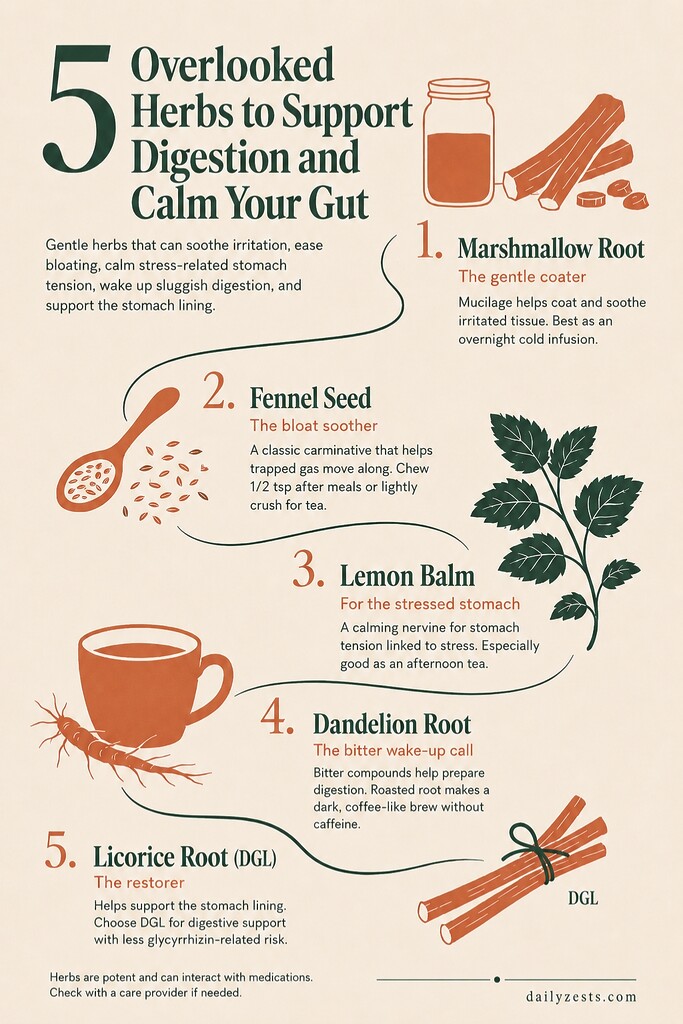
If you are tired of stomach discomfort dictating your day, here are five beautifully simple herbs that have been traditionally used to bring a little peace back to the gut.
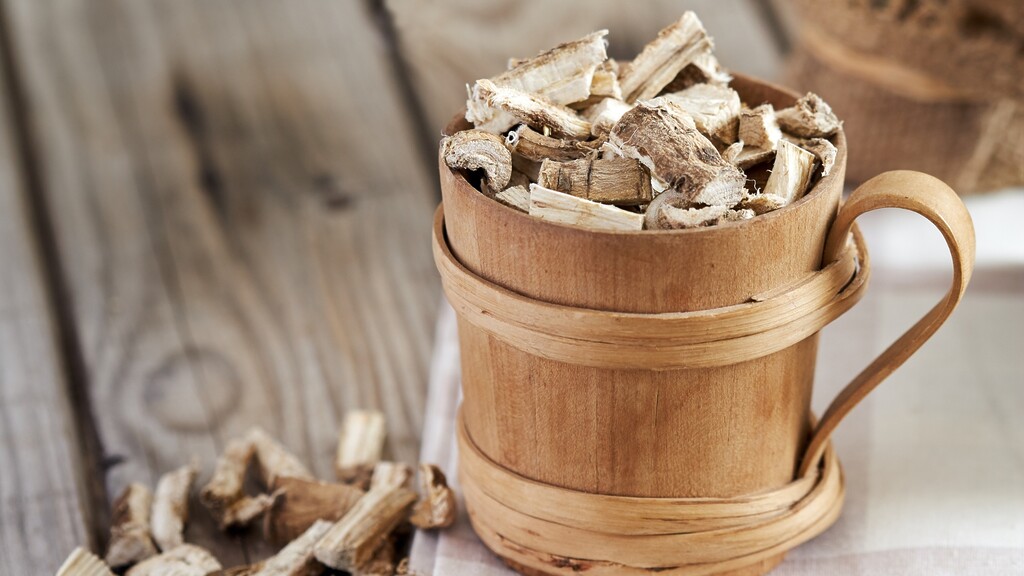
1. Marshmallow Root (The Gentle Coater)
If your stomach feels easily irritated or you often experience a burning sensation after meals, marshmallow root is worth getting to know. Long before it was the name of a campfire treat, the Althaea officinalis plant was used for its uniquely soothing properties.
This root contains a high amount of mucilage. When mucilage meets water, it creates a thick, slippery gel. Research suggests marshmallow’s mucilage-rich extracts can support irritated mucous membranes and form a protective physical barrier that may help soothe irritation.
How to try it: Most of us assume we need to boil roots to get their benefits, but marshmallow root is an exception. High heat can change the root’s slippery mucilage, so a cold infusion is the gentlest way to draw it out. Put a tablespoon of the dried root in a mason jar with cool water, put the lid on, and leave it in the fridge overnight. By morning, the water will be slightly thick and ready to strain. It has a very mild, earthy, and faintly sweet taste.
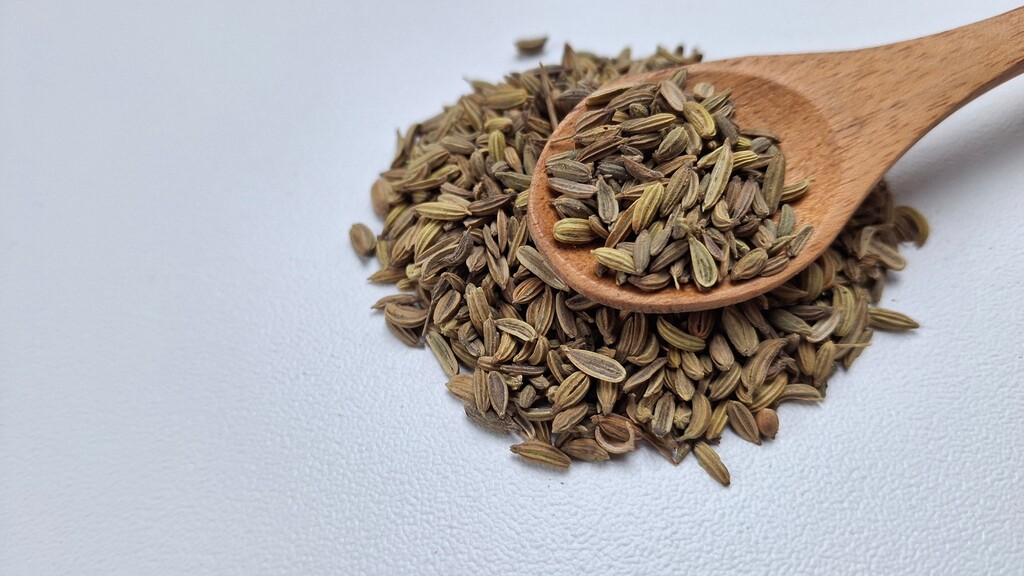
2. Fennel Seed (The Bloat Soother)
Fennel is one of those herbs hiding in plain sight in most American spice racks. We tend to think of it only when a recipe calls for it, but these tiny, ridged seeds are incredibly supportive when you feel like a balloon inflating right under your ribs.
Fennel is classified as a carminative herb. Carminatives contain volatile oils that help relax the smooth muscles of the digestive tract. When those muscles relax, trapped gas can finally move through and dissipate naturally.
If you are worried that making an herbal remedy requires special equipment, fennel proves otherwise. You don’t even need to make tea if you don’t want to. After a heavy meal, you can simply chew on half a teaspoon of fennel seeds. If you do prefer a tea, just remember to lightly crush the seeds with the back of a spoon before adding hot water: that small step is necessary to break the seed coat and release the helpful oils.
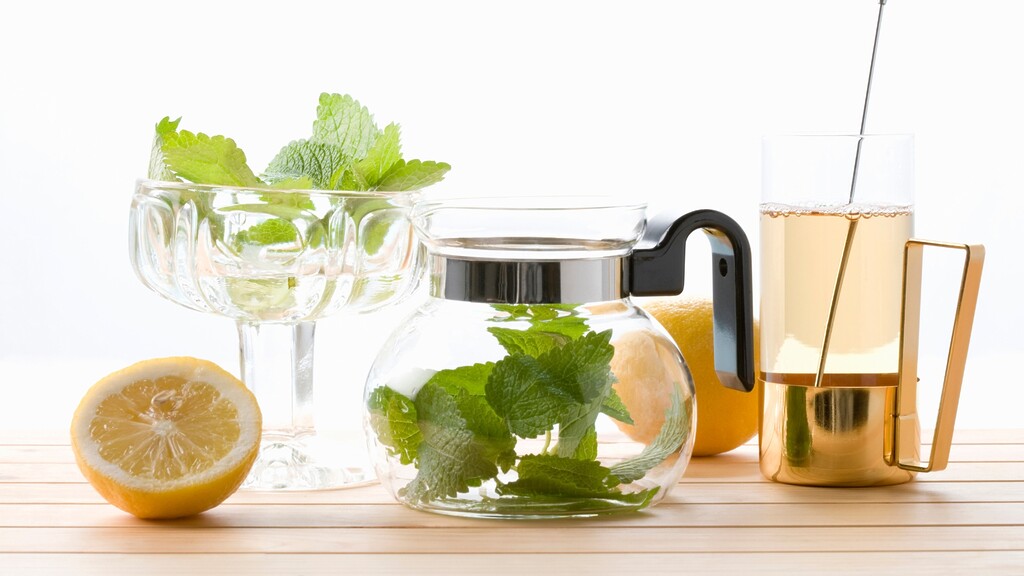
3. Lemon Balm (For the Stressed Stomach)
I have a patch of lemon balm in my garden that completely refuses to be tamed, and I let it run wild because it is one of my favorite things to harvest.
We often forget that the gut and the brain are in constant communication via the vagus nerve. If your mind is racing, your stomach is likely tied in knots. Lemon balm belongs to the mint family, but instead of the sharp coolness of peppermint, it carries a soft, citrusy warmth. It is widely recognized in herbal traditions as a nervine: an herb that supports the nervous system.
Many find that a cup of lemon balm tea in the late afternoon helps quiet that physical manifestation of stress in the belly. It’s perfect for the kind of stomach ache that shows up right before a stressful meeting or during a chaotic travel day.
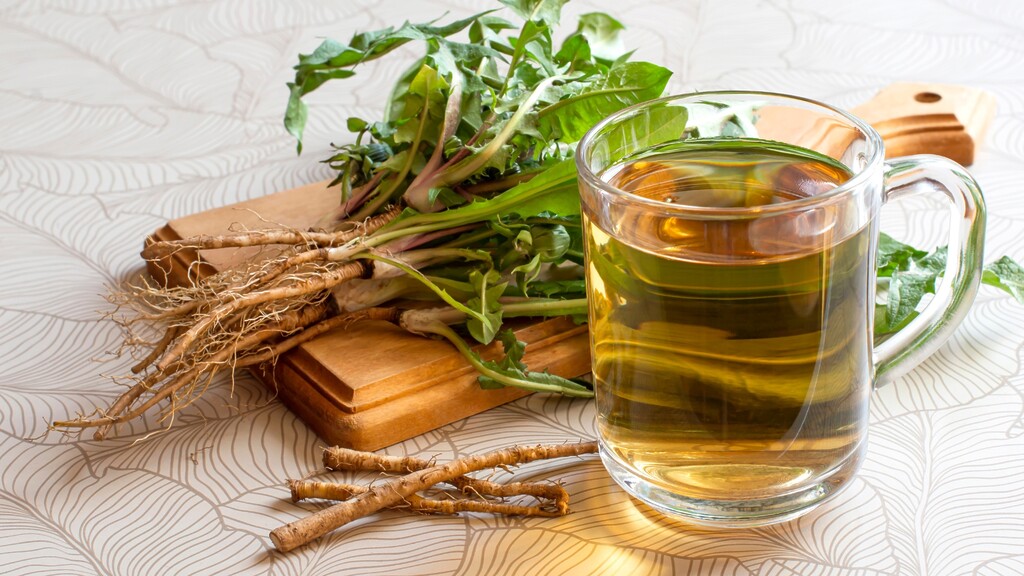
4. Dandelion Root (The Bitter Wake-Up Call)
I genuinely believe we have engineered the bitter flavor out of the modern American diet. We favor things that are sweet, salty, or umami. But historically, our ancestors ate a lot of bitter roots and greens, and our digestive systems evolved to rely on that specific flavor.
When bitter compounds hit receptors on your tongue and throughout the digestive tract, they can nudge the gut’s signaling system, including hormones and motility patterns involved in digestion. This helps prepare your body to handle food, and dandelion root is an excellent, accessible bitter.
Raw dandelion can be intensely bitter, which puts many people off. To make it highly enjoyable, look for roasted dandelion root. When steeped, it brews into a dark, rich liquid that tastes surprisingly similar to coffee, but without the caffeine or the acidity that can sometimes aggravate a sensitive stomach.
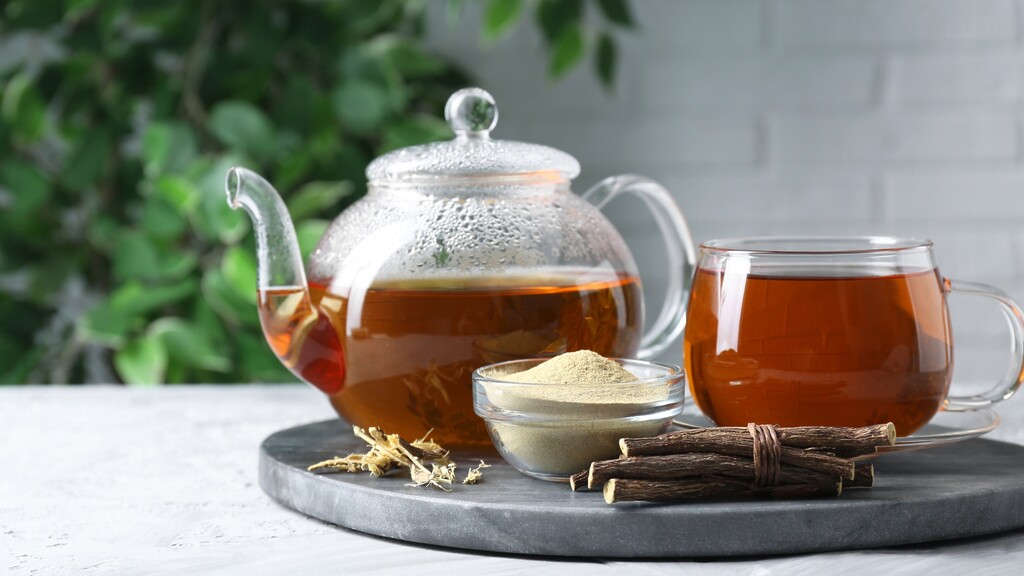
5. Licorice Root (The Restorer)
True licorice root is a powerful demulcent, meaning it soothes inflamed tissues. However, this is where a lot of readers rightly hesitate. Standard licorice root contains a compound called glycyrrhizin, which, when consumed in large amounts or over a long period, can cause your blood pressure to spike and deplete your potassium levels.
If you want the digestive benefits with less glycyrrhizin-related risk, you look for DGL (Deglycyrrhizinated Licorice). This is simply licorice root that has had the glycyrrhizin removed.
DGL is often used to help maintain the mucosal lining of the stomach and is frequently taken right before meals. It usually comes in chewable tablets or powders, and it has a naturally sweet, earthy flavor. If you find your stomach feels raw after a rough digestive stretch, DGL is often recommended as a gentle way to support the stomach lining while it recovers.
Supporting your body doesn’t always have to involve an overhaul of your entire life. Sometimes, the kindest thing you can do for your health is just boil some water, steep a simple plant, and give yourself ten quiet minutes to drink it.
Kristina Hanson is an independent wellness researcher and the founder of DailyZests. She specializes in translating nutritional science into simple, delicious recipes that fit into real life. When she isn’t in the kitchen, you’ll find her hiking the trails or enjoying a slow morning coffee with her Golden Retriever, Barnaby. Read her full story.




 This post may contain affiliate links.