When your joints are aching, the instinct is usually to stop moving entirely. I know that feeling well. Years ago, when I was navigating severe chronic fatigue and the lingering body aches that came with it, I viewed movement as something that would only drain or hurt me. But staying completely still often makes stiff joints feel even tighter. If you are looking for safe yoga poses for knee pain, the secret isn’t pushing harder; it is finding the exact right way to support the joint so the surrounding muscles can finally let go.
You don’t need a heavy sweat session. You just need a little space to breathe and realign.
It helps to understand what your body is actually asking for. Very often, the pain in your knee isn’t entirely about the knee itself. The knee is a hinge, caught between the hip and the ankle. When your hamstrings, calves, or hip flexors get tight from sitting at a desk or standing on hard floors all day, they pull constantly on the knee joint.
Research on hamstring stretching suggests that working with these surrounding muscles may help reduce knee pain and improve function. We aren’t going to bend the knee into deep, stressful angles. Instead, we are going to stretch the muscles that are bossing the knee around.
A quick note from my desk to yours: I’m an independent researcher who loves translating wellness into daily life, not a doctor. If your knee pain is sharp, sudden, or accompanied by swelling, please have a medical professional take a look before trying any new movement.
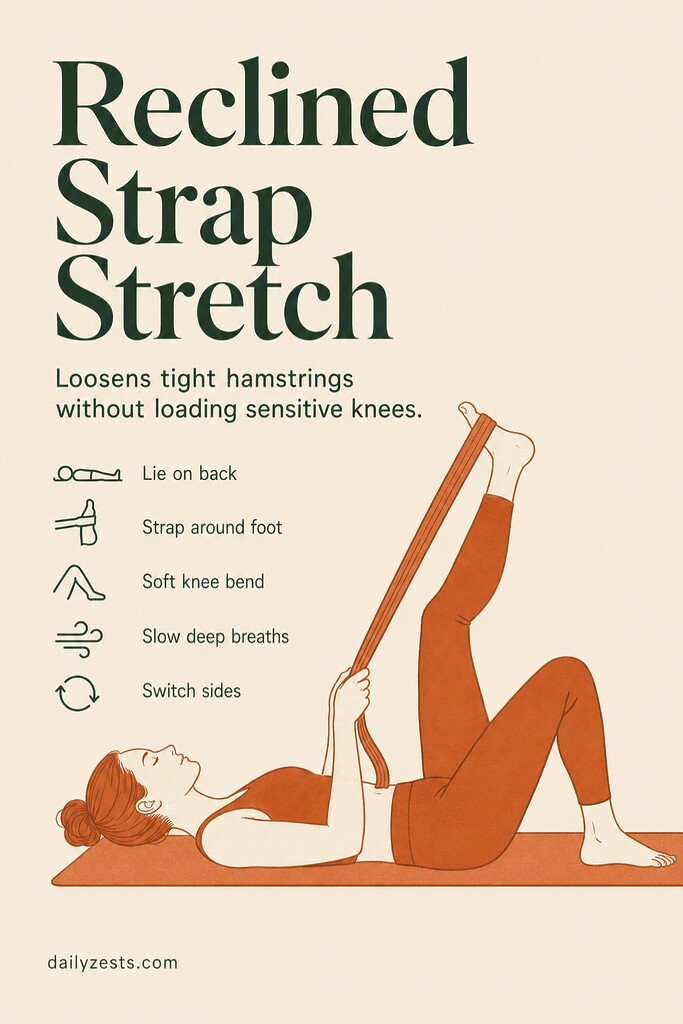
1. Reclined Hand-to-Big-Toe Stretch (With a Strap)
Many traditional hamstring stretches force you to stand and touch your toes, which can put a heavy load on a sensitive knee. This reclined version takes gravity completely out of the equation.
How to do it:
Lie flat on your back. Keep your left leg straight on the floor, or bend your left knee and plant your foot if that feels better on your lower back.
Loop a yoga strap, a dog leash, or a rolled-up towel around the arch of your right foot.
Slowly extend your right leg up toward the ceiling. You do not need your leg to be perfectly straight. Keep a soft, micro-bend in the knee so you feel the stretch in the back of your thigh, not in the joint itself.
Hold for 5 to 10 slow, deep breaths, then gently switch sides.
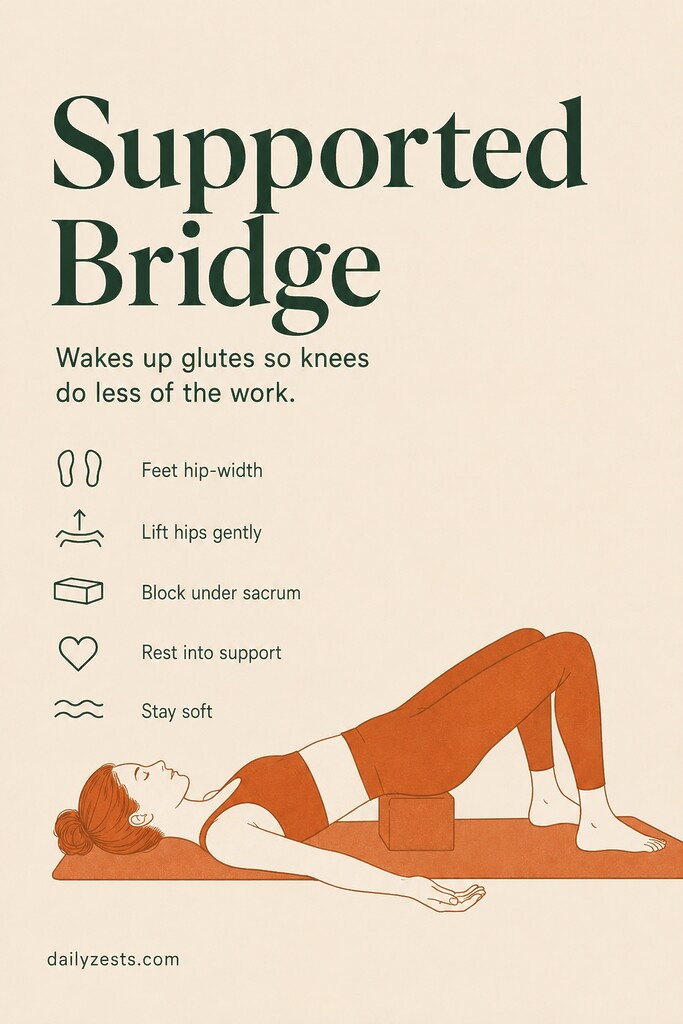
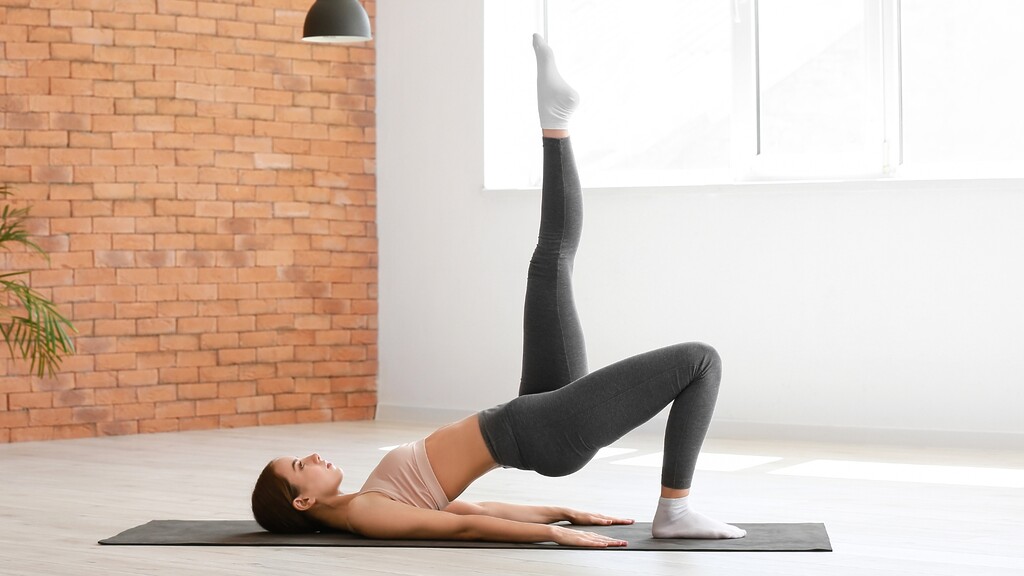
2. Supported Bridge Pose
Weak glutes can leave the knees taking on more strain than they should during your daily walking. Bridge pose gently wakes up the back of your legs and your glutes while stretching the front of your hips, all without putting pressure on the knee cap.
How to do it:
Lie on your back with your knees bent and feet flat on the floor, about hip-width apart. Your heels should be close enough that your fingertips can lightly brush them.
Press evenly into your feet and gently lift your hips toward the ceiling.
For a fully restorative option, slide a yoga block or a firm pillow under your sacrum (the flat, bony part at the base of your spine) and let your weight rest completely on it.
Stay here for a minute, letting your hips open softly.
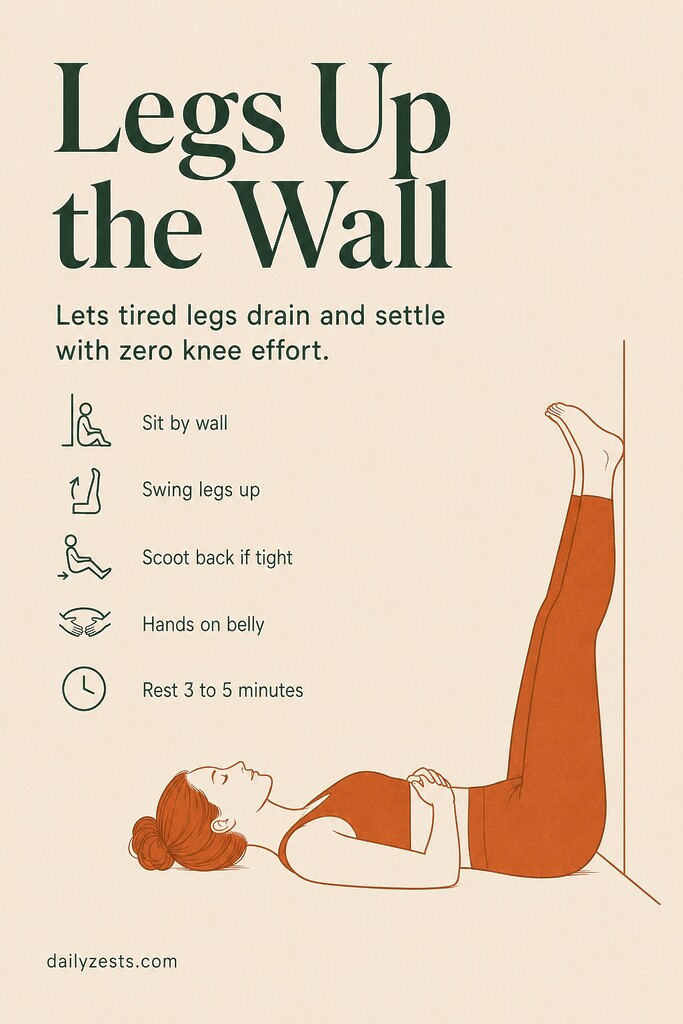
3. Legs Up the Wall (Viparita Karani)
This is my absolute favorite way to close out a long day. If your knees feel mildly puffy after standing, this pose uses gravity to help encourage fluid movement back toward your heart. It requires zero effort from your joints.
How to do it:
Find a clear stretch of wall. Sit sideways with your right hip touching the wall.
Gently pivot your body, swinging your legs up the wall as you lower your back to the floor.
If your hamstrings are tight, scoot your hips a few inches away from the wall. Your legs can rest comfortably at a slight angle.
Rest your hands on your belly or spread them wide. Close your eyes and stay here for 3 to 5 minutes.
Common Questions About Yoga and Joint Discomfort
Should I push through the pain if the stretch feels intense?
No, never. Health shouldn’t feel like a punishment, and your body usually sends pain signals for a good reason. If you feel a sharp, pinching, or burning sensation inside the knee joint, back off immediately. You only want to feel a dull, pleasant stretching sensation in the belly of the muscles (like the thigh or calf), not in the joints.
How often should I do these poses?
Because these are highly restorative, low-impact movements, many people can do them daily, as long as they stay comfortable and pain-free. Many people find that spending five minutes doing “Legs Up the Wall” every evening before bed creates a wonderful, calming ritual that supports both their joints and their sleep quality.
Do I need special equipment?
Not at all. While a yoga block and strap are lovely to have, your home is full of free alternatives. A thick, rolled-up bath towel works beautifully under your hips for bridge pose, and a bathrobe tie makes a perfect stretching strap.
A Softer Approach to Your Body
When our bodies aren’t feeling their best, it is incredibly easy to get frustrated with them. Try to view these small aches as your body communicating with you, asking for a little extra slack in the line. By giving your muscles the space to lengthen safely, you are sending a signal that you are listening. Take your time on the mat, breathe slowly, and let the ground do the heavy lifting for you today.
Kristina Hanson is an independent wellness researcher and the founder of DailyZests. She specializes in translating nutritional science into simple, delicious recipes that fit into real life. When she isn’t in the kitchen, you’ll find her hiking the trails or enjoying a slow morning coffee with her Golden Retriever, Barnaby. Read her full story.


 This post may contain affiliate links.