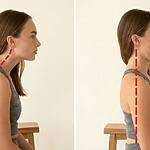
I usually notice it in the late afternoon. My shoulders have slowly crept up toward my ears, my chest feels tight, and my body has molded itself perfectly to the shape of my laptop. We spend so much of our day pulled forward (over keyboards, steering wheels, and garden beds) that it’s no wonder our upper backs start to ache.
For a long time, my solution was just to force my shoulders back and puff out my chest. But holding that rigid military posture is exhausting. It doesn’t fix the problem; it just creates a new kind of tension. Years ago, when I was struggling through a heavy season of chronic fatigue, I realized how much energy it actually took just to hold myself upright when my spine was constantly fighting gravity.
The kinder approach is to stretch the muscles that are pulling you forward and strengthen the ones meant to hold you up. These are the nine movements I lean on when I need to hit reset. They aren’t about twisting yourself into a pretzel. They are gentle invitations to find a little more space in your spine.
Just a quick note from me: I’m a researcher who loves sharing what works for my body, but I’m not a clinician. If you have an existing back injury or chronic pain, please run these by your doctor or physical therapist before trying them out.
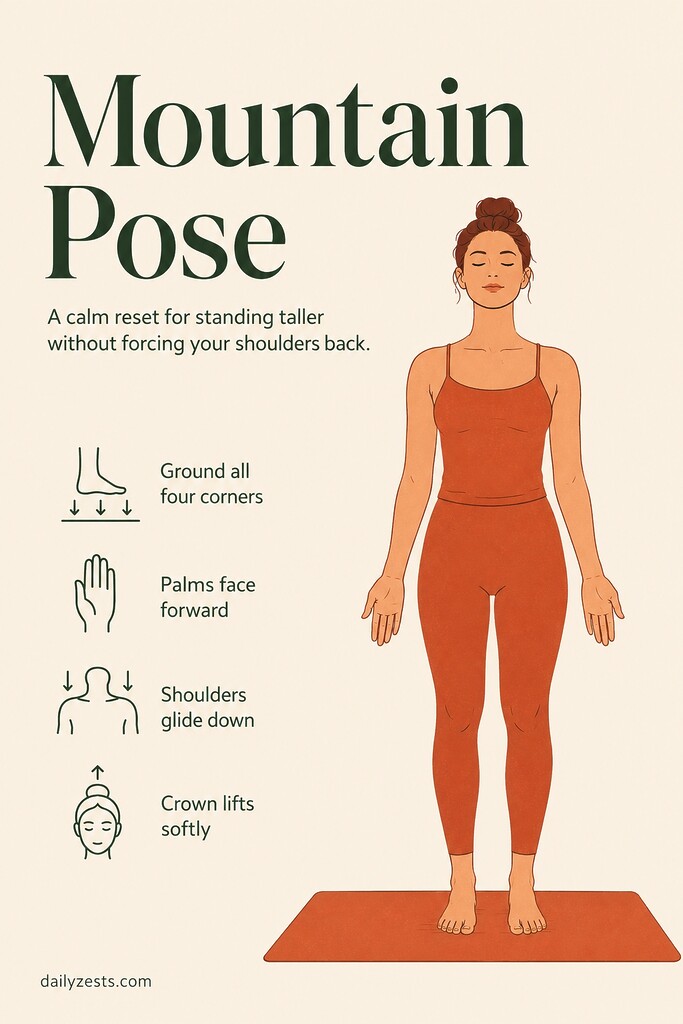
1. Mountain Pose (Tadasana)
It feels a little silly to call standing a yoga pose, but Mountain Pose is the foundation of good posture. We rarely just stand. We lean on one hip, we lock our knees, or we jut our chins forward.
To find this pose, stand with your feet hip-width apart. Lift your toes, spread them wide, and place them back down. Feel the ground under all four corners of your feet. Let your arms hang by your sides with your palms facing gently forward, this simple hand rotation naturally encourages your collarbones to broaden. You don’t need to squeeze your shoulder blades together. Just let them glide down your back.
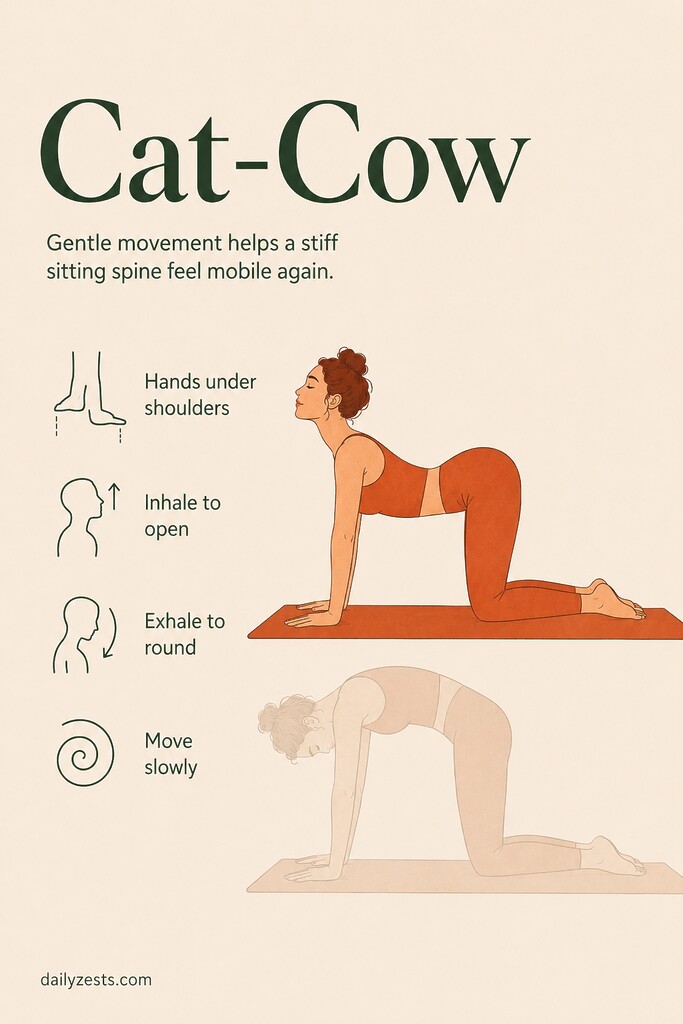
2. Cat-Cow (Marjaryasana-Bitilasana)
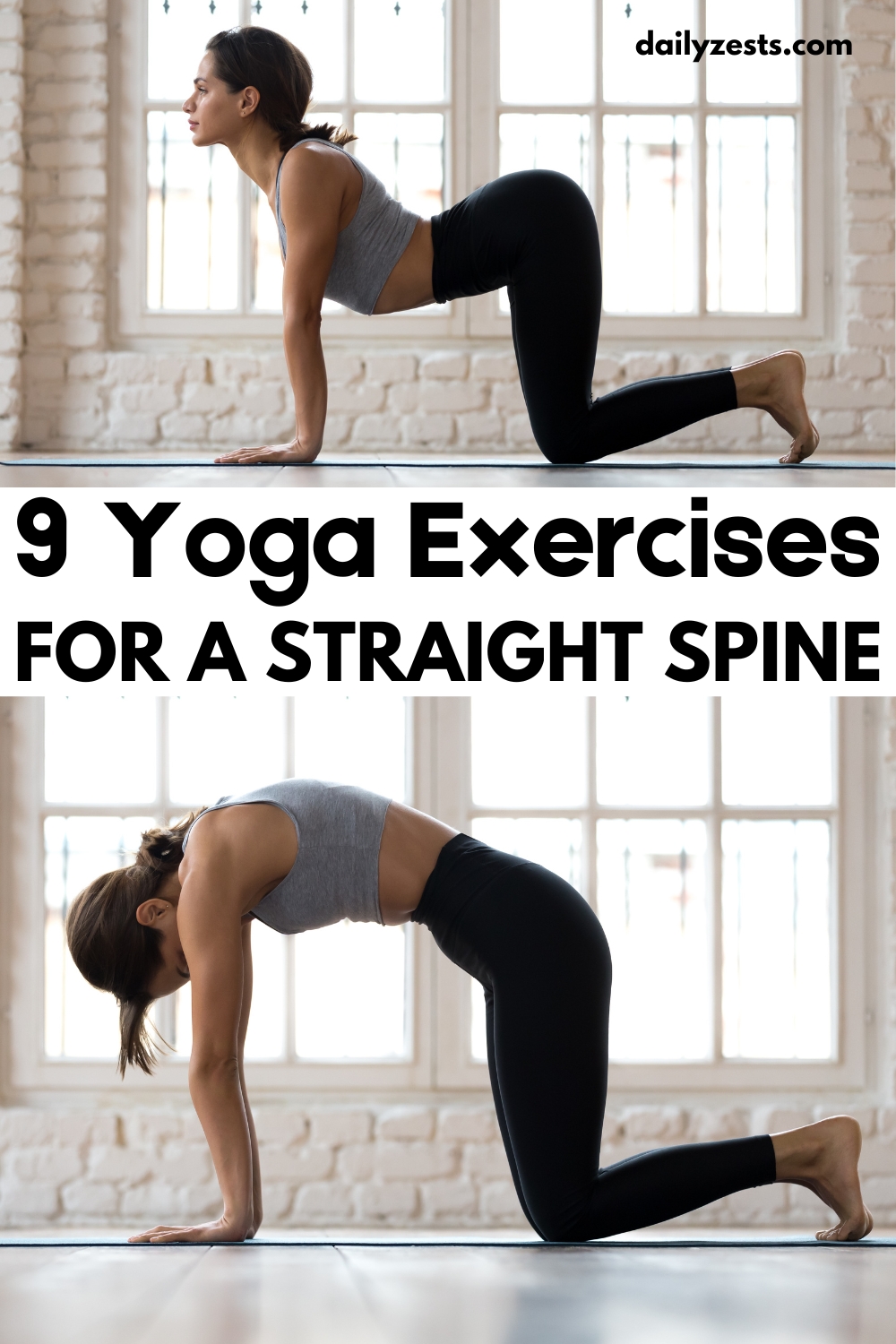
This is arguably one of the most effective yoga poses for posture because it brings gentle movement to the entire length of the spine. When we sit all day, our spinal tissues can start to feel compressed and stiff. Cat-Cow acts like a gentle massage for your back.
Start on your hands and knees. As you inhale, drop your belly toward the floor, lift your tailbone, and draw your chest forward (Cow). As you exhale, press into your hands, round your spine up toward the ceiling, and tuck your chin (Cat). Move slowly, letting your breath dictate the speed of the movement. Five or six rounds usually do the trick.
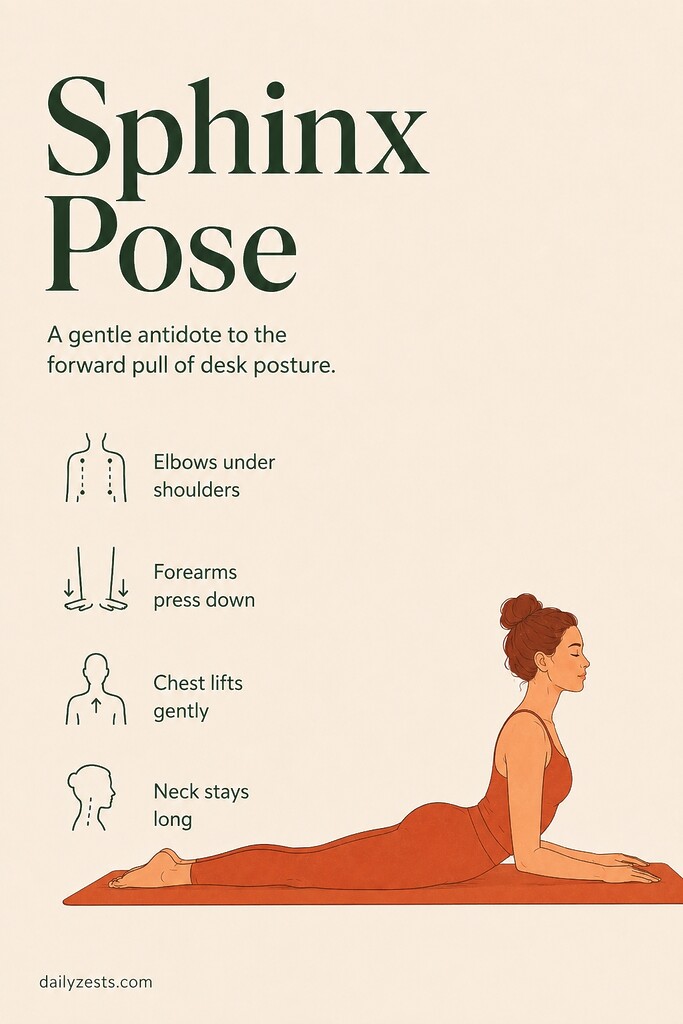
3. Sphinx Pose (Salamba Bhujangasana)
If you spend your day hunched forward, Sphinx pose is the perfect antidote. It offers a supported, passive backbend that opens the chest without putting intense pressure on the lower back.
Lie on your stomach and bring your elbows under your shoulders, forearms flat on the mat. Press down through the tops of your feet and gently lift your chest. A common mistake here is letting your neck slump into your shoulders. Press firmly into your forearms to keep your neck long, as if a string is pulling the crown of your head toward the ceiling.
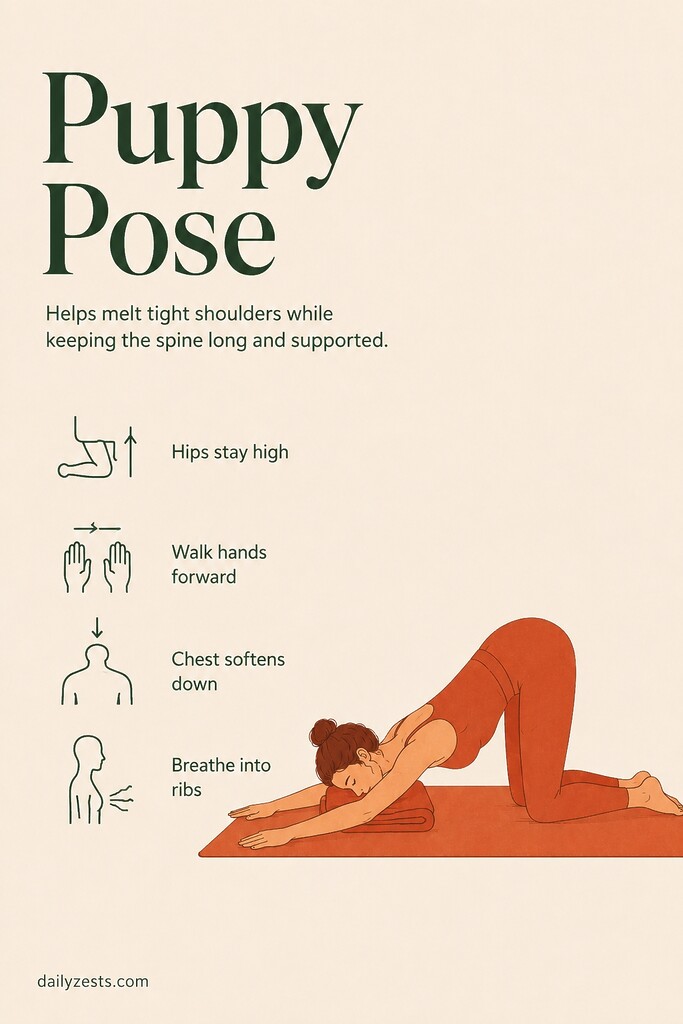
4. Puppy Pose (Uttana Shishosana)
Puppy pose is a cross between Child’s Pose and Downward Dog, and it is brilliant for melting tension in the upper back and shoulders.
Start on all fours. Keep your hips stacked directly over your knees, and slowly walk your hands forward until your arms are straight. Let your chest and forehead sink toward the floor. You should feel a deep, satisfying stretch down the sides of your body and across your armpits. If reaching the floor is too much, rest your forehead on a folded blanket or a yoga block.
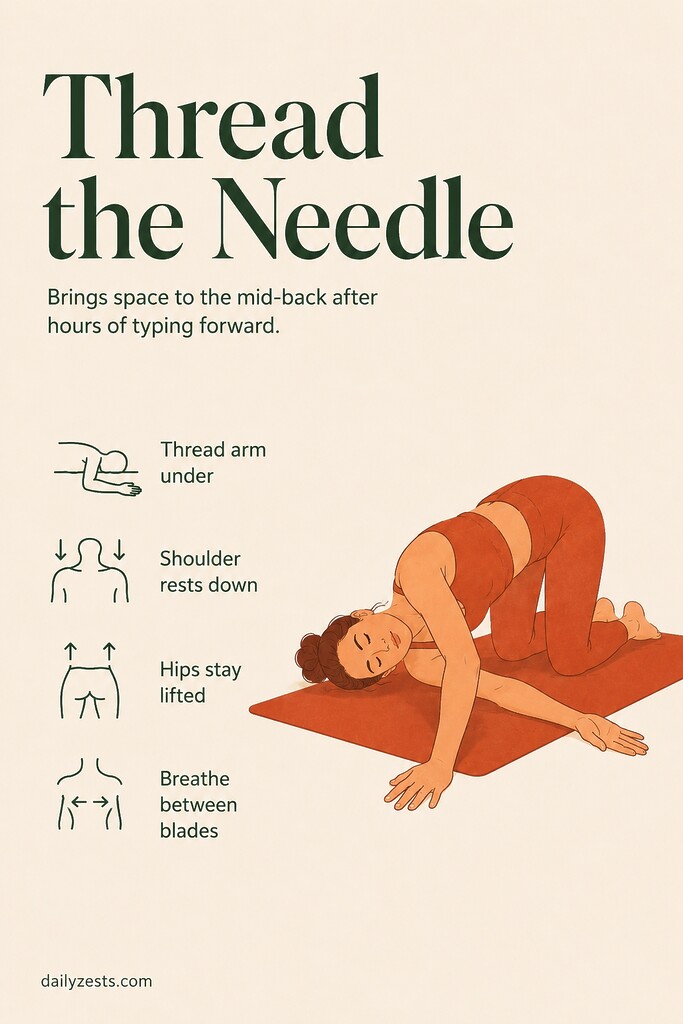
5. Thread the Needle (Parsva Balasana)
Our mid-backs (the thoracic spine) are designed to rotate, but typing at a desk completely shuts that rotation down. When the thoracic spine gets stiff, the neck can start to work harder, which can feed into pain.
From all fours, reach your right arm up toward the ceiling, opening your chest to the side. Then, sweep that right arm under your left arm, bringing your right shoulder and the side of your head to rest on the mat. Keep your hips high. Breathe into the space between your shoulder blades. Hold for three long breaths, then switch sides.
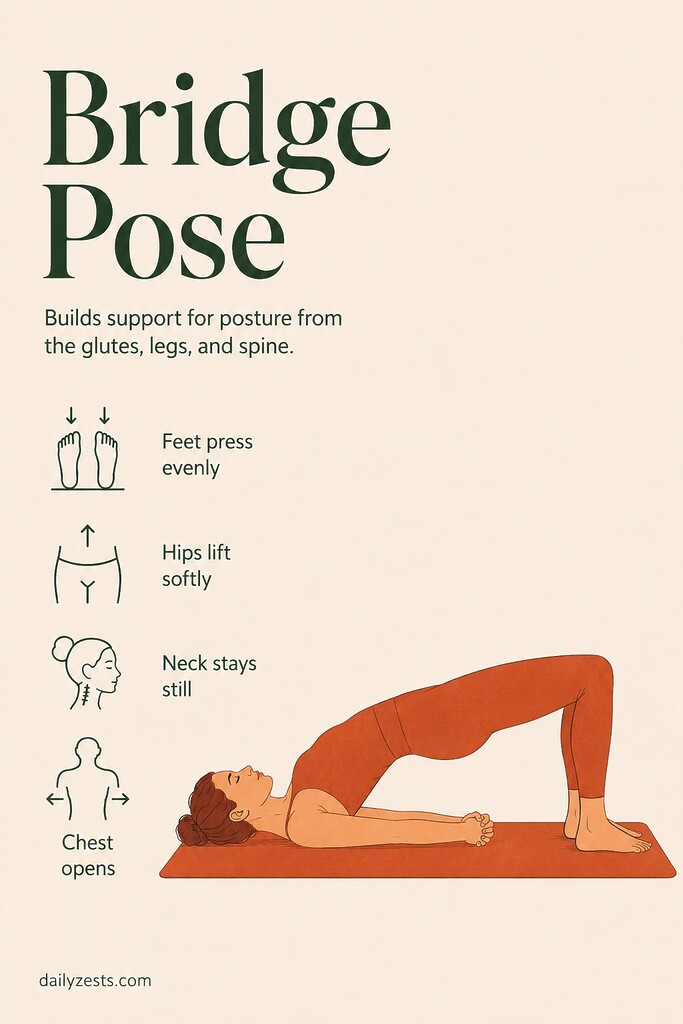
6. Bridge Pose (Setu Bandhasana)
You can stretch your chest all day, but if you want to use yoga for rounded shoulders long-term, you have to strengthen the back of your body. Bridge pose wakes up your glutes, hamstrings, and the stabilizing muscles along your spine.
Lie on your back with your knees bent and feet flat on the floor, close enough to your body that you can graze your heels with your fingertips. Press into your feet and lift your hips toward the ceiling. To deepen the chest opening, you can shimmy your shoulders underneath you and interlace your fingers on the mat. Don’t worry about how high your hips go; focus on pressing evenly through your feet and keeping your neck completely still.
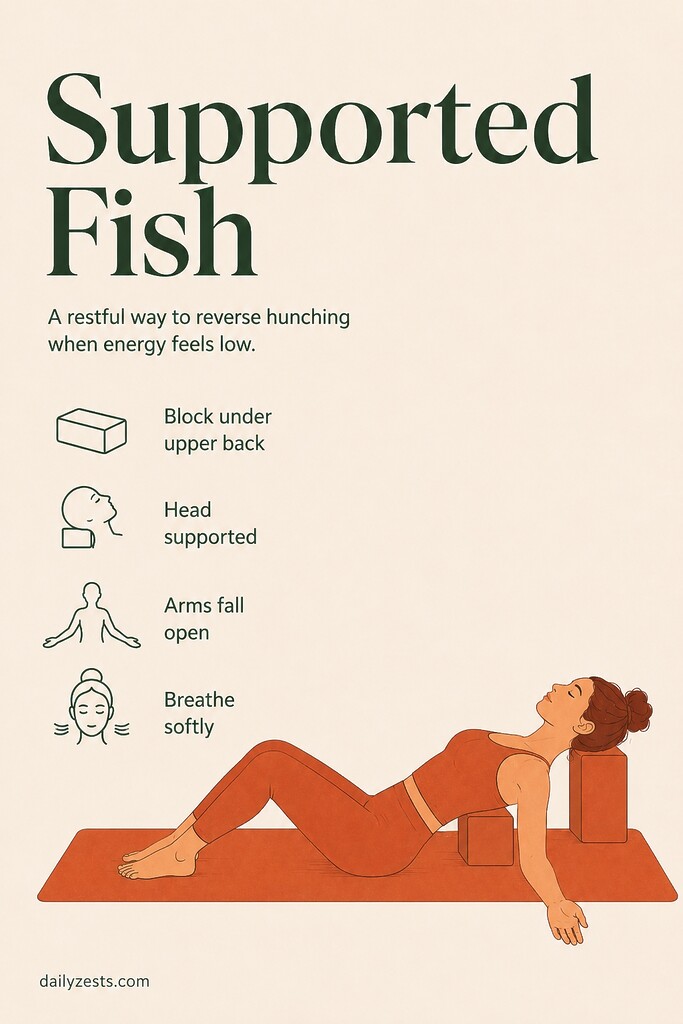
7. Supported Fish Pose (Matsyasana Variation)
This might be the most restorative pose on the list. When I am completely burnt out and don’t have the energy to actively hold a stretch, this is where I go.
You’ll need two yoga blocks (or two firmly rolled-up towels if you don’t have blocks). Place one block horizontally between your shoulder blades and the other under your head for support. Lie back, let your arms fall out to the sides, and just breathe. The blocks do all the work of reversing your hunch. Stay here for a few minutes and let gravity open your chest for you.
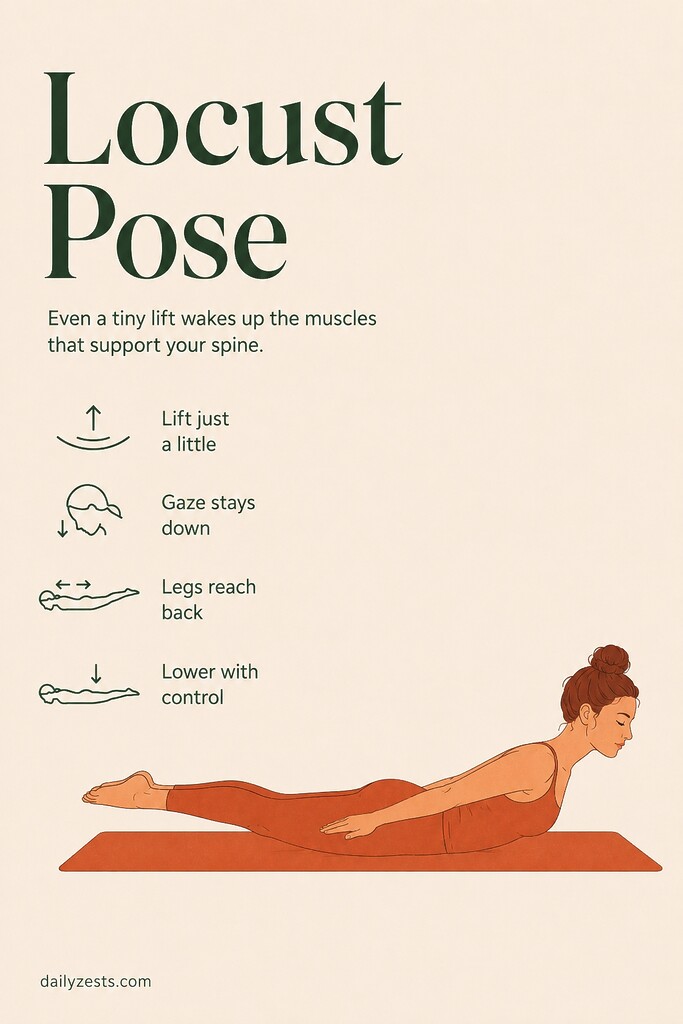
8. Locust Pose (Salabhasana)
Locust pose is pure work. It targets the erector spinae: the muscles running up your back that are responsible for keeping you upright.
Lie on your stomach with your arms resting alongside your body, palms facing down. On an inhale, lift your head, chest, arms, and legs off the floor. The hesitation a lot of people have here is feeling like they aren’t lifting high enough. Please don’t force it. Lifting even one inch off the mat engages the exact muscles you need. Keep your gaze down at the top edge of your mat so you don’t compress the back of your neck. Hold for a breath or two, then lower down with control.
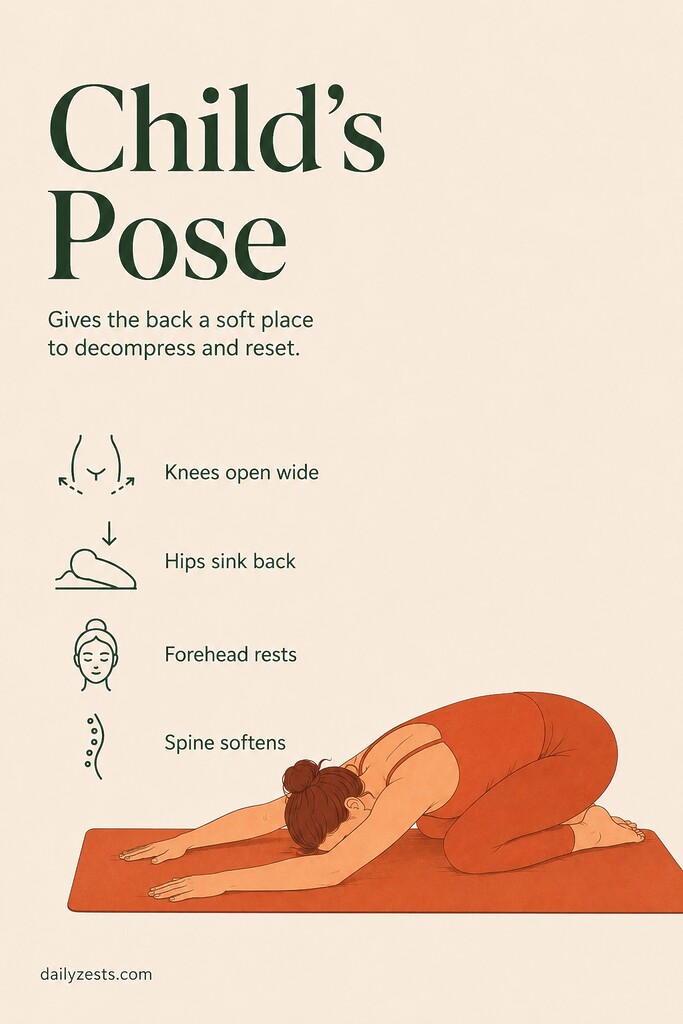
9. Child’s Pose (Balasana)
After asking your spine to extend, twist, and work, it needs a moment to settle.
Bring your big toes together, take your knees out wide, and sink your hips back onto your heels. Walk your hands forward and rest your forehead on the ground. Your spine gets to be long, soft, and completely supported here.
Taking care of your posture doesn’t have to mean constant vigilance and rigid rules. Sometimes, the best thing you can do for your spine is just lie down on the floor, take a deep breath, and let it decompress.
Kristina Hanson is an independent wellness researcher and the founder of DailyZests. She specializes in translating nutritional science into simple, delicious recipes that fit into real life. When she isn’t in the kitchen, you’ll find her hiking the trails or enjoying a slow morning coffee with her Golden Retriever, Barnaby. Read her full story.


 This post may contain affiliate links.