If you have spent any time hunched over a laptop or scrolling on your phone today, the back of your neck is probably letting you know. I know mine does. But before you reach back to rub that familiar ache, we need to talk about strengthening, not just stretching.
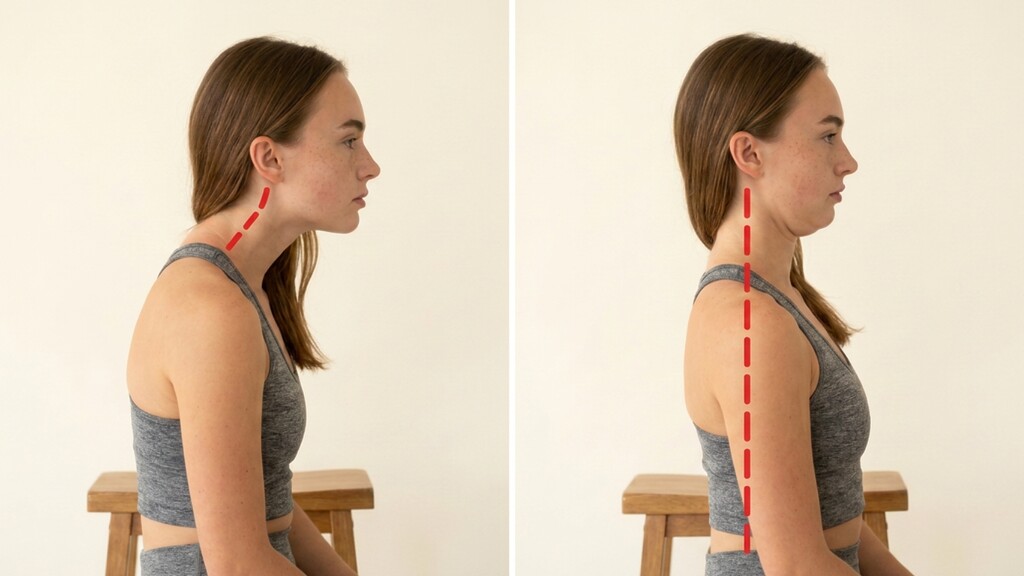
As someone who spends hours deep in research at my desk, my default posture used to resemble a turtle peering out of its shell. This forward-head position is incredibly common, and it is often tied to weaker performance in a very specific group of muscles: the deep cervical flexors, which sit right at the front of your neck.
Most of us instinctively try to stretch the back of our necks when they feel tight. But honestly, those back muscles are already overstretched and exhausted from acting like bungee cords holding up our heavy heads all day. What they actually need is for the front muscles to wake up and do their share of the lifting.
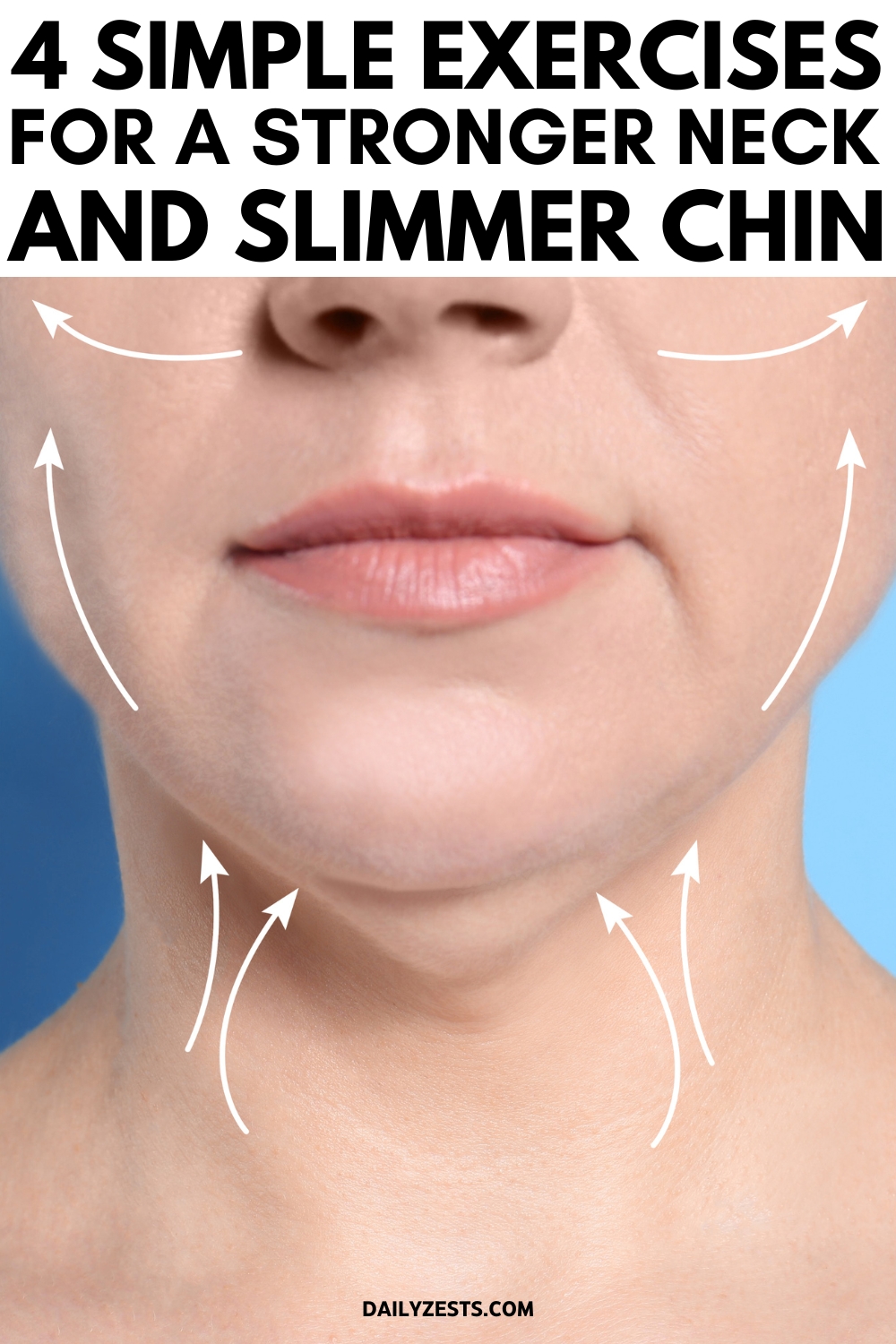
This is also where the aesthetic side comes in. Forward head posture pushes the jaw forward and down, creating slack in the tissue beneath the chin. If you are looking up chin tucks for double chin concerns, it helps to understand the mechanics. You aren’t spot-reducing fat by doing these movements. Instead, you are pulling your head back toward alignment, which can change how the tissue beneath your chin sits.
The 4 Chin Tucks (From Easiest to Most Advanced)
These four variations progress from fully supported to working against gravity. Start with the first one, and only move down the list when the movement feels completely natural and pain-free.
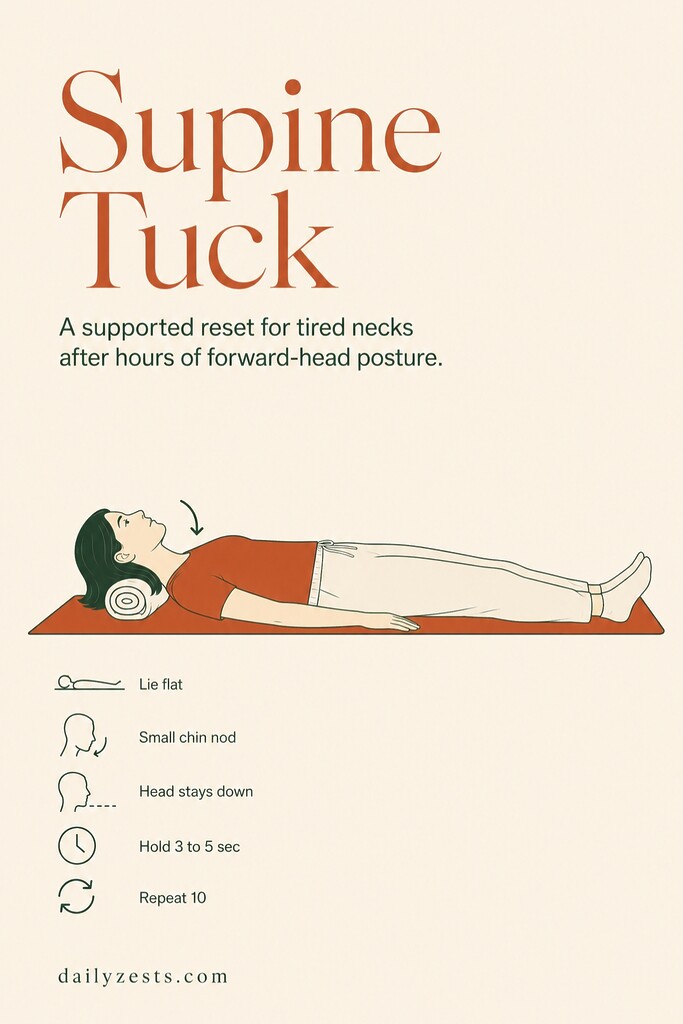
1. The Supine Tuck (Floor-Based)
Doing this exercise on the floor takes gravity out of the equation and gives your brain a physical boundary to press against.
Lie flat on your back on a yoga mat or firm rug, looking straight up at the ceiling.
If lying completely flat sends a pinch through your lower neck, roll up a small hand towel and slide it just under the natural curve of your neck for support.
Without lifting your head off the floor, gently pull your chin down toward your throat, as if you are nodding a tiny “yes.”
You should feel a gentle lengthening at the base of your skull.
Hold for 3 to 5 seconds, release, and repeat 10 times.
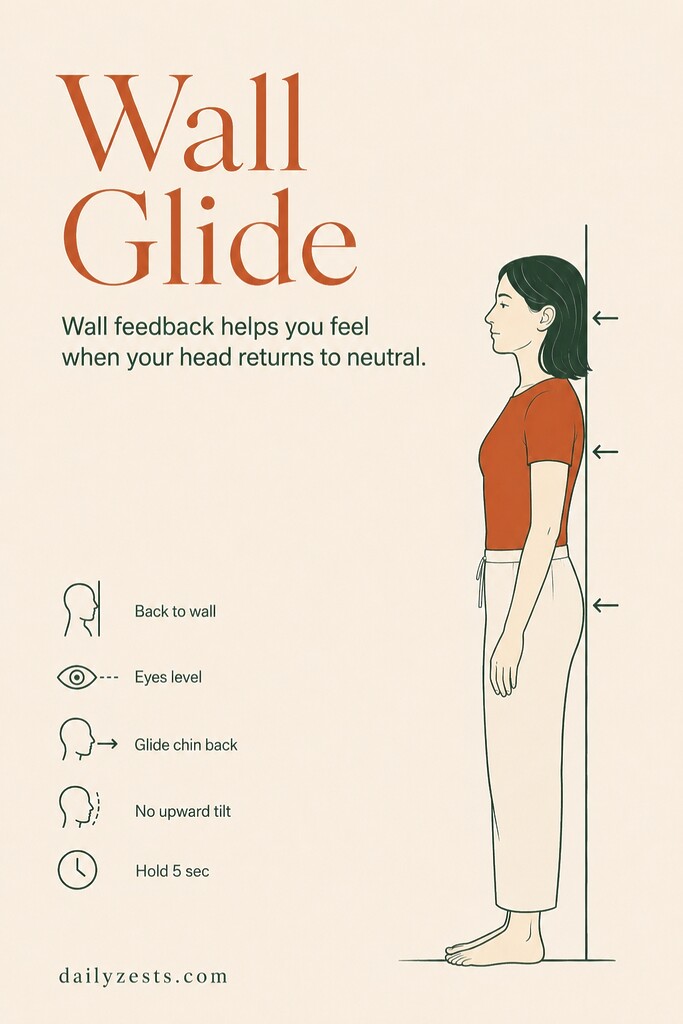
2. The Seated Wall Glide
Once the floor feels easy, bring it up to a wall. The wall provides excellent sensory feedback so you know exactly where your spine is in space.
Sit or stand with your back flat against a wall. Make sure your shoulder blades and your tailbone are making contact.
Look straight ahead. Draw your chin straight backward until the back of your head touches the wall. Do not tilt your chin up toward the ceiling.
Hold for 5 seconds, then relax.
A quick reality check for this one: you are going to give yourself a rather spectacular temporary double chin while holding this position. That means you are doing it perfectly. Let the muscle work, and just avoid doing this directly in front of a mirror if it bothers you.
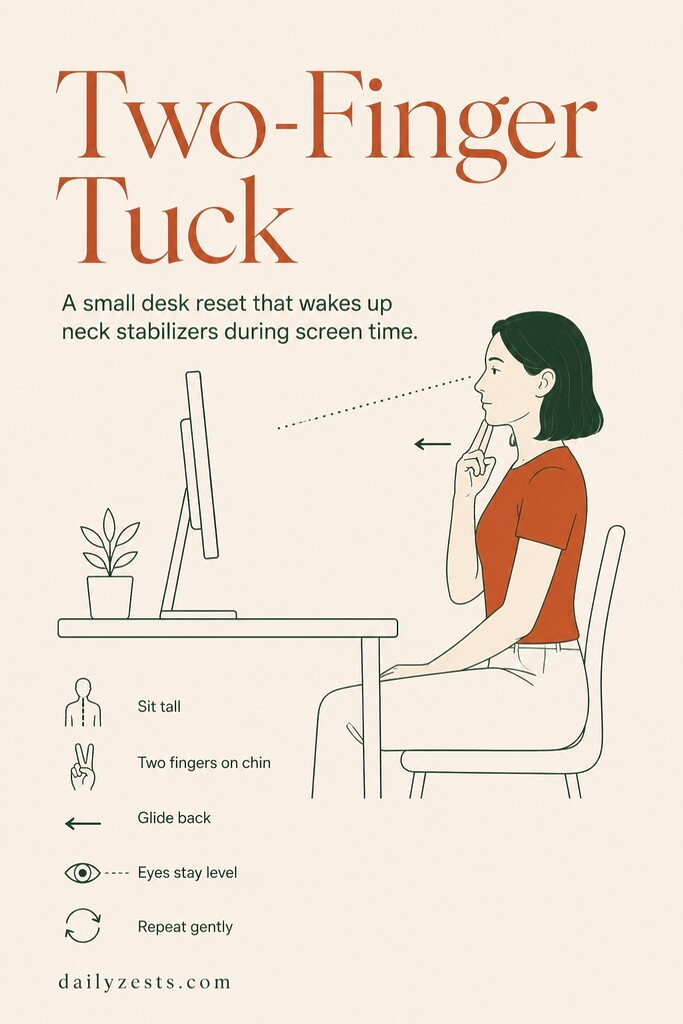
3. The Two-Finger Resistance Tuck
This is my favorite variation for the middle of a workday. It requires zero floor space and gives you just enough tactile resistance to wake the muscles up.
Sit tall at your desk. Place two fingers gently on the very front of your chin.
Push your chin straight back, pulling away from your fingers.
Keep your eyes level with your monitor; don’t let your gaze drop.
Hold for 3 seconds, let your chin glide forward to meet your fingers again, and repeat.
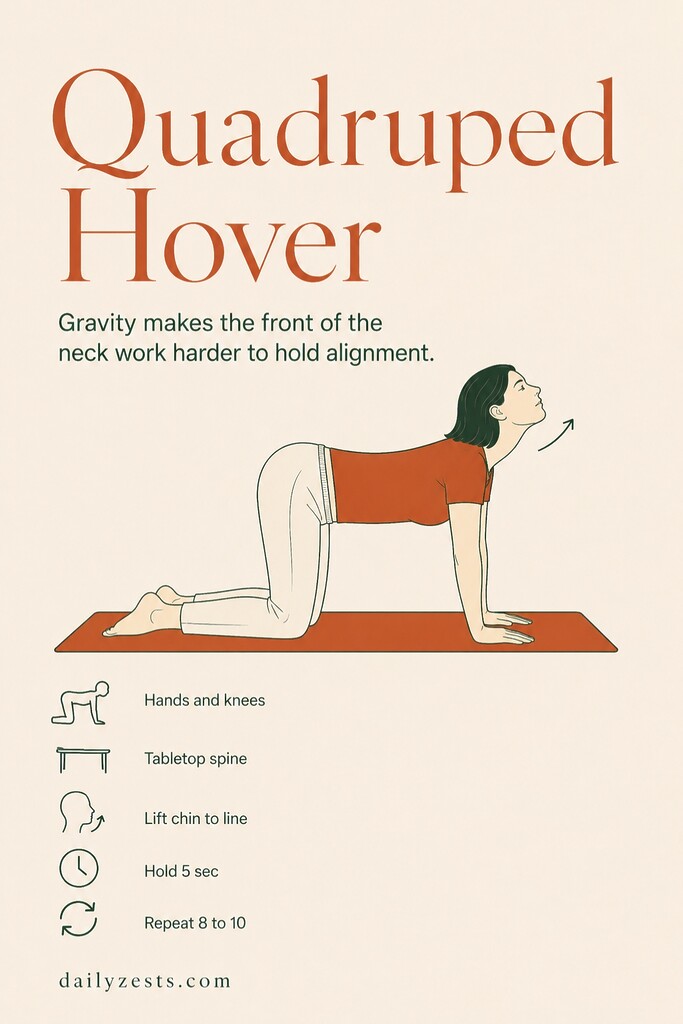
4. The Quadruped Hover
This is the most challenging variation because you are asking those deep flexor muscles to help control your neck while gravity is pulling on your head.
Get down on all fours on a comfortable mat. Keep your spine neutral, like a tabletop.
Initially, let your head sag slightly toward the floor.
Now, pull your chin straight up toward the ceiling, bringing your neck back into a perfectly straight line with your spine.
Hold this retracted position for 5 seconds. You will feel the front of your neck working much harder here.
Gently release and repeat 8 to 10 times.
Frequently Asked Questions
How often should I do chin tucks?
Consistency matters more than intensity. Doing 10 gentle repetitions twice a day is far more supportive of your posture than doing 50 of them on a Sunday and ignoring your neck the rest of the week. I usually tie them to a habit, like doing a set right after I finish my morning coffee.
Should these exercises hurt?
Never. You might feel an unfamiliar fatigue in the front of your neck or a mild stretching sensation at the base of your skull, but sharp pain is a signal to stop immediately. If you feel nerve pain down your arms, skip the exercise and check in with a physical therapist.
Can this actually change my profile?
It depends entirely on the root cause. If the softness under your chin is caused by forward head posture, pulling your cervical spine back into alignment will naturally lift the tissue and change how your jawline catches the light. It is a structural shift, and many find it makes a noticeable difference in how they look and feel.
Looking Up
Reprogramming how you hold your head takes patience. For years, your body has adapted to exactly how you sit, stand, and work. Gently asking it to find a new center of gravity won’t happen overnight.
But the payoff goes beyond just resting tension. When I take my dog Barnaby out for our evening walks now, I realize my natural gaze rests on the tree canopy instead of the pavement. That small shift in perspective (just being able to look forward comfortably) is absolutely worth a few awkward chin tucks against the wall.
Kristina Hanson is an independent wellness researcher and the founder of DailyZests. She specializes in translating nutritional science into simple, delicious recipes that fit into real life. When she isn’t in the kitchen, you’ll find her hiking the trails or enjoying a slow morning coffee with her Golden Retriever, Barnaby. Read her full story.





 This post may contain affiliate links.