If you’ve ever hesitated before taking the stairs or felt that familiar stiffness after sitting too long, you know how exhausting achy knees can be. But finding relief doesn’t require an hour at the gym. Sometimes, five minutes is all you need.
After a long Saturday hike with my Golden Retriever, Barnaby, my knees used to remind me of every single hill. For a long time, my instinct was just to sit still and wait for the stiffness to fade. But I eventually learned that total rest isn’t always the answer. Our joints actually crave gentle, intentional movement.
When we sit for extended periods, our joints can feel a bit like rusty hinges. Movement encourages synovial fluid, the body’s natural joint lubricant, to circulate. At the same time, waking up the muscles around the knee helps them absorb the shock of our daily footsteps, taking the pressure off the joint itself.
Research suggests that a consistent habit of gentle movement is one of the most effective ways to support joint comfort. And the best part? You don’t need equipment, and you don’t need to break a sweat. You just need five minutes.
As a quick reminder: I’m sharing what has worked wonderfully for me and many others, but I’m not a physical therapist. Always listen to your own body, and if you have a specific injury, it’s wise to clear new movements with your doctor first.
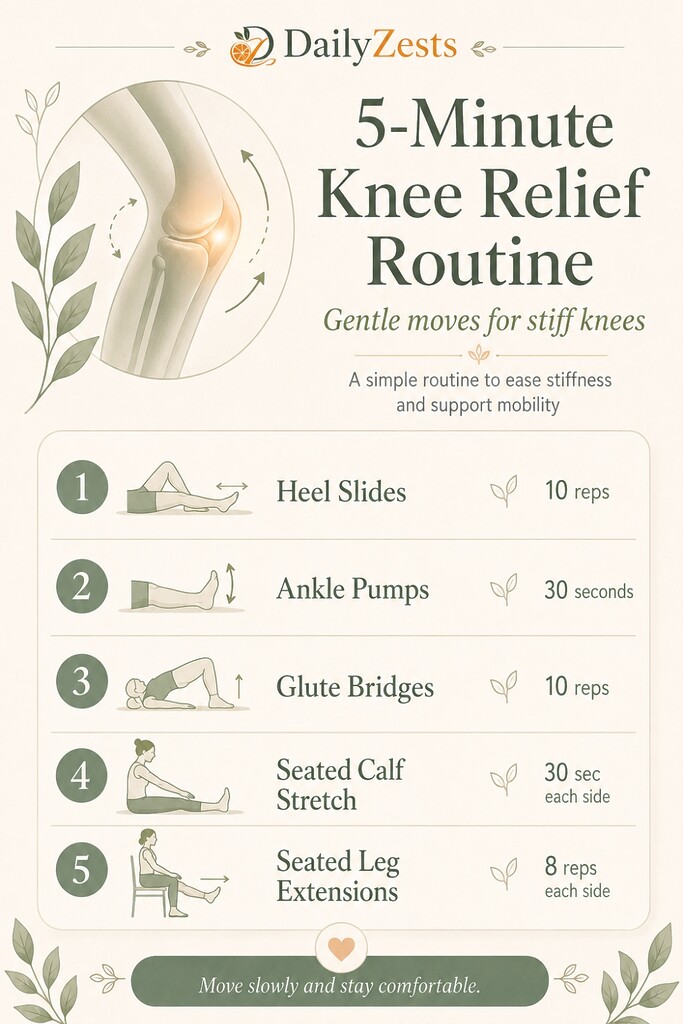
The 5-Minute Routine
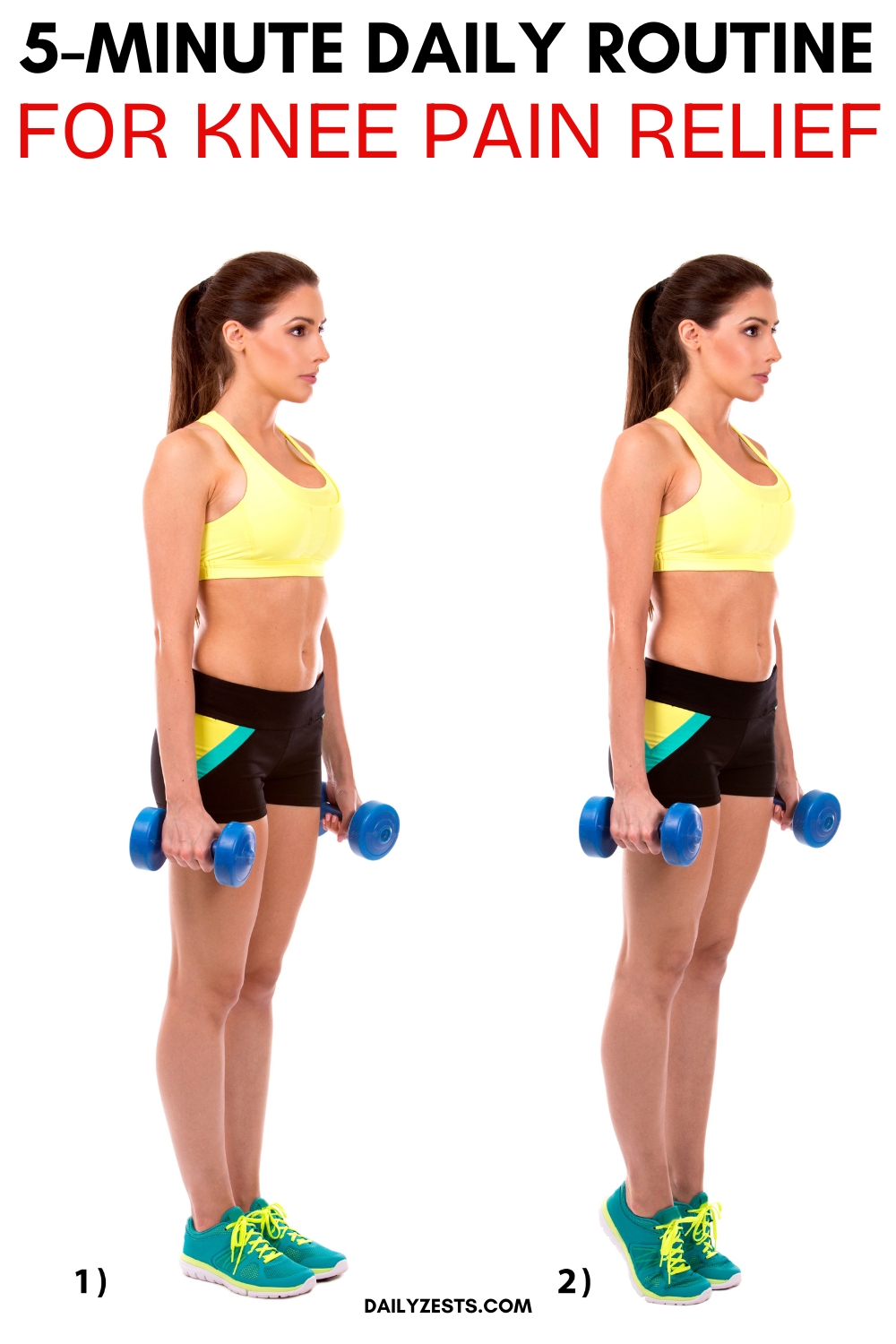
These knee pain relief exercises are designed to be done consecutively. Spend roughly one minute on each movement. You can do this sequence in the morning to wake up your joints, or in the evening to wind down.
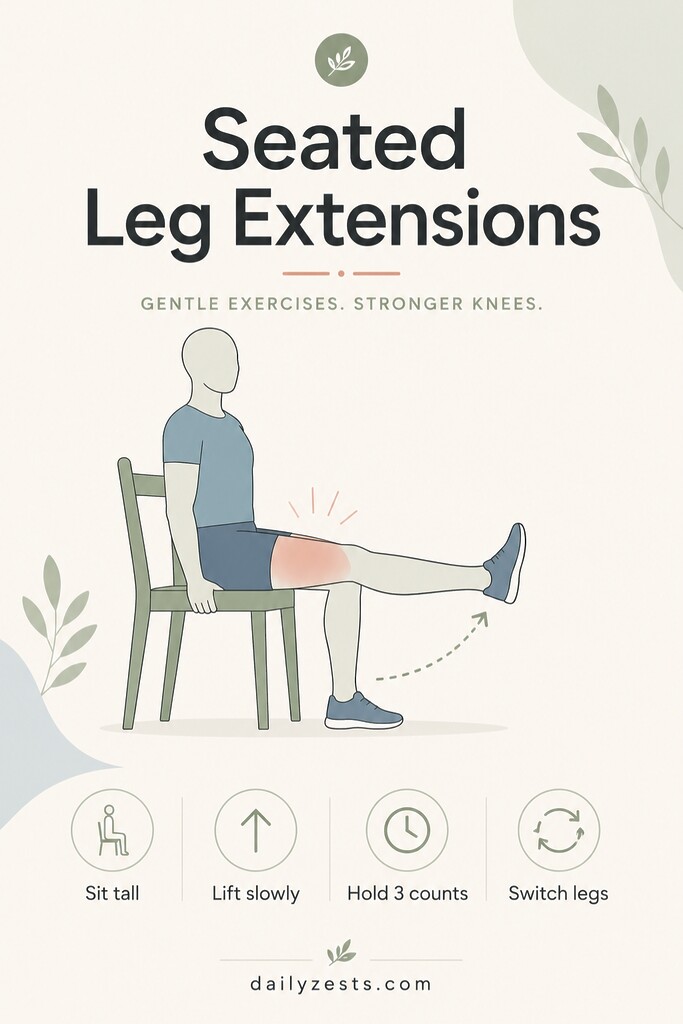
1. Seated Leg Extensions (1 Minute)
Sit comfortably on the edge of a sturdy chair with your feet flat on the floor. Slowly straighten your right leg, lifting your foot until your leg is parallel with the floor. Hold for a count of three, feeling the muscles in the front of your thigh engage, then slowly lower it back down. Switch to the left leg.
Why it works: This movement strengthens the quadriceps. When your quads are strong, they act like shock absorbers, helping with knee support and reducing some of the strain of daily movement. If you spend a lot of time sitting, pairing this with a few posture checks can make a surprising difference in how your lower body feels by 5 PM.
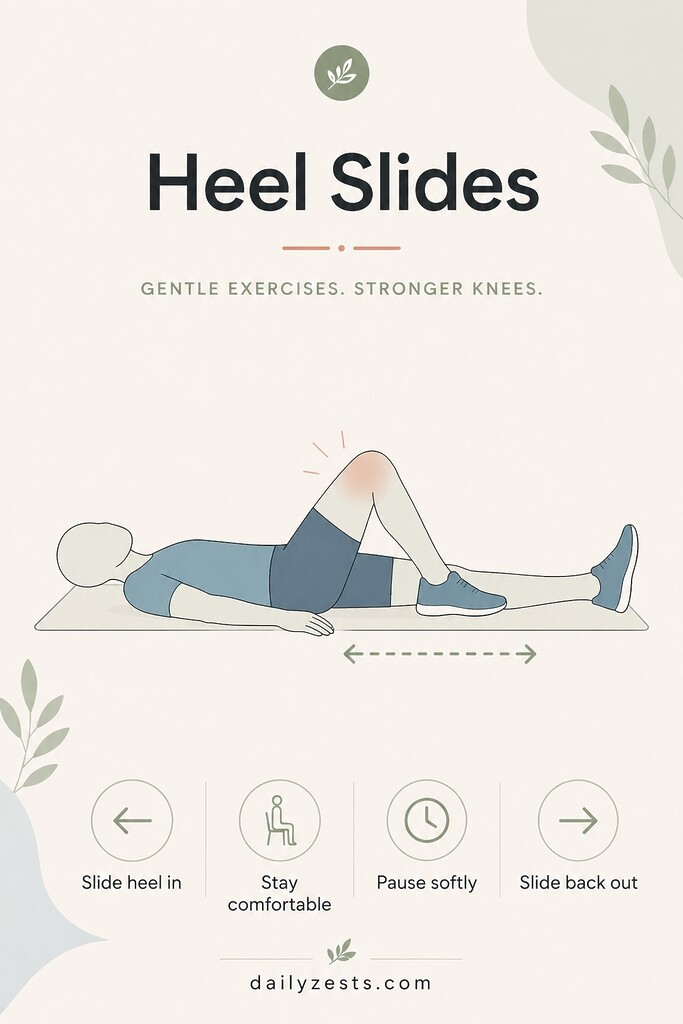
2. Heel Slides (1 Minute)
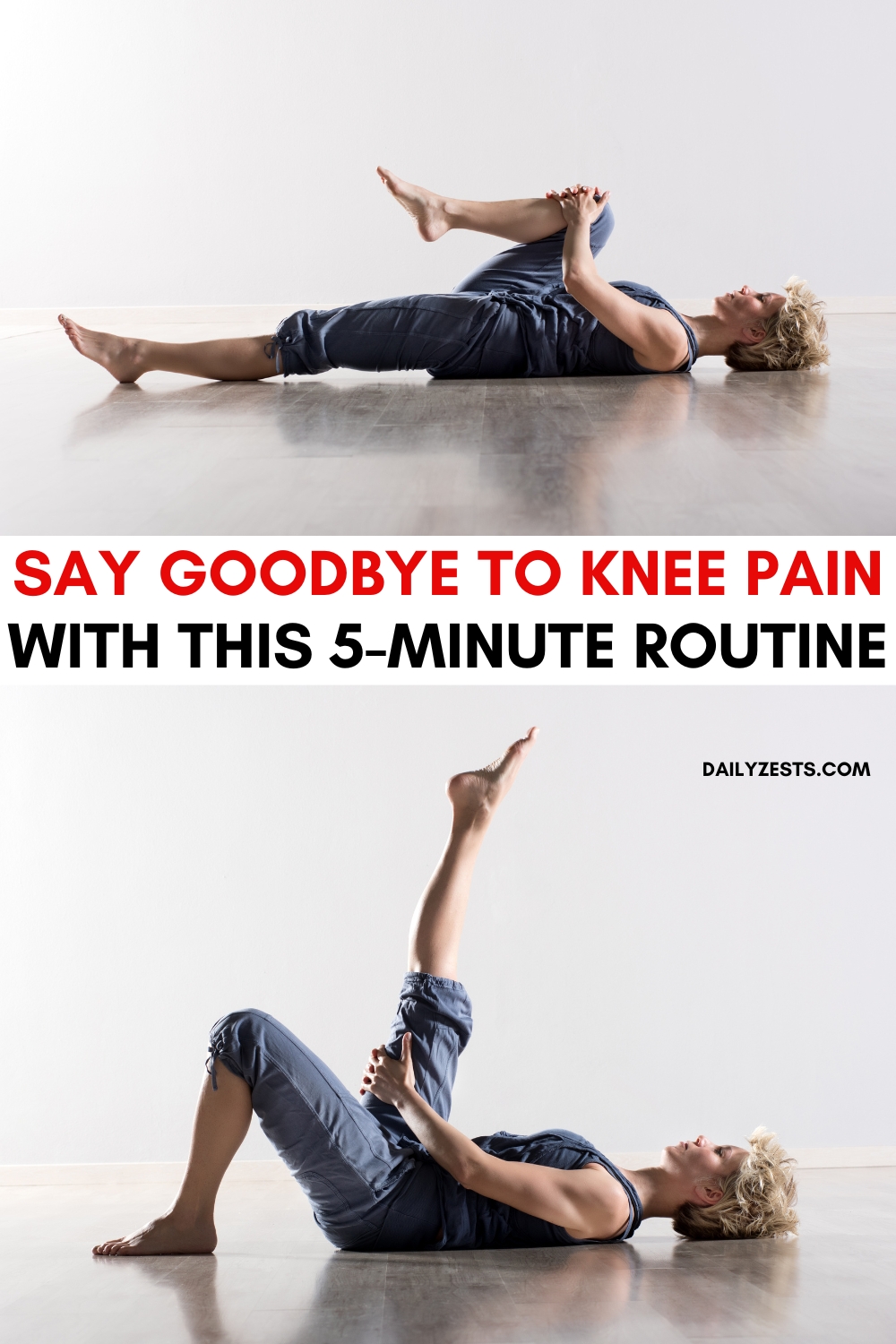
Lie on your back on a comfortable mat or your bed. Keep your left leg straight. Slowly slide your right heel toward your glutes, bending your knee as far as it comfortably goes without forcing it. Hold for a second, then slide the heel back out. Alternate legs for one minute.
Why it works: Heel slides gently encourage an active range of motion without asking the knee to bear your body weight. If floor-based movements feel restorative to your body, you might also enjoy the yoga poses highlighted in the related guide below.
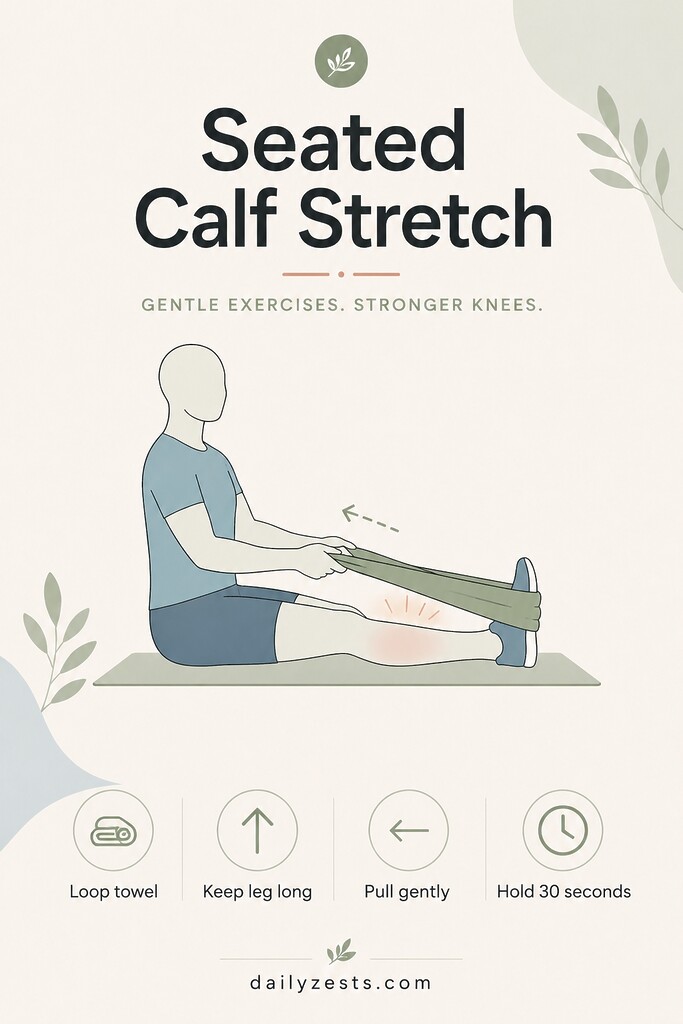
3. Seated Calf Stretches (1 Minute)
Sit on the floor or your bed with your legs extended in front of you. Loop a rolled-up towel or a stretching strap around the ball of your right foot. Gently pull back on the towel while keeping your leg relatively straight, until you feel a soft stretch in your calf. Hold for 30 seconds, then switch sides.
Why it works: Everything in the body is connected. Tight calf muscles can subtly limit ankle motion, which may change knee tracking when you walk. Keeping the calves loose gives the knee more freedom to move naturally.
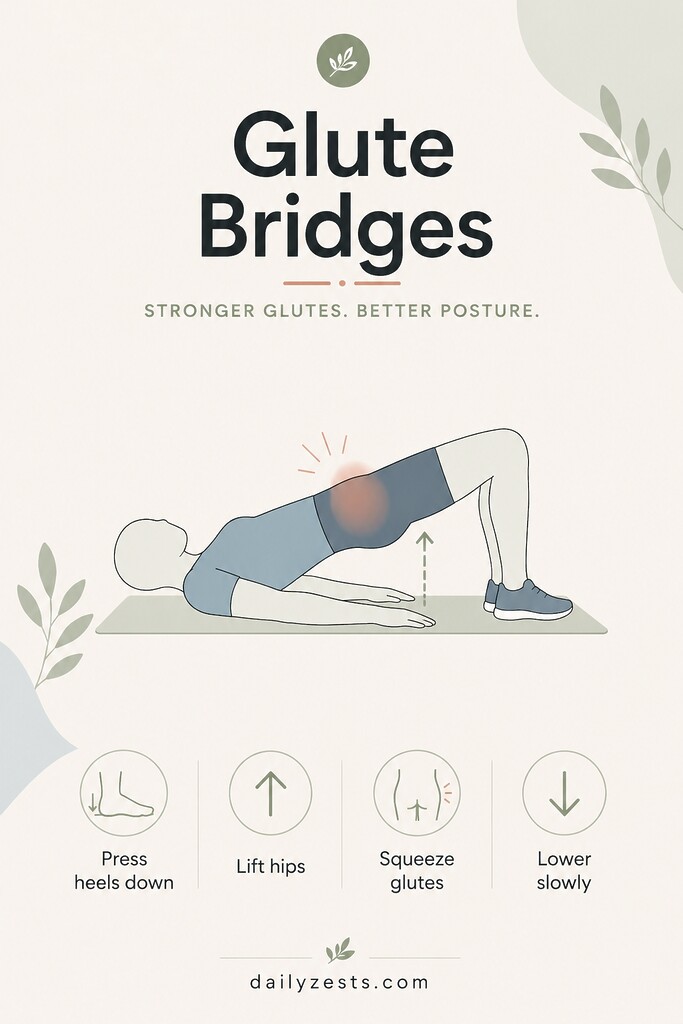
4. Glute Bridges (1 Minute)
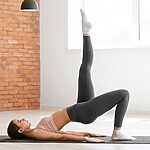
Lie on your back with your knees bent and feet flat on the floor, about hip-width apart. Press into your heels and gently lift your hips toward the ceiling until your body forms a straight line from your shoulders to your knees. Squeeze your glutes at the top, hold for a moment, and slowly lower down.
Why it works: Your glutes are the powerhouse of your lower body. When they are active and strong, they keep your pelvis stable and may help reduce the tendency for your knees to cave inward during daily activities. If you find this movement helpful and want to expand your routine, I highly recommend checking out the essential exercises in the helpful guide below.
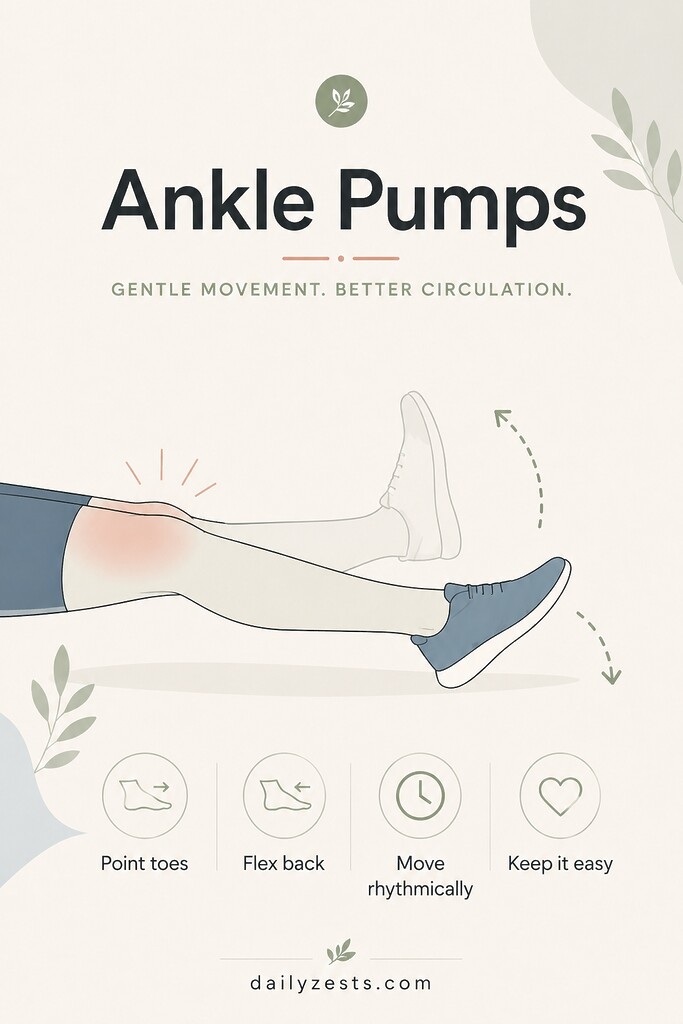
5. Ankle Pumps (1 Minute)
You can do this lying down or sitting. Simply point your toes away from you as far as comfortable, then flex them back toward your shins. Move rhythmically, almost like you’re pressing down and releasing a gas pedal. Do this continuously for one minute.
Why it works: It seems too simple to work, but ankle pumps are incredibly effective for promoting lower-leg circulation. Better circulation helps keep fluid moving through the tissues surrounding your knees.
Frequently Asked Questions
Is it normal if my knees pop during these exercises?
Yes, mild popping or clicking without pain is usually not a concern. It is often just gas bubbles shifting in the joint fluid or a tendon sliding over a bone. However, if the popping is accompanied by sharp pain or swelling, you should pause the movement and consult a doctor.
Should I push through the pain to get stronger?
Never push through sharp or pinching pain. Gentle muscle fatigue or a mild stretching sensation is fine, but pain is your body’s way of asking you to stop. Always back off the stretch or reduce the range of motion until the movement feels comfortable.
Can I do this routine multiple times a day?
For many people, yes. Because these movements are gentle and low-impact, many people find it helpful to do them once in the morning to wake up the joints, and again in the evening or after a long period of sitting, as long as the movements stay comfortable.
A Final Thought on Joint Comfort
Taking care of your body shouldn’t feel like a punishment or another massive item on your to-do list. Five minutes of kindness to your joints can set the tone for your entire day.
And remember, physical movement is just one piece of the puzzle. Supporting your body from the inside out matters too. Lately, I’ve been loving adding a few anti-inflammatory spices to my meals as an extra layer of support. Start small, be patient with your body, and celebrate the fact that you showed up for yourself today.
Kristina Hanson is an independent wellness researcher and the founder of DailyZests. She specializes in translating nutritional science into simple, delicious recipes that fit into real life. When she isn’t in the kitchen, you’ll find her hiking the trails or enjoying a slow morning coffee with her Golden Retriever, Barnaby. Read her full story.


 This post may contain affiliate links.