There is a highly specific, quiet misery to waking up feeling entirely stuck. When your digestion stalls and the heavy bloating sets in, it is incredibly hard to focus on anything else. But rather than aggressively forcing your system with harsh remedies, you can gently invite your body to wake up.
For years, while trying to find answers for my own chronic fatigue, I didn’t realize how much my sluggish physical energy mirrored my sluggish digestion. I would try rigid cleanses out of pure frustration, only to end up feeling worse. It wasn’t until I stopped fighting my body and started paying attention to its actual rhythms that things began to shift.
Health should never feel like a punishment. If you are looking for constipation and bloating relief today, the goal is to support your natural digestive mechanics, not override them. Here is what I have learned about getting things moving again.
How to Coax Your Digestion Awake
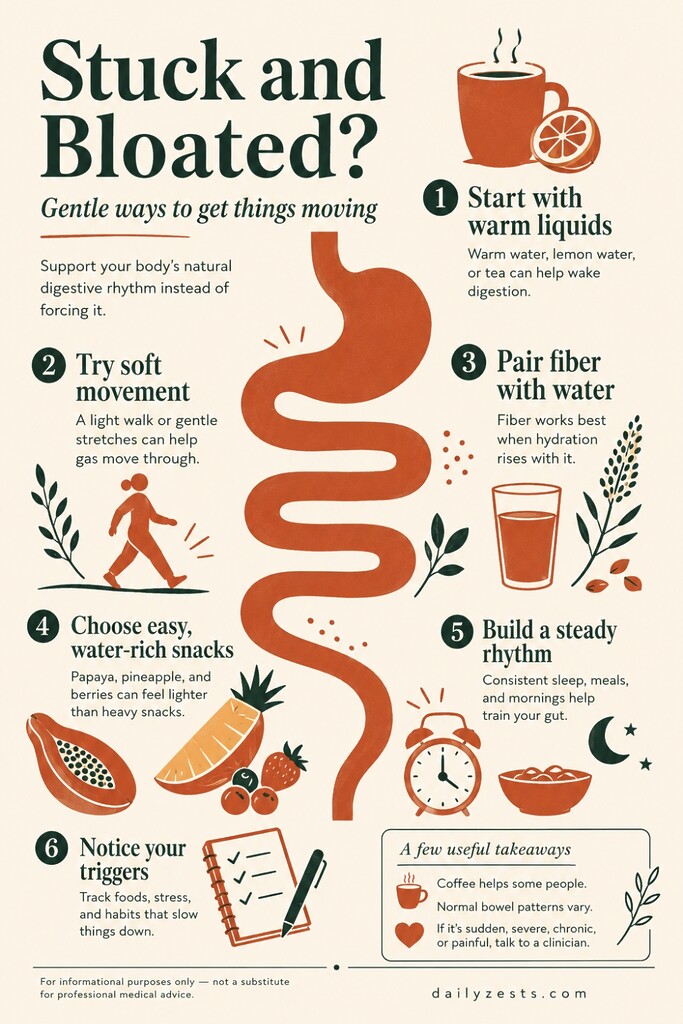
1. Start with Warm Liquids
When you are feeling backed up, a massive glass of ice water might sound refreshing, but it is rarely what your gut needs. Think about how your muscles react to cold: they contract and tense up. Your digestive tract is entirely lined with muscle.
Why it works: A warm drink can gently stretch the stomach and help trigger the gastrocolic reflex, which can stimulate peristalsis (the wave-like movements that push food through your system). A warm cup of water with a little lemon, or simply plain hot water, is a soothing way to signal to your body that it is time to wake up. It is why my slow morning coffee on the porch with my dog, Barnaby, isn’t just a mental break: it is a functional part of my digestion.
2. Try Light, Intentional Movement
When you feel heavily bloated, the absolute last thing you probably want to do is a high-intensity workout. Luckily, you don’t need to. Gentle stretching and light physical movement can encourage gas to move through your digestive tract and release, which fits with one study.
Walking is wonderful for this, but if you want something you can do on your living room rug, certain stretches are specifically known to support gut motility. If you aren’t sure where to start, a simple sequence of yoga poses often provides exactly the gentle compression and release your abdomen needs.
3. Give Your Fiber the Water It Demands
We are constantly told that fiber is the ultimate fix for constipation. And while finding easy ways to increase your fiber intake is incredibly supportive of long-term gut health, piling dry bran onto a stuck system can actually make the bloating much worse.
Why it works: Soluble fiber acts like a sponge in your digestive tract. It absorbs water to create a soft gel, which makes everything easier to pass, and medical guidance makes the same point for constipation care. But if you eat the sponge without drinking the water, it just sits there. If you are increasing your fiber to get things moving, you must increase your hydration right alongside it.
4. Rethink Your Snacking Habits
When you feel bloated, it is tempting to just stop eating entirely until the feeling passes. But skipping meals completely can sometimes cause your digestion to slow down even further. Instead of fasting, try reaching for whole, water-rich foods that demand very little digestive effort from your body.
Foods rich in natural enzymes, like pineapple or papaya, can be incredibly soothing. If you need inspiration that won’t leave you feeling heavier, keeping a few gut-friendly snacks on hand can help keep your metabolism humming without overwhelming a sluggish system.
5. Build a Rhythm Your Body Can Trust
Your digestive system loves predictability. It operates on a circadian rhythm, much like your sleep cycle, a pattern described in recent research. If you eat, sleep, and wake at wildly different times every day, your gut often struggles to know when it is supposed to do its job.
Establishing just a few morning habits to improve digestion (like waking up at the same time and having your warm drink before checking your phone) can train your body to expect a bathroom trip at a specific hour.
6. Notice the Quiet Signals
Sometimes, getting stuck isn’t about what you are lacking, but what you are unintentionally introducing. We all have different foods, stressors, or habits that cause our individual systems to hit the brakes. Identifying the common triggers that upset your gut takes a little patience, but it is profoundly empowering once you learn your own unique map.
Frequently Asked Questions About Digestive Relief
Does coffee actually help with constipation?
For many people, yes. Research suggests that coffee can stimulate the muscles of your digestive system within minutes in some people, according to one study. However, because coffee is also a mild diuretic, it is important to drink a glass of water alongside it so you don’t accidentally dehydrate your system further.
How long is too long to go without a bowel movement?
Normal digestive rhythms vary wildly from person to person. Some people naturally go three times a day, while others go three times a week. Generally, experts agree that going fewer than three times a week, especially if accompanied by hard stools or severe bloating, is a sign that things have slowed down too much, which matches NIH guidance.
Will walking actually relieve my bloating?
Walking is one of the most effective, gentle ways to relieve trapped gas. The physical rhythm of your steps, combined with being upright, helps move gas bubbles through your digestive tract much faster than lying down on the couch.
A quick note from my kitchen to yours: While these practical adjustments are what worked for me to support my daily digestion, I am a researcher, not a doctor. If your constipation is sudden, severe, chronic, or accompanied by sharp pain, please reach out to a healthcare professional; NIH guidance makes this same point. Sometimes a sluggish gut is just a sluggish gut, but occasionally it is a sign that your body needs a clinician’s care.
Be kind to yourself today. Your body is doing the best it can, and sometimes, it just needs a quiet, comforting invitation to get back to work.
Kristina Hanson is an independent wellness researcher and the founder of DailyZests. She specializes in translating nutritional science into simple, delicious recipes that fit into real life. When she isn’t in the kitchen, you’ll find her hiking the trails or enjoying a slow morning coffee with her Golden Retriever, Barnaby. Read her full story.



 This post may contain affiliate links.