For years, the bathroom scale felt like a broken promise. I would cut calories, track every single bite, push myself through exhausting workouts, and watch the number stubbornly refuse to budge. If you are living with Polycystic Ovary Syndrome, you probably know that exact feeling of deep frustration. It is incredibly isolating to do everything “right” and see no physical change.
I spent a long time believing I just lacked willpower. It took years of reading the research and listening to my own body to realize I was fighting a hormonal battle, not a character flaw. This is the story of my PCOS weight loss journey, and the gentle shifts that finally allowed my body to let go of the weight.
Most popular weight-loss advice boils down to eating less and moving more. For someone with typical metabolic function, that math usually checks out. For a body dealing with PCOS, that advice can actually make things worse.
PCOS changes how the body handles insulin. When we eat, our bodies produce insulin to help shuttle glucose into our cells for energy. But research on PCOS and insulin resistance suggests that many women with PCOS are insulin resistant. Our bodies have to pump out extra insulin to get the job done. High insulin levels signal the body to store fat and hold onto it tightly. It also triggers intense cravings and endless fatigue.
When I was severely cutting calories, my body thought it was starving. My stress hormones spiked, my metabolism slowed down, and the weight stayed right where it was. I had to stop trying to starve my body into submission. I needed to nourish it into balance.
A quick note before we get into the details: I am a researcher and someone who has walked this path, not a doctor. I am sharing the habits that proved supportive of my own health. Always consult with your own healthcare provider before making major changes to your routine.
What Actually Worked for My Body
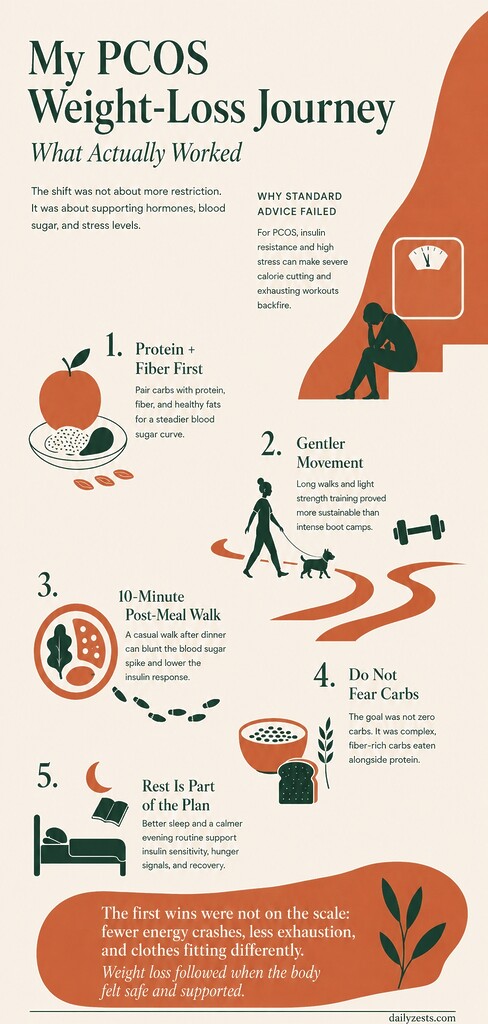
The turning point in my PCOS weight loss journey was shifting my focus away from restriction. Instead of looking at my plate and thinking about what I needed to remove, I started asking what I needed to add to support my hormones.
1. Building Meals Around Protein and Fiber
I used to start my day with a bowl of plain oatmeal, thinking it was the healthiest choice. By 10:00 AM, I was starving and shaky. Now, I understand that carbohydrates alone cause a rapid rise in blood sugar, followed by a crash that leaves you exhausted.
I started pairing my carbohydrates with heavy hitters: protein, fiber, and healthy fats. This combination slows down digestion. It allows glucose to enter the bloodstream at a slow, steady trickle instead of a rushing waterfall. That keeps the blood sugar curve much quieter.
Practically, this meant simple changes. If I wanted an apple, I paired it with a handful of almonds. I started adding a scoop of unflavored protein powder to my morning coffee before taking my dog, Barnaby, out to the porch. I made sure every lunch and dinner had a solid source of protein and a large serving of fibrous vegetables.
2. Letting Go of Extreme Workouts
For a long time, I thought sweating through high-intensity boot camps was the only way to earn a smaller body. I would leave the gym feeling completely depleted, and I would stay sore for days.
Here is the gentle truth about PCOS. We are often already operating with a higher baseline of cortisol (the stress hormone). Intense, prolonged cardio can push that cortisol even higher. When cortisol stays elevated, the body responds by holding onto weight, particularly around the midsection.
I canceled my intense gym membership. I swapped those grueling sessions for long, brisk walks in my local nature preserve and gentle strength training two days a week. Building muscle is incredibly helpful because muscle tissue uses glucose efficiently, which helps keep blood sugar stable. But walking was the real magic. It lowered my stress, improved my insulin sensitivity, and felt completely sustainable.
3. Walking After Meals to Blunt the Spike
One of the most practical habits I picked up was the 10-minute post-meal walk. Whenever possible, I try to move my body shortly after eating dinner. You do not need to break a sweat. A casual stroll around the block or even doing some vigorous garden cleanup is enough to tell your muscles to soak up the glucose from your meal.
This simple habit cuts down the post-meal blood sugar spike significantly. When the spike is smaller, the body produces less insulin. It is a tiny, almost effortless adjustment that pays massive dividends over time.
4. Moving Past the Fear of Carbs
It is very common to hear that people with PCOS should completely eliminate carbohydrates. I tried extreme low-carb diets. They “worked” for a few weeks, but I was miserable. My brain felt foggy, my energy tanked, and eventually, I would give in to massive cravings.
You might be worried that eating any carbohydrates will ruin your progress. I had to unlearn that fear. Our bodies prefer to run on glucose, and completely depriving ourselves usually backfires. The secret was not zero carbs. The secret was choosing complex, fiber-rich carbohydrates and always eating them alongside protein.
5. Prioritizing Rest Over Hustle
We rarely talk about sleep in the context of weight loss. But a single night of poor sleep can drastically reduce your body’s sensitivity to insulin the next day. It also ramps up the hormones that make you feel hungry while suppressing the signals that tell you when you are full.
I stopped treating sleep as a luxury. I set a firm boundary with my evening routine, turning off screens an hour before bed and reading a physical book. It sounds too simple to matter, but a calm nervous system is an absolute requirement for healthy hormones.
Trusting the Process
The hardest part of this journey was the pacing. The weight did not melt off overnight. There were weeks when the scale stayed exactly the same, and the old urge to slash calories would creep back in.
But the non-scale victories arrived much faster. My afternoon energy crashes disappeared. I stopped waking up exhausted. My clothes began to fit differently. By focusing on how my body functioned rather than just how it looked, I finally created an environment where weight loss was possible.
You do not have to fight your body to heal it. Sometimes, the most powerful thing you can do is simply give it the right tools, step out of its way, and let it find its balance again.
Kristina Hanson is an independent wellness researcher and the founder of DailyZests. She specializes in translating nutritional science into simple, delicious recipes that fit into real life. When she isn’t in the kitchen, you’ll find her hiking the trails or enjoying a slow morning coffee with her Golden Retriever, Barnaby. Read her full story.


 This post may contain affiliate links.