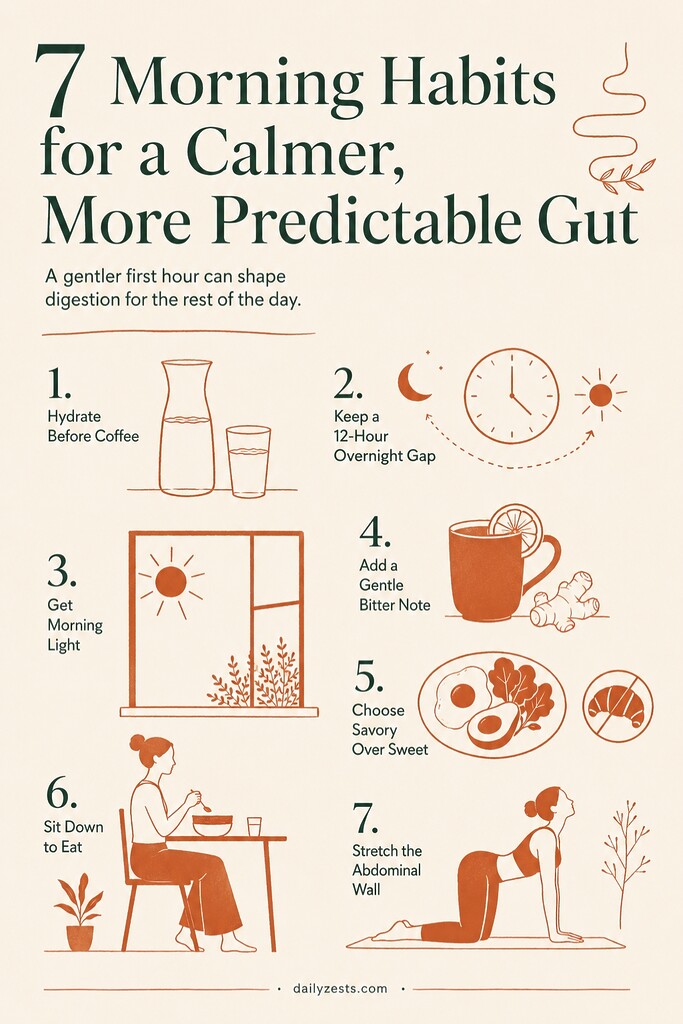
The way you spend your first hour awake often dictates how your stomach behaves for the rest of the day. If you regularly wake up feeling heavy, or if bloating sets in before you have even poured your second cup of coffee, your morning routine might just need a gentle shift.
I know how frustrating it is to feel like you are fighting your own body before the day has even started. For years, I approached digestion as something to be forced or fixed. It was only when I started looking at the research and paying attention to my own daily rhythms that I realized our bodies are not trying to be difficult. Often, they just need the right cues to wake up properly.
Just a quick note before we get into the details. I am a wellness researcher sharing what the science points toward and what actually works in my own kitchen. I am not a doctor. If you are dealing with chronic pain or severe digestive distress, please bring those symptoms to your primary care physician.
1. Hydrate Before You Caffeinate
Coffee is a deeply ingrained ritual. I love my morning cup on the porch just as much as anyone, but sending acidic coffee into an empty, dehydrated stomach can irritate your digestive lining right out of the gate.
During the night, your body loses a significant amount of water simply through breathing and sweating. When you wake up, your digestive organs are dehydrated. Drinking 12 to 16 ounces of room-temperature water before anything else gives your system the fluid it needs to start moving.
Water acts as a gentle flush. It supports hydration while the migrating motor complex, which is the system responsible for sweeping leftover food and bacteria through your digestive tract, does its own cleanup work between meals. Think of it as rinsing out the pipes before turning on the heavy machinery.
2. Build in a Small Fasting Window
You do not need to practice extreme intermittent fasting to see gut benefits. However, rolling out of bed and immediately putting food into your mouth does not give your digestive tract the resting phase it needs.
Research suggests that giving your body about 12 hours between dinner and your first meal the next morning creates a simple overnight break that fits with time-restricted eating research and your body’s daily rhythms. If you finish dinner by 7 PM, simply waiting until 7 AM to eat breakfast gives your body a natural, effortless break. If you wake up at 6 AM, spend that first hour drinking water, showering, and getting dressed. Let your stomach wake up on its own schedule.
3. Step Outside for Morning Light
This sounds like lifestyle advice, but it is actually a biological cue. When natural sunlight hits your eyes in the early morning, it tells your brain to shift away from melatonin production and reinforce daytime alertness.
Your gut has its own circadian rhythm. When your brain registers that it is daytime, it sends signals to your digestive system to increase motility and prepare for incoming food. Getting outside for just ten minutes with the dog (my Golden Retriever, Barnaby, never lets me skip this step) sets your internal clock. If you cannot get outside, drink your water by a bright, open window.
4. Introduce a Gentle Bitter Element
Sweet flavors tell your body to store energy. Bitter flavors tell your body to digest. Introducing something mildly bitter or warming in the morning may nudge digestive signaling, though it is not a magic switch for stomach acid, bile, and enzymes.
You do not need to drink anything harsh. A slice of fresh lemon in your morning water works beautifully. Alternatively, steeping a few slices of fresh ginger in hot water creates a soothing, anti-inflammatory drink that signals your stomach to prepare for a meal. Ginger can support gastric emptying, meaning it helps food move smoothly from your stomach into your small intestine.
5. Shift from Sweet to Savory
This was the hardest habit for me to break, but it made the biggest difference. Starting the day with a muffin, a bowl of sweetened cereal, or toast with jam spikes your blood sugar immediately. When I used to eat a sweet breakfast, I would experience a massive energy crash by 3 PM every single afternoon, accompanied by intense cravings and a bloated stomach.
Dealing with insulin resistance taught me that blood sugar and digestion are deeply connected. A glucose spike followed by a sharp drop can leave you tired and hungry again, and in people with blood sugar issues, higher glucose levels are linked with slower stomach emptying. Shifting to a savory breakfast focused on high-quality protein and fiber keeps blood sugar stable. Scrambled eggs, a handful of spinach, and some avocado will keep your gut far happier than a pastry ever could.
6. Sit Down to Eat
We are all rushing. It is incredibly tempting to eat a piece of toast while standing at the kitchen island, packing a lunchbox with one hand and checking emails with the other.
Here is the problem: when you eat while moving or stressing, your nervous system stays in a sympathetic “fight or flight” state. Your body literally pulls blood away from your digestive organs and routes it to your muscles. To digest your food properly, you need to be in a parasympathetic “rest and digest” state.
Take five minutes. Sit down at a table. Put your phone away. Chewing your food thoroughly while seated is the simplest, entirely free thing you can do to prevent afternoon bloating.
7. Stretch the Abdominal Wall
You do not need to do a full workout before breakfast. Heavy exercise right after waking can actually be stressful for some bodies. However, gentle movement physically massages your digestive organs and encourages trapped gas to move along.
A few simple stretches can change the physical space in your abdomen. Try lying on your back and gently hugging your knees to your chest. Alternatively, a slow “cat-cow” stretch on your hands and knees stretches the abdominal wall and gently compresses the intestines.
You do not have to adopt all seven of these habits tomorrow morning. Start with the one that feels the easiest. Maybe you just leave a glass of water on your nightstand tonight, or commit to sitting down for five minutes to eat your breakfast. Digestion responds best to consistency and gentle care, not overnight overhauls. Pick one small change, and see how your body thanks you by lunch.
Kristina Hanson is an independent wellness researcher and the founder of DailyZests. She specializes in translating nutritional science into simple, delicious recipes that fit into real life. When she isn’t in the kitchen, you’ll find her hiking the trails or enjoying a slow morning coffee with her Golden Retriever, Barnaby. Read her full story.



 This post may contain affiliate links.