You did everything right yesterday. You ate well, took a walk, and went to bed with a perfect number, only to wake up to a frustratingly high reading. It feels like a betrayal, but your body isn’t actually fighting you.
Sitting on the porch with my coffee and my golden retriever, Barnaby, is my favorite part of the day. But when I was first trying to understand my own insulin resistance, mornings often carried a heavy knot of dread. I would stare at my monitor, completely baffled by how my blood sugar could rise while I was fast asleep.
If you live with diabetes or insulin resistance, this morning frustration is incredibly common. You might immediately blame yourself, wondering what you did wrong the day before. Most of the time, the answer is absolutely nothing.
Why Your Liver Wakes Up Before You Do
To understand how to steady your morning numbers, it helps to understand what your body is trying to do while you sleep.
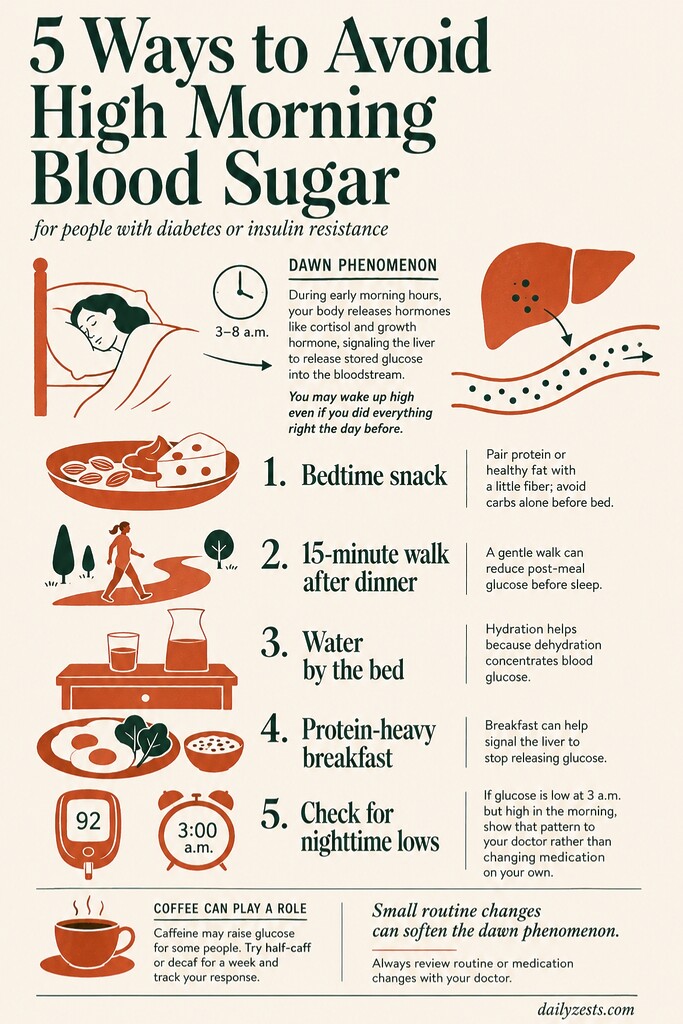
In the early hours of the morning, usually between 3:00 a.m. and 8:00 a.m., your body prepares you to wake up. It releases a surge of hormones, like cortisol and growth hormone, that signal your liver to dump stored glucose into your bloodstream. Your body is essentially packing you a little energy lunchbox for the day ahead. This is known as the dawn phenomenon.
In a body without diabetes, insulin handles this extra glucose effortlessly. But if you have diabetes, that glucose stays in your bloodstream, waiting to be used. You wake up, check your numbers, and see a spike.
A quick note from me: I am a researcher sharing what the science says and what worked for my own metabolic health, but you and your doctor know your specific needs best. Always run routine changes by them, especially if you take medication.
5 Gentle Ways to Steady Your Morning Numbers
You can’t stop the dawn phenomenon entirely, nor would you want to, since those hormones actually help you wake up, but there are small, practical ways to soften its impact.
1. Have a specific kind of bedtime snack
It sounds completely backward to eat before bed when you are worried about high blood sugar. For some people, especially those using insulin or medications that can cause lows, going to sleep with an empty stomach may leave the body more vulnerable to an overnight drop.
The trick, if a snack fits your plan, is choosing one that pairs a little fiber with protein or healthy fat, which digests slowly and may help some people stay steadier through the night, though evidence is mixed. A spoonful of peanut butter, a small handful of almonds, or a slice of turkey with cheese can be worth testing if your doctor agrees and your monitor backs it up. Avoid carbohydrates on their own right before bed, as they will likely spike you before you even fall asleep.
2. Take a gentle 15-minute after-dinner walk
You don’t need a heavy workout to see benefits. In fact, intense exercise right before bed can raise cortisol and keep you awake. Instead, aim for a slow, gentle walk about thirty minutes after your last meal.
Walking prompts your leg muscles to soak up glucose from your bloodstream without needing extra insulin to do it. This simple habit can lower your post-meal blood sugar before your head hits the pillow, giving you a better starting point before the dawn phenomenon begins.
3. Keep water on your nightstand
This is the easiest step, and the one we most often overlook. Dehydration concentrates the glucose in your blood. Think of a glass of lemonade, if you let half the water evaporate, the lemonade becomes much sweeter. Your bloodstream works the same way.
Sleeping for eight hours naturally dehydrates you. Drinking a glass of water as soon as you wake up helps dilute the glucose in your blood and gives your kidneys the hydration they need to help flush out the excess.
4. Eat a protein-heavy breakfast (even if you aren’t hungry)
When you wake up with a high reading, your first instinct is often to skip breakfast. It feels logical: why add food to a system that already has too much sugar?
But skipping breakfast can backfire for many people with type 2 diabetes. If you don’t eat, your body stays in fasting mode, and your liver may keep releasing glucose to sustain you. Eating a small meal tells your liver, “I’ve got it from here, you can stop now.”
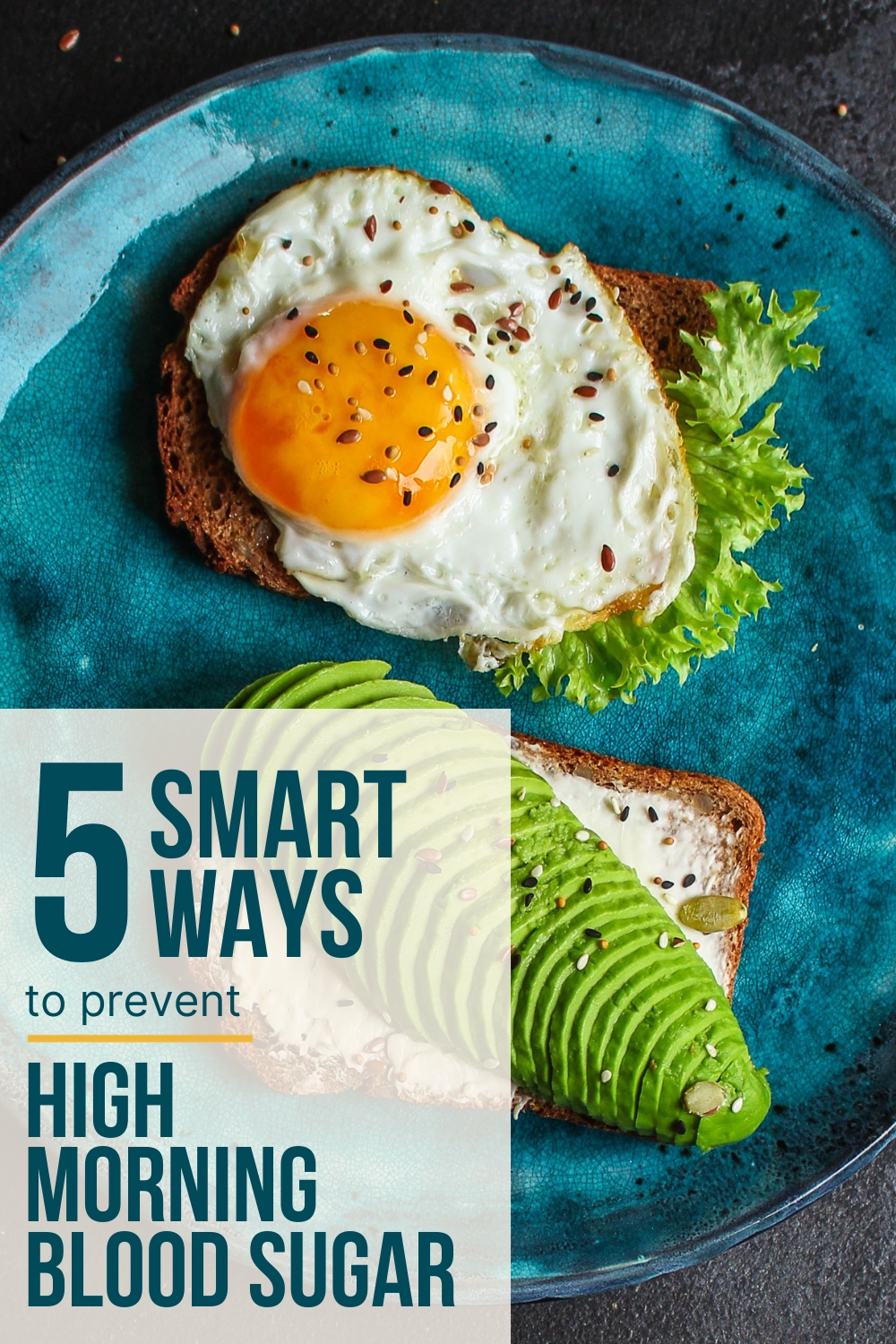
I learned this the hard way, trying to fast my way out of high morning numbers only to watch them climb higher by 10:00 a.m. Now, I stick to a breakfast high in protein and fiber, like scrambled eggs with spinach, or plain Greek yogurt with chia seeds, to signal my liver to quiet down.
5. Check for the Somogyi Effect
If you’ve tried adjusting your evenings and you still wake up high, ask your doctor whether nighttime lows are part of the pattern; the classic Somogyi effect is debated and appears uncommon. The theory is that blood sugar drops too low in the middle of the night. In response, your body releases counter-regulatory hormones that can push glucose back up by morning.
To figure out if this is happening, many doctors suggest setting an alarm for 3:00 a.m. for a few nights to check your glucose, or using CGM data if you have it. If it’s low at 3:00 a.m. but high at 7:00 a.m., bring that pattern to your doctor rather than adjusting medication on your own. Your doctor may adjust the timing or dose of evening medication, or talk through whether a small bedtime snack makes sense for you.
FAQ: Is my morning coffee making it worse?
It might be. Caffeine stimulates the release of adrenaline, which can cause your liver to release, you guessed it, more glucose. For some people with diabetes, a cup of black coffee can raise blood sugar, even without any added milk or sugar.
If you suspect coffee is contributing to your morning spikes, try switching to half-caff or decaf for a week and see what your monitor tells you. You don’t necessarily have to give up your morning ritual, but knowing how your body reacts to it gives you the power to choose.
You don’t have to overhaul your entire life by tomorrow morning. Start with a glass of water on the nightstand, or a handful of almonds before bed, and see what your body tells you.
Kristina Hanson is an independent wellness researcher and the founder of DailyZests. She specializes in translating nutritional science into simple, delicious recipes that fit into real life. When she isn’t in the kitchen, you’ll find her hiking the trails or enjoying a slow morning coffee with her Golden Retriever, Barnaby. Read her full story.
Okay, so I’ve been battling these crazy morning highs for what feels like forever! I swear, I could eat a salad for dinner and still wake up like I’ve chugged a gallon of maple syrup. I’ve heard of the dawn phenomenon, but the Somogyi effect is new to me. How can I tell if that’s what’s happening to me? Is there a way to catch it in the act? It’s all so confusing! Also does that mean I should eat before bed? Because I thought that was a no-no!
Hi Luciana, I totally get your frustration! It’s like your body’s playing tricks on you, right? The Somogyi effect can be sneaky. The best way to determine if it’s the culprit is to monitor your blood sugar during the night, especially around 2-3 AM. A continuous glucose monitor (CGM) is really helpful for this, as it takes readings constantly. If you see a significant dip in the middle of the night followed by a spike in the morning, that’s a strong indicator of the Somogyi effect.
As for the bedtime snack, it’s not a one-size-fits-all answer. If you’re experiencing the Somogyi effect, a small, balanced snack before bed might actually help prevent those overnight lows that trigger the rebound highs. I talk about this in the “The Bedtime Snack Strategy” section. The key is to choose something with a mix of complex carbs and protein or healthy fats, and then monitor your response to see if it helps. Definitely chat with your doctor about this, though, as they can give you personalized advice based on your specific situation. Hang in there, Luciana! You’re not alone in this.
This article is super informative, but I have a question about exercise. I’m a night owl, and the only time I can really squeeze in a workout is late at night, like after 9 PM. But the article says that might not be the best idea? Does that mean I’m doomed to morning highs if I don’t become a morning person? Also, if you exercise in the morning, won’t you crash right after, since you haven’t eaten?
Hi Antonella , thanks for the question! I understand the struggle of fitting exercise into a busy schedule. While morning exercise can be particularly helpful for managing the dawn phenomenon, it doesn’t mean you’re doomed if you’re a night owl. The key is to be mindful of how your body responds. Late-night exercise could potentially lead to overnight lows in some people, but it might not affect you the same way.
The best approach is to experiment and monitor your blood sugar. Try exercising at night and see how it affects your overnight and morning levels. If you notice lows, you might need to adjust your timing or have a small snack before or after your workout. There is a “Strategic Timing” section of the article about this. And don’t worry, if you choose to exercise in the morning, you shouldn’t crash, since your liver will release stored glucose to prevent that. The important thing is to find an exercise routine that you enjoy and that fits your lifestyle, and then work with your doctor to fine-tune your diabetes management plan accordingly. You’ve got this, Antonella !
Ugh, the dreaded morning high blood sugar! It’s like my body’s throwing a party I never RSVP’d to. I think mine is the dawn phenomenon, but I’m not 100% sure. The article mentions using a CGM, but those things are expensive! Are there any other ways to figure out what’s going on without breaking the bank? Also, giving up evening snacks is going to be TOUGH. Any tips for a snacker like me?
Olivia, I totally get it – it’s like our bodies have a mind of their own sometimes! You’re right, CGMs can be pricey. Before investing, try keeping a detailed log for a couple of weeks. Note down your bedtime blood sugar, what you ate for dinner and when, any middle-of-the-night lows (if you wake up), and your morning reading. This can give you and your doctor some good clues. As for snacks, maybe try a small portion of something high in protein and healthy fats before bed? Think a handful of almonds or some plain Greek yogurt. It might help stabilize things without causing a spike. Good luck with your blood sugar detective work!
This article is super helpful! I’ve been struggling with high morning blood sugar for a while now, and I think lack of sleep might be a big part of it. I’m a total night owl, and I have a hard time winding down before bed. Any suggestions for a good bedtime routine that doesn’t involve counting sheep? Also, does the type of exercise really matter? I hate running, but I love dancing around my living room. Would that count?
Ava, glad you found it helpful! Sleep is SO important for blood sugar control, so you’re spot on. For a relaxing bedtime routine, maybe try a warm bath with Epsom salts, some light stretching, or reading a physical book (not on a screen!). There are also some great meditation apps out there. And YES, dancing totally counts as exercise! The best exercise is the one you enjoy and will actually do. So put on your favorite tunes and dance the night away (but maybe not too close to bedtime!). Sweet dreams and stable blood sugars!



 This post may contain affiliate links.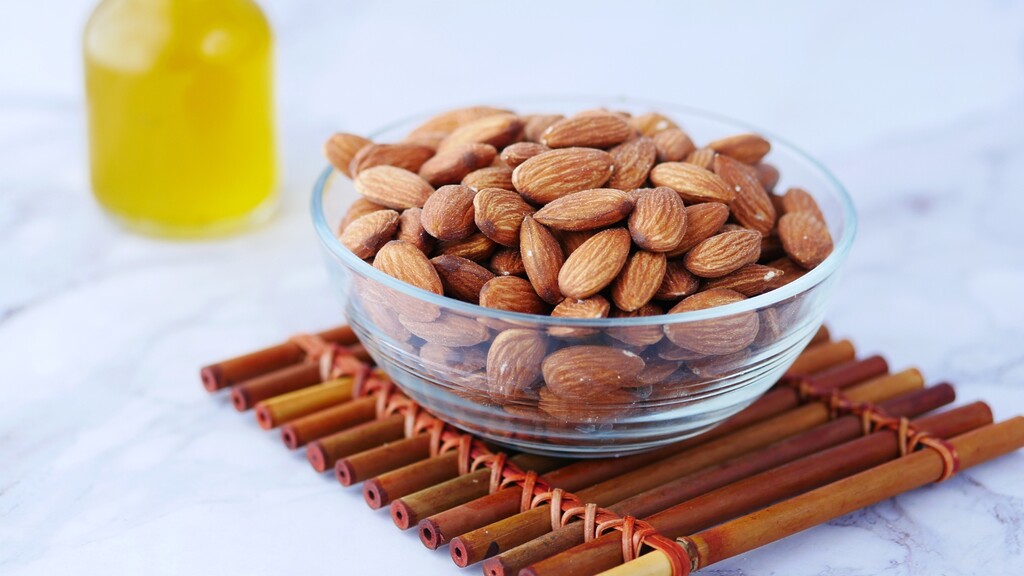







Okay, so I’ve been battling these crazy morning highs for what feels like forever! I swear, I could eat a salad for dinner and still wake up like I’ve chugged a gallon of maple syrup. I’ve heard of the dawn phenomenon, but the Somogyi effect is new to me. How can I tell if that’s what’s happening to me? Is there a way to catch it in the act? It’s all so confusing! Also does that mean I should eat before bed? Because I thought that was a no-no!
Hi Luciana, I totally get your frustration! It’s like your body’s playing tricks on you, right? The Somogyi effect can be sneaky. The best way to determine if it’s the culprit is to monitor your blood sugar during the night, especially around 2-3 AM. A continuous glucose monitor (CGM) is really helpful for this, as it takes readings constantly. If you see a significant dip in the middle of the night followed by a spike in the morning, that’s a strong indicator of the Somogyi effect.
As for the bedtime snack, it’s not a one-size-fits-all answer. If you’re experiencing the Somogyi effect, a small, balanced snack before bed might actually help prevent those overnight lows that trigger the rebound highs. I talk about this in the “The Bedtime Snack Strategy” section. The key is to choose something with a mix of complex carbs and protein or healthy fats, and then monitor your response to see if it helps. Definitely chat with your doctor about this, though, as they can give you personalized advice based on your specific situation. Hang in there, Luciana! You’re not alone in this.
This article is super informative, but I have a question about exercise. I’m a night owl, and the only time I can really squeeze in a workout is late at night, like after 9 PM. But the article says that might not be the best idea? Does that mean I’m doomed to morning highs if I don’t become a morning person? Also, if you exercise in the morning, won’t you crash right after, since you haven’t eaten?
Hi Antonella , thanks for the question! I understand the struggle of fitting exercise into a busy schedule. While morning exercise can be particularly helpful for managing the dawn phenomenon, it doesn’t mean you’re doomed if you’re a night owl. The key is to be mindful of how your body responds. Late-night exercise could potentially lead to overnight lows in some people, but it might not affect you the same way.
The best approach is to experiment and monitor your blood sugar. Try exercising at night and see how it affects your overnight and morning levels. If you notice lows, you might need to adjust your timing or have a small snack before or after your workout. There is a “Strategic Timing” section of the article about this. And don’t worry, if you choose to exercise in the morning, you shouldn’t crash, since your liver will release stored glucose to prevent that. The important thing is to find an exercise routine that you enjoy and that fits your lifestyle, and then work with your doctor to fine-tune your diabetes management plan accordingly. You’ve got this, Antonella !
Ugh, the dreaded morning high blood sugar! It’s like my body’s throwing a party I never RSVP’d to. I think mine is the dawn phenomenon, but I’m not 100% sure. The article mentions using a CGM, but those things are expensive! Are there any other ways to figure out what’s going on without breaking the bank? Also, giving up evening snacks is going to be TOUGH. Any tips for a snacker like me?
Olivia, I totally get it – it’s like our bodies have a mind of their own sometimes! You’re right, CGMs can be pricey. Before investing, try keeping a detailed log for a couple of weeks. Note down your bedtime blood sugar, what you ate for dinner and when, any middle-of-the-night lows (if you wake up), and your morning reading. This can give you and your doctor some good clues. As for snacks, maybe try a small portion of something high in protein and healthy fats before bed? Think a handful of almonds or some plain Greek yogurt. It might help stabilize things without causing a spike. Good luck with your blood sugar detective work!
This article is super helpful! I’ve been struggling with high morning blood sugar for a while now, and I think lack of sleep might be a big part of it. I’m a total night owl, and I have a hard time winding down before bed. Any suggestions for a good bedtime routine that doesn’t involve counting sheep? Also, does the type of exercise really matter? I hate running, but I love dancing around my living room. Would that count?
Ava, glad you found it helpful! Sleep is SO important for blood sugar control, so you’re spot on. For a relaxing bedtime routine, maybe try a warm bath with Epsom salts, some light stretching, or reading a physical book (not on a screen!). There are also some great meditation apps out there. And YES, dancing totally counts as exercise! The best exercise is the one you enjoy and will actually do. So put on your favorite tunes and dance the night away (but maybe not too close to bedtime!). Sweet dreams and stable blood sugars!