When you’re balancing blood sugar and keeping an eye on your metabolic health, the daily checklist of things to monitor can feel heavy. But protecting your toes doesn’t require an elaborate medical protocol. A solid diabetic foot care routine just takes five quiet minutes at the edge of your bed.
When I was first trying to understand my own insulin resistance, the sheer volume of “what-ifs” kept me up at night. The human body is remarkably connected, and when blood sugar stays elevated over time, it can quietly impact nerve function and circulation in our lower legs. This is why medical professionals emphasize daily foot care for diabetes, when nerves lose a bit of their sensitivity (a condition called neuropathy), you might not feel a small pebble in your shoe or a tiny blister forming on your heel.
But rather than viewing foot care out of fear, I find it helps to look at it as a quiet act of daily observation. You are just checking in with a part of your body that does a lot of hard work. Catching a small scrape on a Tuesday means you can keep it clean and covered by Wednesday, long before it becomes a genuine concern.
As a researcher and someone living with metabolic challenges, I’m sharing what the evidence strongly supports for daily care. I am not a doctor, so please always run new symptoms or stubborn cuts by your medical team.
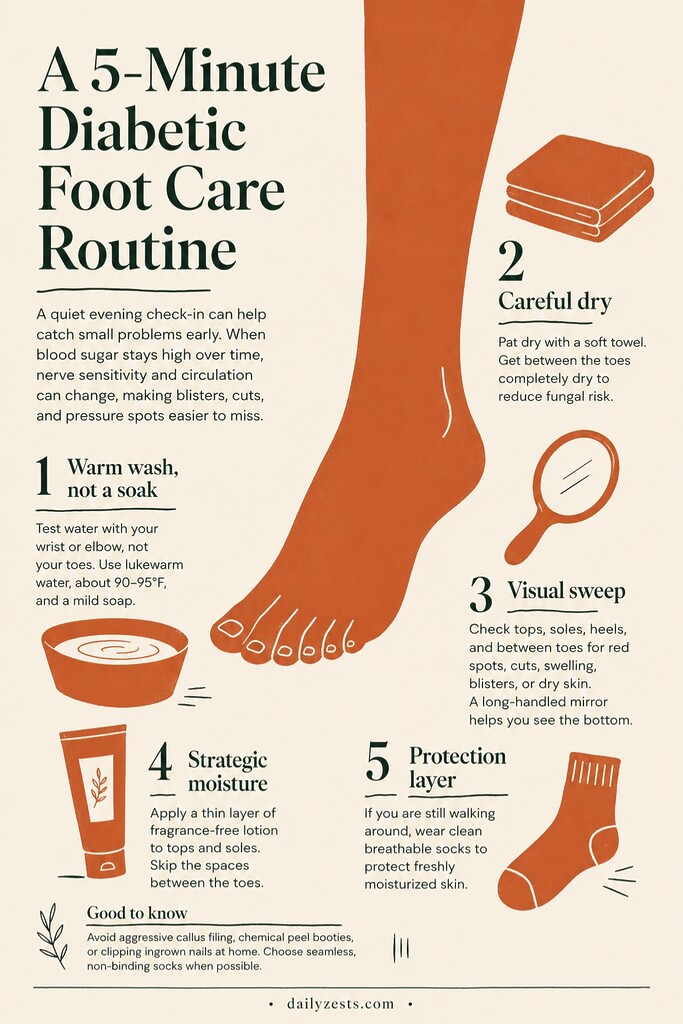
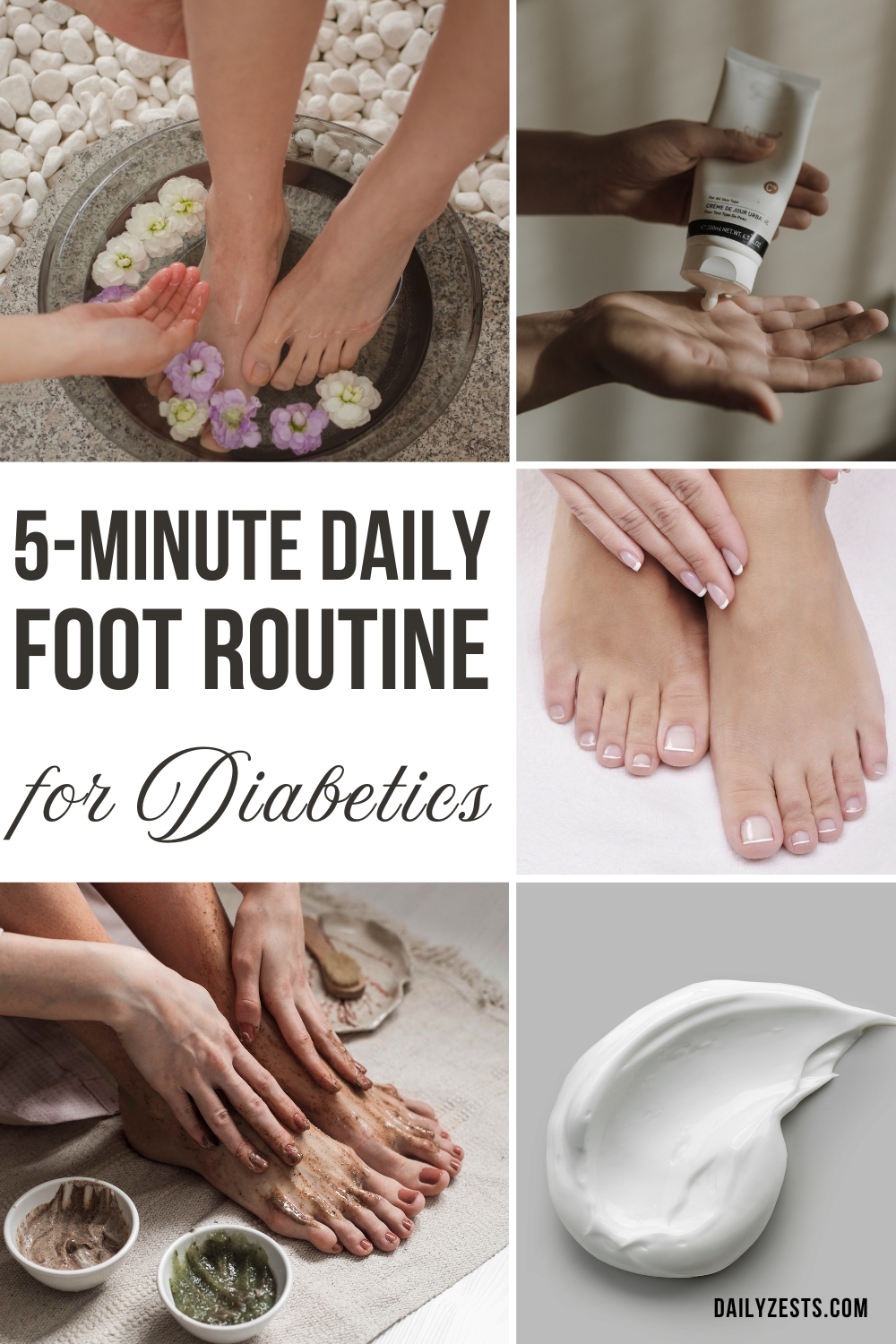
The 5-Minute Evening Foot Routine
You can do this at any time, but evening is usually best. The day is done, your shoes are off, and you have a moment to breathe.
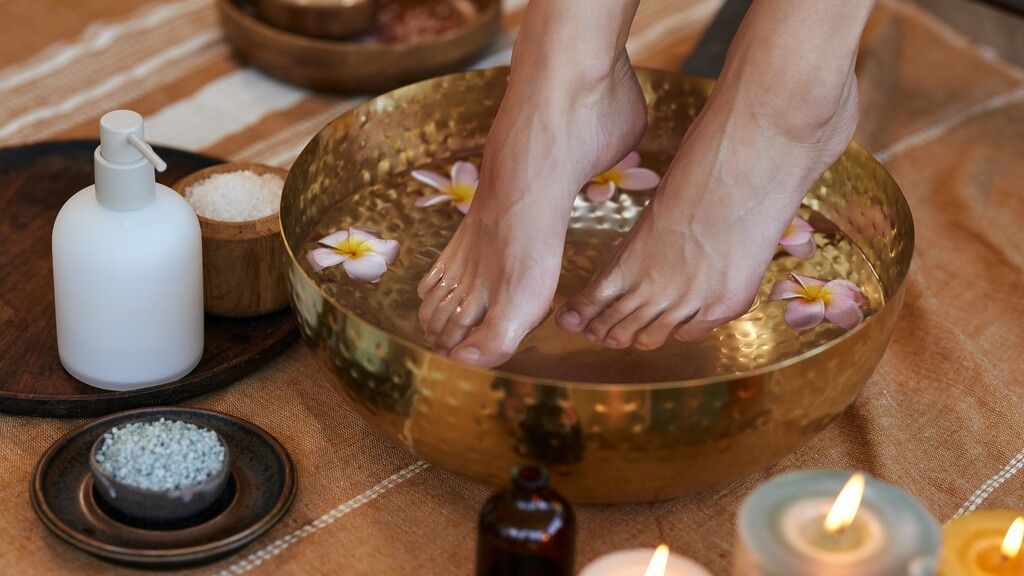
Step 1: The Warm Wash (Not a Soak)
Run some warm water in the tub or a small basin. Here is the golden rule: test the water temperature with your wrist or elbow, never your toes. If nerve sensitivity is already shifting, your feet might not accurately tell you if the water is dangerously hot. Aim for lukewarm, around 90°F to 95°F.
Use a mild, unscented soap to gently wash your feet. I know a hot, soapy foot soak sounds like the ultimate reward after a long day, but research suggests we should actually avoid soaking your feet. Keeping feet submerged for long periods breaks down the skin’s natural barrier, leading to dry, cracked heels once the water evaporates.
Step 2: The Careful Dry
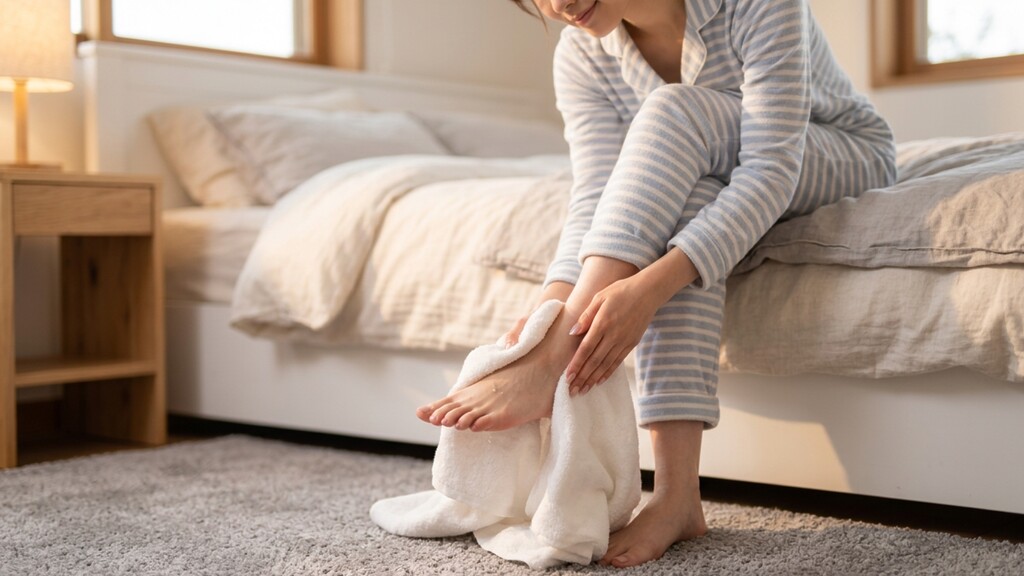
Pat your feet dry with a clean, soft towel. Avoid rough rubbing, which can irritate the skin. Pay special attention to the spaces between your toes. Fungal infections thrive in warm, damp microclimates, so making sure those little gaps are completely dry is one of the kindest things you can do for your skin.
Step 3: The Visual Sweep
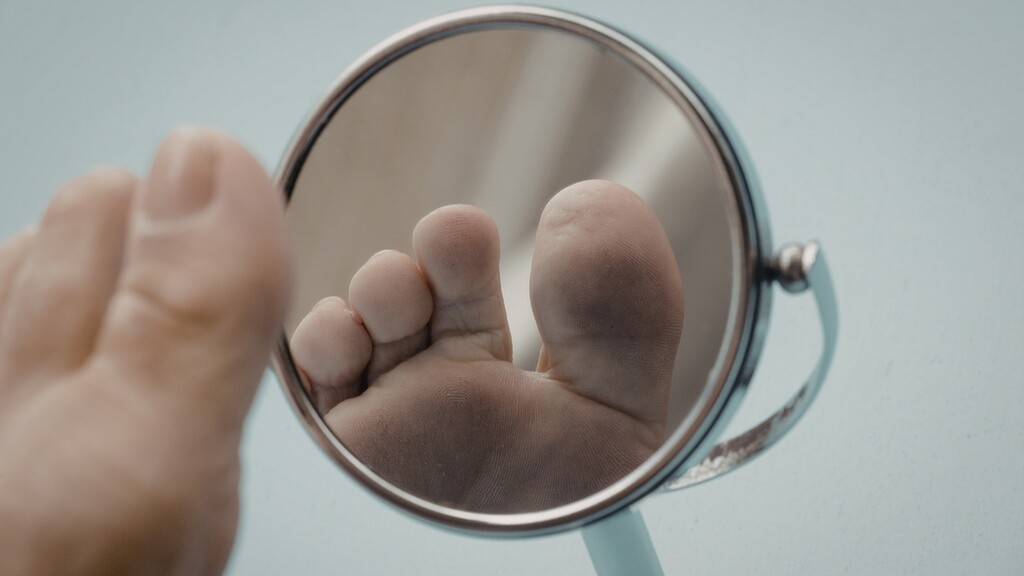
Sit comfortably in a well-lit spot. You are looking for any changes from yesterday: red spots, cuts, swelling, blisters, or that dry white film that sometimes builds up around the heel. Run your hands lightly over the soles to feel for temperature changes or hard spots.
If reaching your feet is uncomfortable or strains your back, pick up a shatterproof, long-handled hand mirror. You can place it on the floor or hold it at an angle to see the bottom of your feet without having to bend yourself into an unnatural yoga pose.
Step 4: Strategic Moisture
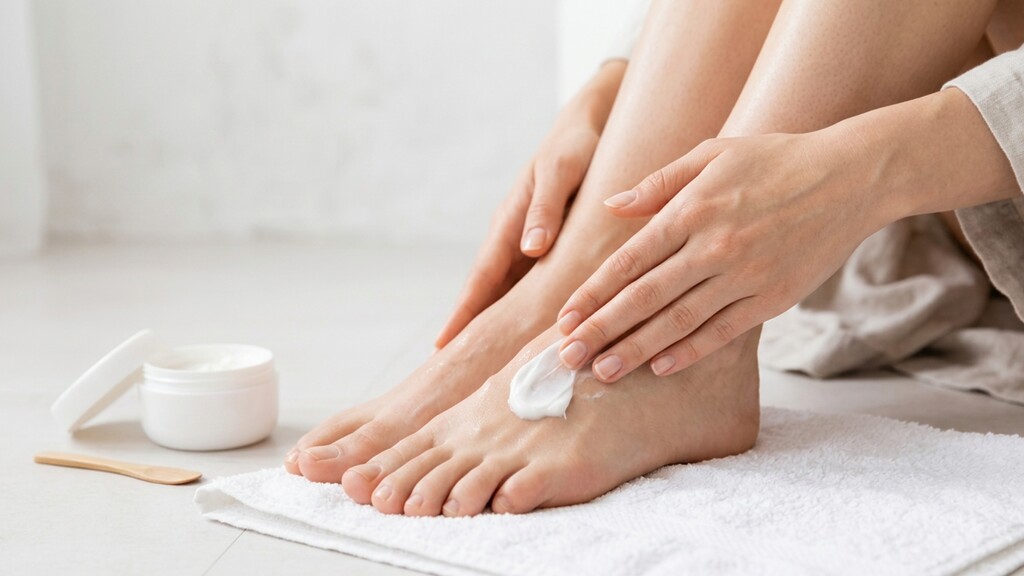
Apply a thin layer of lotion to the tops and bottoms of your feet to prevent the skin from cracking. Choose something plain and deeply hydrating: fragrance-free creams containing ceramides or a gentle urea formulation usually work beautifully.
Just remember to stop before you reach your toes. Applying lotion between the toes traps excess moisture where the skin touches, which invites the exact fungal issues we dried them so carefully to avoid.
Step 5: The Protection Layer
If you are heading straight to bed, you are done. If you still have walking around to do, slip on a pair of clean, breathable socks (bamboo or cotton blends are excellent) to protect your freshly moisturized skin from picking up grit off the floor.
Common Foot Care Questions
Can I use a pumice stone to smooth my calluses?
It is generally best to leave the sharp tools and aggressive scrubbing to the professionals. Aggressively filing down calluses, using chemical peel booties, or trying to clip a stubborn ingrown nail at home can increase the risk of an accidental cut or skin injury. When circulation is compromised, even a tiny nick takes much longer to heal. A podiatrist has the sterile tools and the exact training needed to handle calluses safely. A bathroom is just no place for minor surgery.
What type of socks are actually best?
Look for socks specifically labeled for diabetes or neuropathy, which usually feature seamless toes and a non-binding top. Traditional socks often have thick seams resting right across the toe knuckles, which can rub silently inside a shoe all day and cause a blister you might not feel.
Taking care of yourself doesn’t have to look like a strict, sterile medical routine. Sometimes, it just looks like a quiet five minutes, a warm towel, and a simple promise to look after the body that carries you.
Kristina Hanson is an independent wellness researcher and the founder of DailyZests. She specializes in translating nutritional science into simple, delicious recipes that fit into real life. When she isn’t in the kitchen, you’ll find her hiking the trails or enjoying a slow morning coffee with her Golden Retriever, Barnaby. Read her full story.


 This post may contain affiliate links.