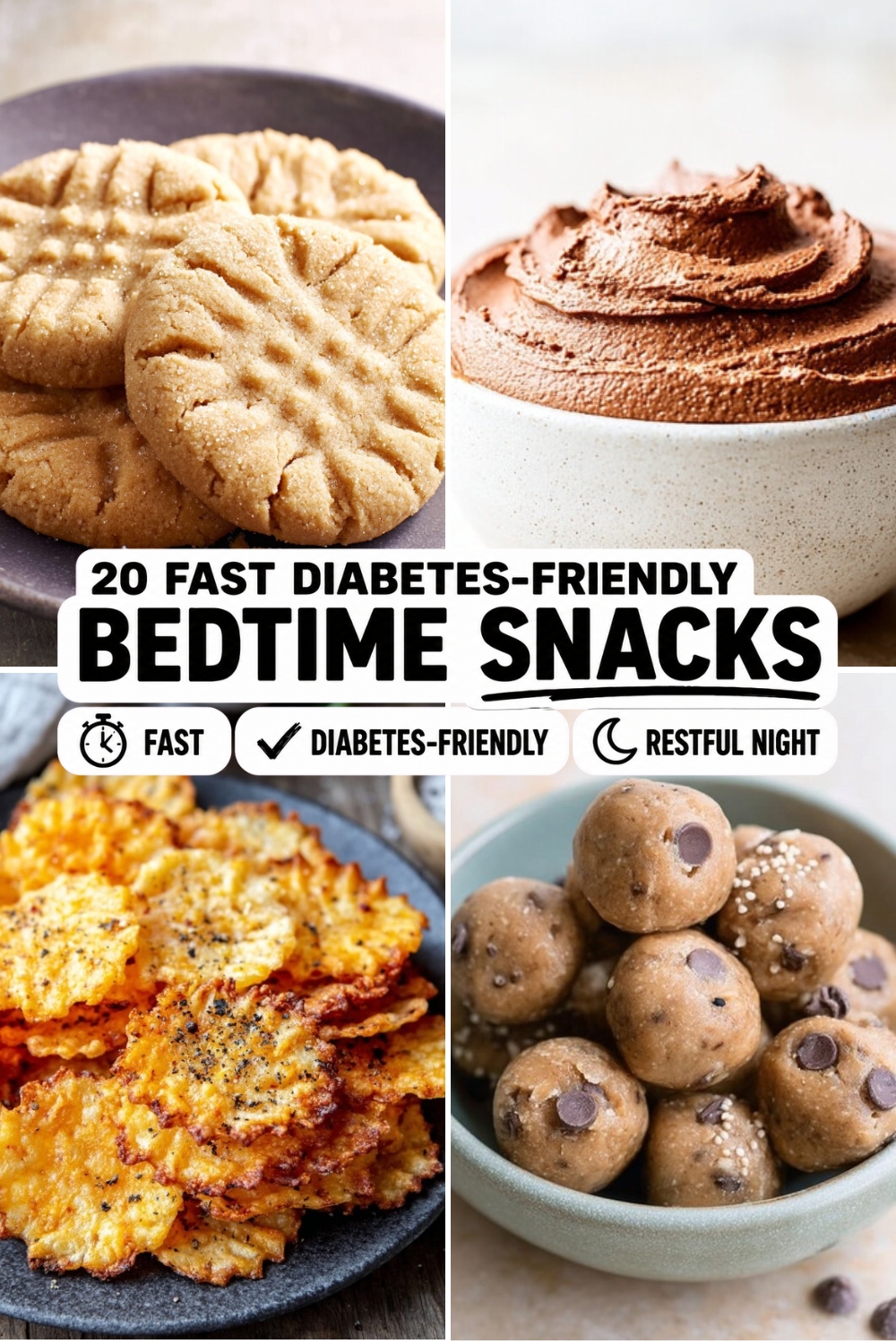
Finding the best bedtime snacks for diabetics usually means hunting for something fast that won’t throw off your macros. These twenty quick, carb-conscious bites skip the heavy sugars and deliver steady, satisfying flavor. Grab one before bed—no complicated prep required.
A quick note: These recipes are designed around macros that fit a diabetes-friendly lifestyle — they’re not medical advice. Carb tolerance is personal; always run new foods past your healthcare provider and check your own blood sugar response.
When evening hunger hits, reaching for a balanced bite is usually considered a smarter approach than ignoring it completely. Focusing on a combination of protein, healthy fats, and fiber-rich ingredients may help support a steadier overnight balance without sitting heavy in your stomach. According to the American Diabetes Association, choosing options with lower net carbs and minimal added sugars can contribute to a more manageable response after eating.
We designed this collection to lean heavily on those exact principles. Rather than relying on traditional flours or refined sweeteners, these snacks use nuts, seeds, and smart swaps to give you that comforting late-night texture while keeping the carb counts firmly in check.
Why These Evening Bites Earn Their Spot
Macro-conscious: Every recipe is anchored by low Net Carbs and zero refined sugar.
Fast Prep: When you’re tired, you don’t want a project. Most of these come together in minutes.
Real Ingredients: Built on wholesome bases like almonds, cottage cheese, and dark chocolate.
Actually Satisfying: They deliver on the deep, rich flavors you actually want at 9 PM.
These rich, one-bowl treats take almost no effort and deliver a dense, fudgy center that tastes like a peanut butter cup. They are perfect to keep stashed in the fridge when you need something creamy without the heavy sugar crash.
Why it fits a diabetes-friendly plate: Comes in at just 1.7g net carbs per serving. By relying on the natural fats in peanut butter rather than refined sugar, this quick bite is generally considered a smart choice for steady evening snacking.
🕒 Active Prep: 5 minutes
1.7g Net Carbs • 1.6g Fiber •0.6g Sugar • 3.7g Protein • 109 kcal
Warm cinnamon and roasted almond flavors make these protein balls an incredibly comforting evening choice. No baking required—just roll them up and you have a chewy, lightly sweetened snack that hits the spot when you are winding down for the night.
Why it fits a diabetes-friendly plate: Built on a hearty base that offers a solid 12.9g of protein, which research suggests may help support a slower digestion process. It skips the traditional honey binders for a mindful sweetener blend.
🕒 Active Prep: 10 minutes
4.2g Net Carbs • 3g Fiber •1.1g Sugar • 12.9g Protein • 207 kcal
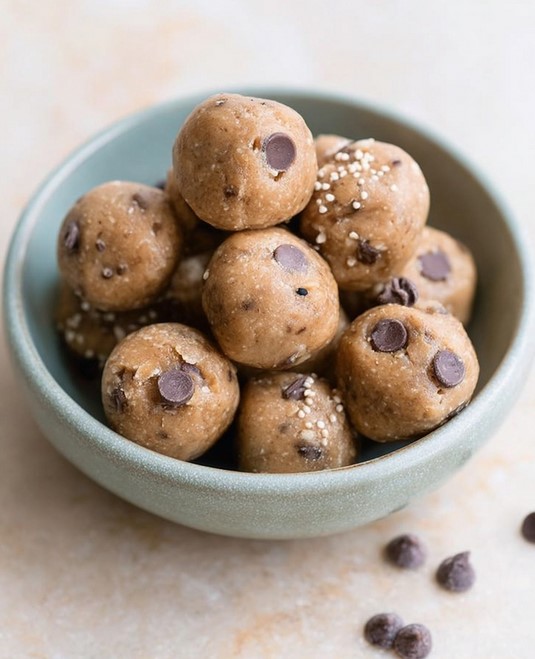
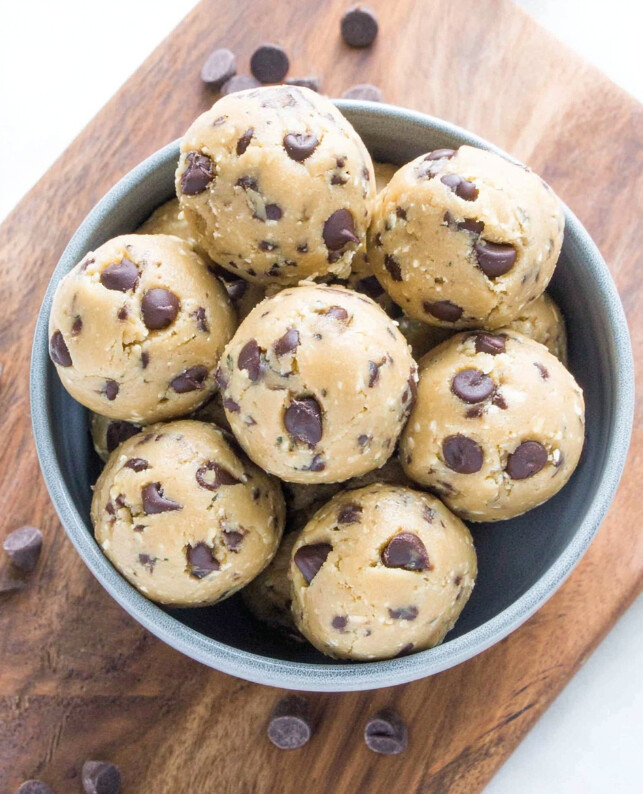
Okay, can we talk about how good it feels to eat cookie dough straight from the bowl? These bites capture that nostalgic flavor safely, using a touch of ground flaxseed for that authentic grainy, brown-sugar texture without the actual flour or sugar.
Why it fits a diabetes-friendly plate: Packs 3g of fiber and healthy fats into every 4g net carb serving. Leaving out the traditional wheat flour makes this a lighter take that fits comfortably into a carb-aware evening routine.
🕒 Ready in: 10 minutes
4g Net Carbs • 3g Fiber •1g Sugar • 5g Protein • 132 kcal
A cool, fluffy spoon-dessert that works perfectly when you want something a bit fruity before bed. It mixes up start-to-finish in a single bowl and has a wonderfully creamy, whipped consistency that highlights the natural tartness of mixed berries.
Why it fits a diabetes-friendly plate: Berries are highly regarded for their fiber content, which can contribute to a gentler carbohydrate profile. This recipe keeps portions manageable and lands at just 5.3g of net carbs per serving.
🕒 Ready in: 35 minutes
5.3g Net Carbs • 2g Fiber •4.3g Sugar • 2.3g Protein • 97 kcal
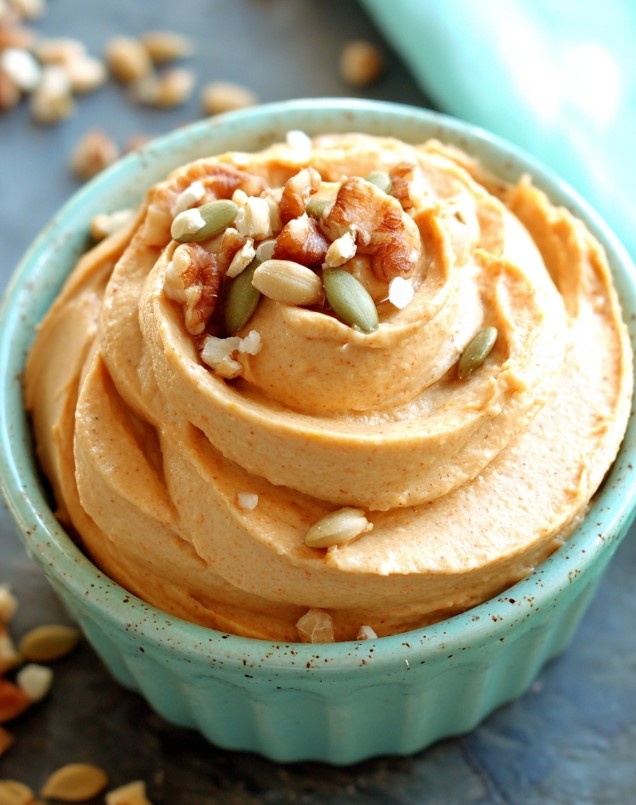
This is the one I make when the craving for pie hits, but I don’t want the effort. It creates a beautiful piped swirl of warm fall spices and rich pumpkin, using coconut cream to achieve a dairy-free richness that feels very intentional.
Why it fits a diabetes-friendly plate: Pumpkin is naturally lower in carbohydrates than most starchy squashes. This straightforward mousse avoids added sugar entirely, keeping the net carbs down to a modest 3.5g per portion.
🕒 Ready in: 10 minutes
3.5g Net Carbs • 2.5g Fiber •2g Sugar • 3.5g Protein • 100 kcal
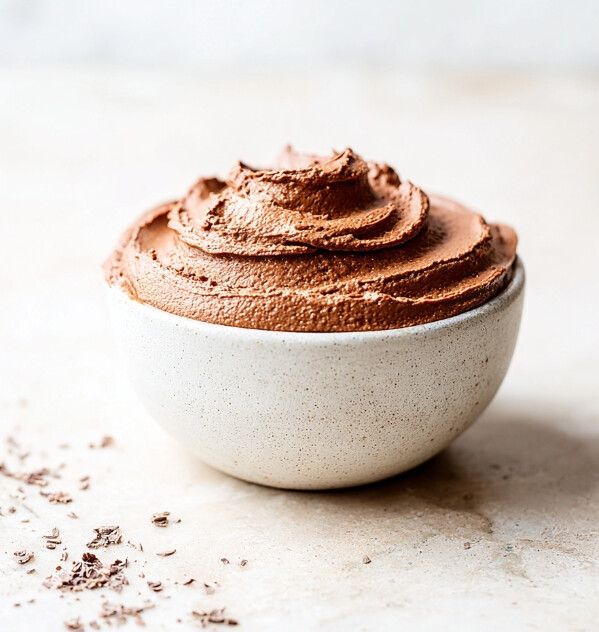
It is amazing what you can do with just three ingredients. By swapping out heavy cream for a protein-rich base, you get an incredibly velvety, decadent texture that chills to perfection without taking all evening to put together.
Why it fits a diabetes-friendly plate: By utilizing a protein-forward foundation instead of traditional sugars, this cup offers a satisfying 8g of protein per serving. This macro balance may help support steadier overnight satisfaction.
🕒 Active Prep: 10 minutes
4.5g Net Carbs • 1.5g Fiber •1g Sugar • 8g Protein • 98 kcal
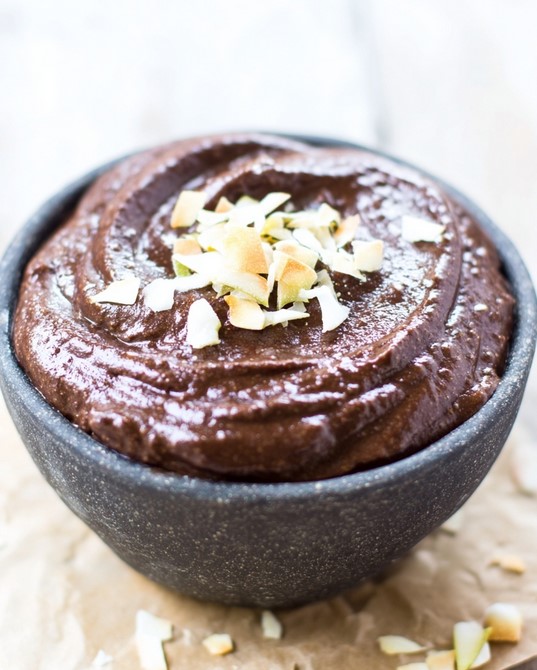
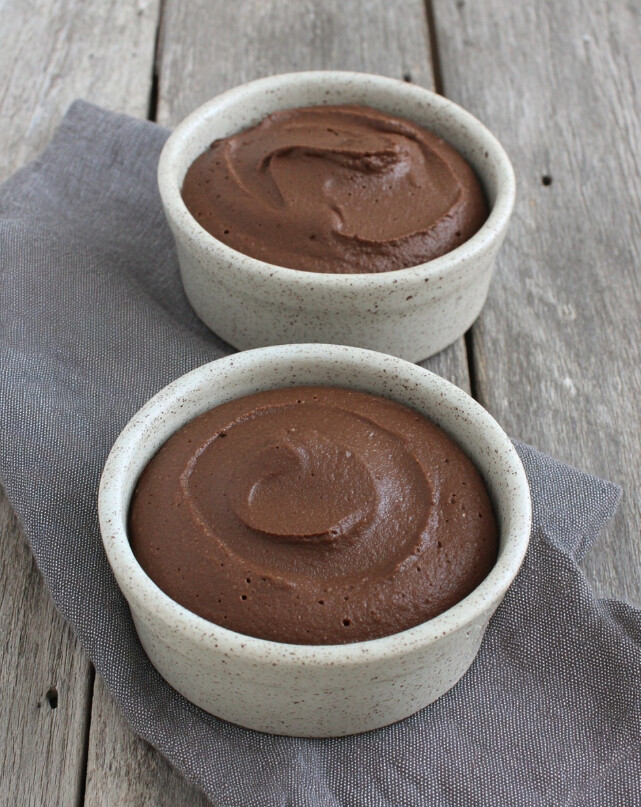
If you liked the previous mousse but need a dairy-free option, you will be all over this one. Just drop the ingredients into a food processor and five minutes later you have a surprisingly airy, deep chocolate dessert ready to chill.
Why it fits a diabetes-friendly plate: This dairy-free version leverages plant-based ingredients to deliver an impressive 7.6g of fiber. High-fiber choices are generally considered excellent for rounding out a carb-conscious meal plan.
🕒 Active Prep: 5 minutes
4.5g Net Carbs • 7.6g Fiber •0.8g Sugar • 3.6g Protein • 158 kcal
These little cups feel like opening a fancy box of chocolates, but you control everything that goes into them. They skip the heavy saturated fats of coconut oil and swap in a clever protein base that creates an impossibly silky texture as they set.
Why it fits a diabetes-friendly plate: Designed as a smart, satisfying portion that avoids refined sugars. They provide a helpful 5g of protein per cup, making them a solid anchor for your late-night cravings.
🕒 Active Prep: 10 minutes
4g Net Carbs • 2g Fiber •1g Sugar • 5g Protein • 117 kcal
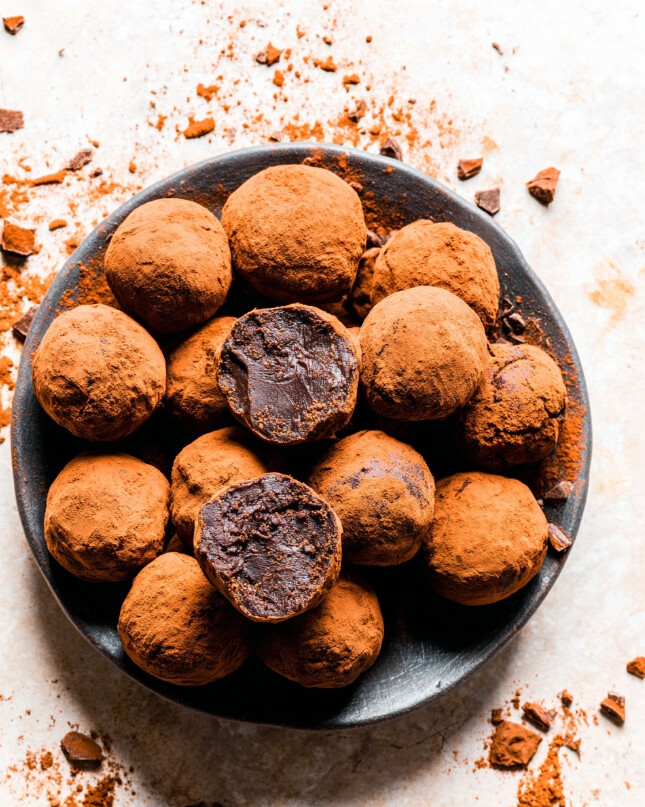
Sometimes you don’t want a whole snack; you just need one rich, perfect bite. These truffles use high-quality, sugar-free dark chocolate to recreate a classic French ganache feel that literally melts on your tongue.
Why it fits a diabetes-friendly plate: Portion control is built right in. With only 2.5g net carbs and barely any sugar, this “lightened-up” twist fits beautifully into a mindful evening routine without adding bulk.
🕒 Active Prep: 15 minutes
2.5g Net Carbs • 3.9g Fiber •0.2g Sugar • 0.9g Protein • 59 kcal
These bakery-style macaroons hit that perfect balance: crispy toasted edges on the outside, and soft, chewy coconut on the inside. They are incredibly straightforward to mix up in a single bowl and bake remarkably fast.
Why it fits a diabetes-friendly plate: Unsweetened coconut is naturally rich in fats and fiber while staying very low in carbs. At just 1.2g of net carbs each, they are an excellent option for rounding out your daily macros.
🕒 Ready in: 22 minutes
1.2g Net Carbs • 2.3g Fiber •1g Sugar • 2.2g Protein • 100 kcal
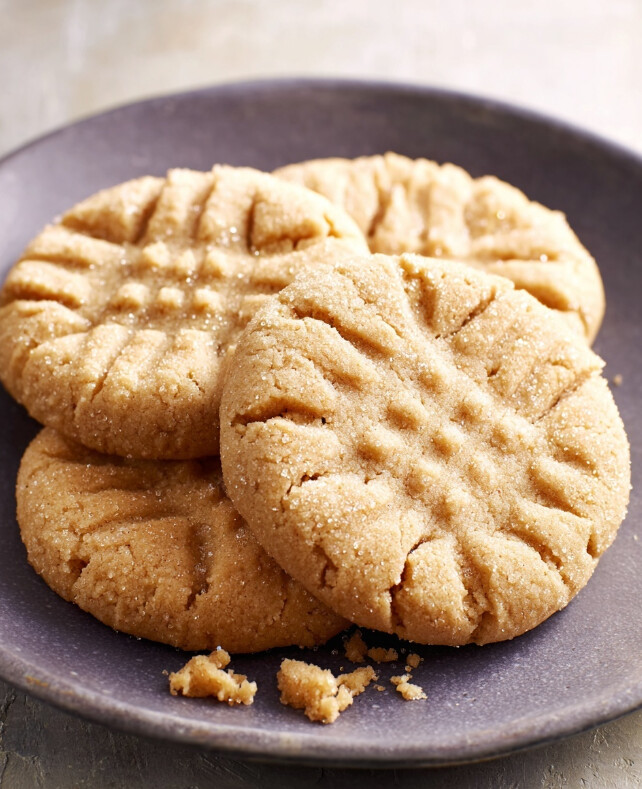
Quick—are you Team Crunchy or Team Smooth peanut butter? Either way, these cookies strip baking back to the absolute essentials. They have that dense, fudge-like crumble we all grew up with, totally flourless and ready in 20 minutes.
Why it fits a diabetes-friendly plate: By utilizing a zero-calorie granular alternative in place of white sugar, this recipe drastically cuts the carbohydrate footprint. They provide a nostalgic, satisfying snack for just 2g of net carbs.
🕒 Ready in: 20 minutes
2g Net Carbs • 1g Fiber •1g Sugar • 3g Protein • 65 kcal
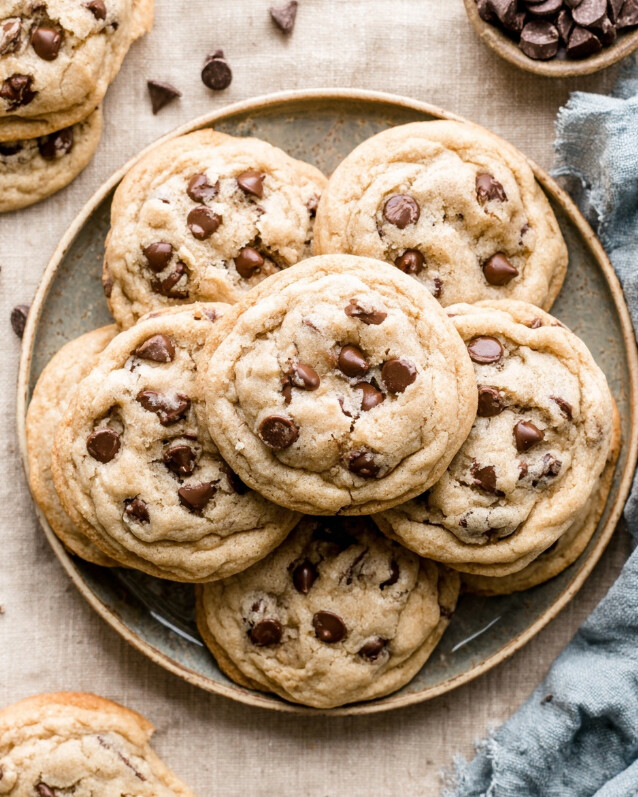
Sometimes a warm chocolate chip cookie and a glass of almond milk is exactly what the evening calls for. Swapping standard oil for real butter and adding a dash of cinnamon gives these one-bowl cookies a tender, bakery-style finish.
Why it fits a diabetes-friendly plate: Formulated specifically to fit a low-carb lifestyle, these cookies rely on smart flour swaps and sugar-free chocolate chips to keep the net carbs securely at 3g without sacrificing flavor.
🕒 Ready in: 22 minutes
3g Net Carbs • 2g Fiber •0g Sugar • 3g Protein • 100 kcal
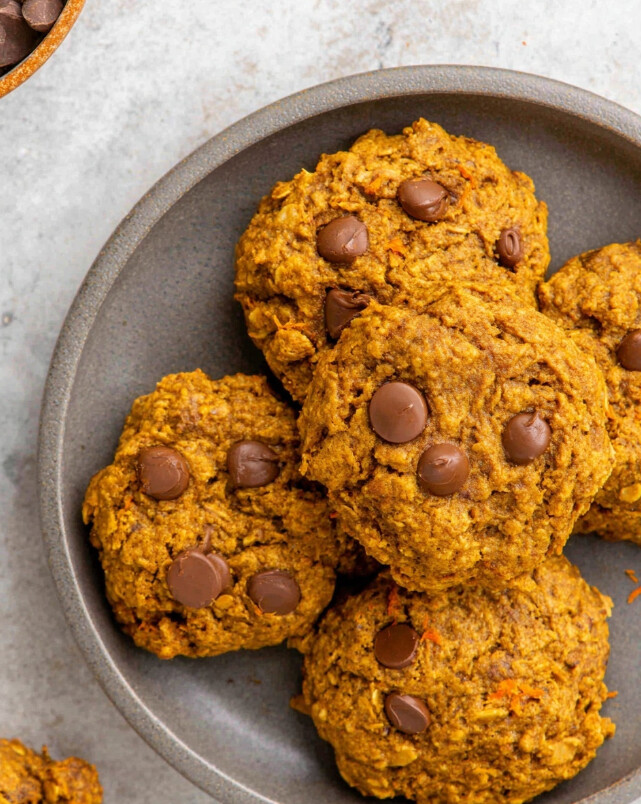
These are brilliant if you miss the texture of a hearty oatmeal cookie. We swap the grains entirely for coarsely ground sunflower seeds, achieving a chewy, satisfying bite packed with warming pumpkin spices and a few dark chocolate pieces.
Why it fits a diabetes-friendly plate: Using sunflower seeds rather than oats drastically lowers the glycemic impact while retaining 2.5g of fiber per cookie, which research suggests may help support a steadier post-snack profile.
🕒 Ready in: 35 minutes
2g Net Carbs • 2.5g Fiber •0.5g Sugar • 3g Protein • 106 kcal
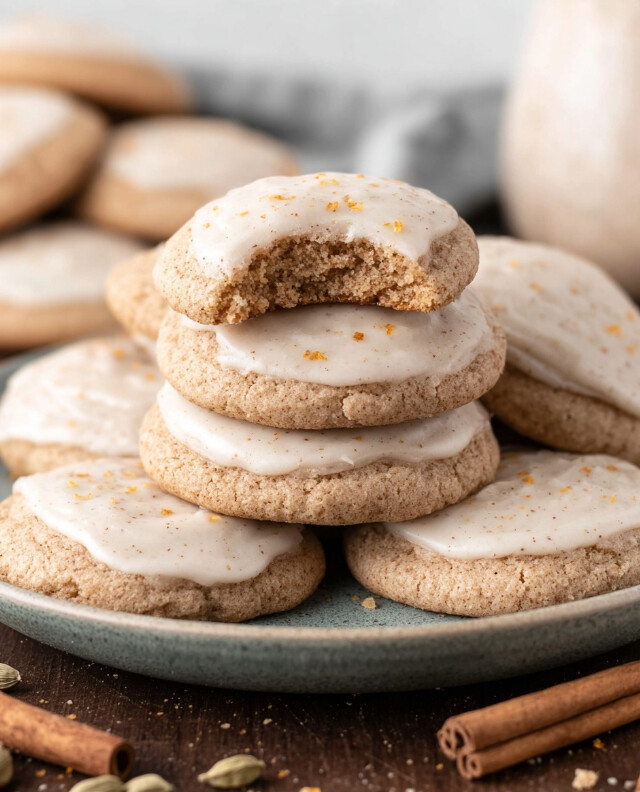
Bring the aroma of your favorite coffee shop latte straight to your evening routine. A subtle touch of orange zest completely brightens the deep, aromatic spice blend, making these a fantastic partner for a decaf tea before bed.
Why it fits a diabetes-friendly plate: Strong spices like chai and cardamom deliver massive flavor without relying on sugars. Coming in at just 2g of net carbs, this treat provides comfort while staying aligned with smart-carb goals.
🕒 Ready in: 30 minutes
2g Net Carbs • 2g Fiber •0g Sugar • 4g Protein • 138 kcal
These are a staple in our house—nobody is missing the sugar here. Packed with rich almond flavor and studded with chocolate chips, they offer a deliciously soft bite that acts as the perfect fast sweet snack when you don’t feel like turning on the oven.
Why it fits a diabetes-friendly plate: Designed as a “fat bomb” style snack, they leverage healthy fats to provide a deeply satisfying feeling while keeping carbohydrates incredibly low—just 2.1g net carbs per piece.
🕒 Ready in: 38 minutes
2.1g Net Carbs • 2.6g Fiber •0.6g Sugar • 3.2g Protein • 151 kcal
If you need a grab-and-go option for your late-night movie watching, this is it. Using a base of whey protein, chia seeds, and almond flour, they have a hearty, textured chew that really keeps you going without feeling weighed down.
Why it fits a diabetes-friendly plate: Blending whey protein and chia seeds provides an excellent one-two punch of 13g protein and 3.2g fiber. This combination is widely considered effective for balancing evening macros.
🕒 Active Prep: 15 minutes
3.1g Net Carbs • 3.2g Fiber •0g Sugar • 13g Protein • 205 kcal
I wasn’t sure a recipe this short could work, honestly. The first bite shut me right up. These little squares take about five minutes to press together, offering a wonderfully chewy, naturally sweet coconut base that is perfect straight from the fridge.
Why it fits a diabetes-friendly plate: With minimal ingredients, this recipe successfully avoids the corn syrup binders found in store-bought bars. Sitting comfortably at 1.5g net carbs, it provides steady, low-glycemic enjoyment.
🕒 Ready in: 5 minutes
1.5g Net Carbs • 2.5g Fiber •1g Sugar • 1g Protein • 115 kcal
These smooth, chilled bites are the definition of an easy freezer stash. Bursting with real peanut butter and cream cheese flavor, they are a refreshingly cold treat that melts away slowly, making a small portion feel very generous.
Why it fits a diabetes-friendly plate: Cream cheese and natural peanut butter offer a high-fat, low-carb foundation that is highly satiating. This keeps the net carbohydrates down to just 1.1g, an ideal metric for late-night snacking.
🕒 Active Prep: 15 minutes
1.1g Net Carbs • 0.4g Fiber •0.6g Sugar • 1.6g Protein • 61 kcal
We need at least a few savory options, right? By baking mozzarella cheese slices until pliable and rolling them with pepperoni, you get a hot, bubbly, pizza-like swirl in just 11 minutes. Zero dough required.
Why it fits a diabetes-friendly plate: Bypassing the traditional pizza crust removes almost all the carbohydrates from this equation. It provides a massive 21g of protein, which is an excellent way to cap off a carb-conscious day.
🕒 Ready in: 11 minutes
2g Net Carbs • 1g Fiber •2g Sugar • 21g Protein • 250 kcal
Fair warning: this disappears fast. If you miss the crunch of a potato chip at night, bake down cottage cheese into these savory, golden, paper-thin crisps. They are sturdy enough for dipping but incredible eaten right off the baking sheet.
Why it fits a diabetes-friendly plate: Cottage cheese is a powerhouse ingredient, acting as a high-protein, low-carb foundation that avoids the starchy flour of regular crackers. They can contribute to a genuinely balanced plate without piling on empty carbs.
🕒 Ready in: 41 minutes
2.4g Net Carbs • 0g Fiber •0g Sugar • 6.2g Protein • 48 kcal
Keep portions honest: Even lower-carb options count toward your daily total. Use the Diabetes Plate Method logic—portion out your snack into a small bowl rather than eating from the storage container.
Sweetener choices: If a recipe calls for a specific sweetener blend like monk fruit or erythritol, sticking to it ensures your net carbs stay accurate. Liquid stevia can alter the moisture balance in baked goods.
Make-ahead power: The “fat bomb” and cheesecake bites are designed to live in the freezer. Make a batch on Sunday to eliminate the Fast Prep scramble entirely during the workweek.
Common Questions, Answered
Are these low-carb bedtime snacks actually necessary?
Snacking at night is highly personal. For some individuals, eating a small, protein-forward snack may help support more stable overnight patterns, though research suggests this varies widely by person. It is generally considered best to base this decision on your own routine and advice from your healthcare team.
What makes these better than standard late-night treats?
These recipes focus heavily on drastically lowering net carbs and eliminating refined added sugars. Incorporating fiber and healthy fats into your choices is generally considered a strong strategy to slow down carbohydrate absorption, according to guidelines from the CDC.
Can I swap almond flour for regular flour in these recipes?
Not without fundamentally changing the macro profile. Almond flour is naturally much lower in carbohydrates and higher in fat, which is precisely why it fits a diabetes-friendly plate so well. Regular flour will significantly increase the carb count.
How do I calculate net carbs for a snack?
Net carbs are generally calculated by taking the Total Carbohydrates and subtracting the Dietary Fiber (and sometimes certain sugar alcohols, depending on the product). This number represents the carbohydrates that are more likely to have an impact.
Which one are you trying first? From the savory baked mozzarella to the rich dark chocolate truffles, having a plan makes evenings so much easier. Save this to your Pinterest board and let me know in the comments!
The recipes and information shared here are designed to fit a diabetes-friendly meal plan and are intended for informational and educational purposes only. They are not a substitute for professional medical, dietary, or nutritional advice. Always monitor your own blood sugar response to new foods, and consult your doctor, registered dietitian, or certified diabetes care and education specialist (CDCES) before making significant changes to your eating pattern — especially if you take insulin or other diabetes medications. Statements on this site have not been evaluated by the FDA and are not intended to diagnose, treat, cure, or prevent any disease. Nutrition values are estimates and may vary based on ingredients and portion sizes.
Kristina Hanson is an independent wellness researcher and the founder of DailyZests. She specializes in translating nutritional science into simple, delicious recipes that fit into real life. When she isn’t in the kitchen, you’ll find her hiking the trails or enjoying a slow morning coffee with her Golden Retriever, Barnaby. Read her full story.
This is a great list of snack ideas, but I’m a bit confused about the recommendations for fruit. I’ve always been told that fruit, especially at night, is a no-no for diabetics because of the sugar content. While the article mentions berries, it also suggests apples and peanut butter. Aren’t apples pretty high in sugar? And how much peanut butter are we talking about here? I could easily eat half a jar in one sitting! Also, are there any specific statistics on how these snacks affect blood sugar levels, particularly in different racial groups, as I’ve heard diabetes affects us all differently? I’m African American, if that helps. Thanks!
Hi Lia, thanks for your question! You’re right to be cautious about fruit. While fruits do contain natural sugars, they also offer fiber, which helps slow down sugar absorption. Apples, in moderation, can be a good choice, especially when paired with a protein and fat source like peanut butter, which further slows down digestion. A good rule of thumb is to stick to a small apple and about 1-2 tablespoons of peanut butter. The key is portion control and choosing lower-sugar fruits like berries whenever possible. As for your question about statistics and racial groups, you are correct that diabetes can affect different populations differently. Studies have shown that African Americans, Hispanic Americans, American Indians, and some Asian Americans are at a higher risk of developing type 2 diabetes. While the snacks in this article are generally safe for most people with diabetes, individual responses to food can vary. For example, a study published in the Journal of the American Medical Association (JAMA) found that the prevalence of diabetes among non-Hispanic Black adults was 18.7%, compared to 15.1% in Hispanic adults and 10.2% in non-Hispanic White adults. There isn’t a large body of research specifically examining the impact of different bedtime snacks on blood sugar in different racial groups, but portion control and monitoring your blood sugar levels before and after snacking are always recommended. It’s always best to consult with your doctor or a registered dietitian who can provide personalized advice based on your individual needs and medical history.
As a registered nurse, I often get asked about healthy bedtime snacks by my patients with diabetes. This article is a good starting point, but I’m wondering about the practicality of some of these suggestions. For example, “chia seed pudding” sounds great in theory, but who has time to make that every night? Also, while air-popped popcorn is mentioned, there’s no warning about the flavored varieties that are often loaded with salt and unhealthy fats. Are there any recommendations for quick, grab-and-go options that don’t require any preparation? And for those who are lactose intolerant, what are some good alternatives to the dairy-based suggestions like yogurt and cheese?
Sara, thank you for your comment and for the important work you do as a nurse! You’re right, not everyone has the time or energy for elaborate snack preparation. While the article provides a variety of options, some quicker, no-prep options include a handful of nuts, seeds, a hard-boiled egg (which can be prepared in advance), or a small portion of edamame. For those who are lactose intolerant, non-dairy alternatives like unsweetened almond milk yogurt or soy-based cheese are great substitutes. As for popcorn, you’re absolutely correct to point out the potential pitfalls of flavored varieties. The article emphasizes air-popped popcorn specifically to avoid those added unhealthy ingredients. It’s crucial to read labels carefully and choose plain, air-popped versions whenever possible. It’s always important to adjust the recommendations according to what every person can do and is willing to do. Thanks for bringing up these important points!
This is a helpful list of snack ideas, especially for those late-night cravings. I’m a little confused about the timing, though. The article talks about the Somogyi effect and dawn phenomenon. Does this mean I should be eating a snack every night before bed, even if I’m not hungry, to prevent these? Or is it only if I wake up hungry?
Hi Mary, thanks for your great question! It’s important to clarify the timing of bedtime snacks in relation to the Somogyi effect and dawn phenomenon. You shouldn’t necessarily eat a snack every single night if you’re not hungry. The goal is to address potential blood sugar fluctuations, not to force yourself to eat.
Here’s a breakdown:
If you regularly experience low blood sugar during the night (Somogyi effect): A bedtime snack, carefully chosen from the options in the article, can be beneficial to help prevent those nighttime lows. Discuss this with your doctor or a registered dietitian, as they can help determine the right type and amount of snack.
If you experience high blood sugar in the morning (dawn phenomenon): A bedtime snack may or may not be helpful, and the type of snack is very important. In some cases, a small amount of protein and healthy fats may help mitigate the dawn phenomenon, but in other cases, it might not make a significant difference. Again, consulting with your healthcare team is essential.
If you simply experience occasional late-night hunger: Then, choosing a healthy snack from this list is a much better option than reaching for sugary or processed foods.
The key is to monitor your blood sugar levels, especially overnight and in the morning, and work with your healthcare provider to determine the best approach for you. Thanks for asking this important question about timing!
This is a really useful article! I’m always looking for new snack ideas. I’m wondering about the portion sizes, though. The article mentions portion control, but doesn’t give specific amounts for each snack. For example, ‘a handful of nuts’ can vary greatly. Could you provide some more specific portion size recommendations for some of these snacks?
Hi Linda, thanks for your feedback! You’re absolutely right; portion control is crucial, and ‘a handful’ is a very subjective measurement. Here are some more specific portion size recommendations for a few of the snacks listed:
Hummus and Vegetables: 1/4 cup of hummus with 1 cup of raw vegetables (like carrot sticks, cucumber slices, or bell pepper strips).
Low-Fat Cheese and Whole-Wheat Crackers: 1 ounce of low-fat cheese with 2-4 whole-wheat crackers (depending on the size of the crackers).
Seeds: 1/4 cup of seeds (like sunflower or pumpkin seeds).
Whole-Grain Toast with Avocado: 1 slice of whole-grain toast with 1/4 of a medium avocado.
Nuts: 1/4 cup of nuts (about a small handful).
Low-Fat Cottage Cheese with Berries: 1/2 cup of low-fat cottage cheese with 1/2 cup of berries.
Apples and Peanut Butter: 1 small apple with 1 tablespoon of peanut butter.
Alright, I’ll admit, some of these snacks sound pretty good. But “low-sugar Jello”? Seriously? Is that even a thing? And who has time to make chia seed pudding before bed? I’m usually so tired by then, I can barely brush my teeth! Also, I’ve heard that eating before bed is bad for you, even if it’s healthy. Isn’t it better to just go to bed hungry than to risk messing up your sleep with digestion and all that? Plus, how many Americans have diabetes? are there any statistics about diabetes across the races?
Hey Melissa, thanks for the comment! I hear you on the Jello – it sounds a little suspect, doesn’t it? But trust me, it exists! You can find it in most grocery stores, usually near the regular Jello. And yeah, chia seed pudding does require a little bit of prep, but you can make a big batch on the weekend and have it ready to go for the whole week. It’s actually pretty easy – just mix chia seeds with some almond milk and let it sit in the fridge for a few hours. But if that’s still too much work, there are plenty of other quick options on the list, like a handful of nuts or some string cheese. As for eating before bed, it’s true that for some people, it can disrupt sleep. But for diabetics, having a small, healthy snack can actually help stabilize blood sugar levels overnight and prevent those dreaded morning highs. It’s all about finding what works best for you. Also, you asked a really important question about the statistics regarding diabetes in America and across races. According to the CDC, as of 2023, an estimated 37.3 million Americans have diabetes, which is about 11.3% of the population. The prevalence of diabetes varies significantly across racial and ethnic groups. Non-Hispanic Black adults have the highest age-adjusted prevalence at 14.7%, followed by Hispanic adults at 12.5%, non-Hispanic Asian adults at 9.2%, and non-Hispanic white adults at 7.4%. These disparities are influenced by a combination of genetic, socioeconomic, and lifestyle factors. Addressing these disparities requires targeted interventions and culturally appropriate care.
This is all great in theory, but what about when you have a REAL craving? Like, sometimes I just want a cookie or a bowl of ice cream before bed. Are there any “cheat” snacks that are still relatively okay for diabetics? And what about portion sizes? How much hummus is too much hummus? Also, my doctor told me to avoid carbs before bed altogether. Is that outdated advice? What are some natural ways of managing diabetes? Any suggestions?
Hi Jennifer, I totally get it – sometimes you just need a treat! And that’s okay! The key is moderation and making smart choices. Instead of regular ice cream, try a small scoop of sugar-free ice cream or some frozen yogurt. Or, have a square or two of dark chocolate (70% cacao or higher) – it’s lower in sugar and has antioxidants. As for cookies, there are some decent low-carb recipes out there that use almond flour and sugar substitutes, but be mindful of the portion size. Speaking of portions, it’s a good idea to stick to the recommended serving sizes on food labels. For hummus, that’s usually about 2 tablespoons. And about carbs before bed, it’s not necessarily outdated advice, but it’s not a one-size-fits-all rule. Some people find that a small amount of complex carbs, like those in whole-wheat crackers or a few berries, can actually help stabilize their blood sugar overnight. It’s really about experimenting and seeing what works best for your body. Also, in addition to the tips I mentioned in the article, there are several natural ways to help manage diabetes. These include things like getting regular exercise, managing stress through techniques like yoga or meditation, and incorporating certain spices like cinnamon into your diet, which some studies suggest may help improve insulin sensitivity. Some people also find that practices like intermittent fasting can be beneficial, but it’s crucial to talk to your doctor before making any significant changes to your diet or routine, especially if you’re on medication. Remember, I’m not a doctor, so it’s always best to consult with your healthcare provider for personalized advice. They can help you create a plan that’s tailored to your specific needs. 😊



 This post may contain affiliate links.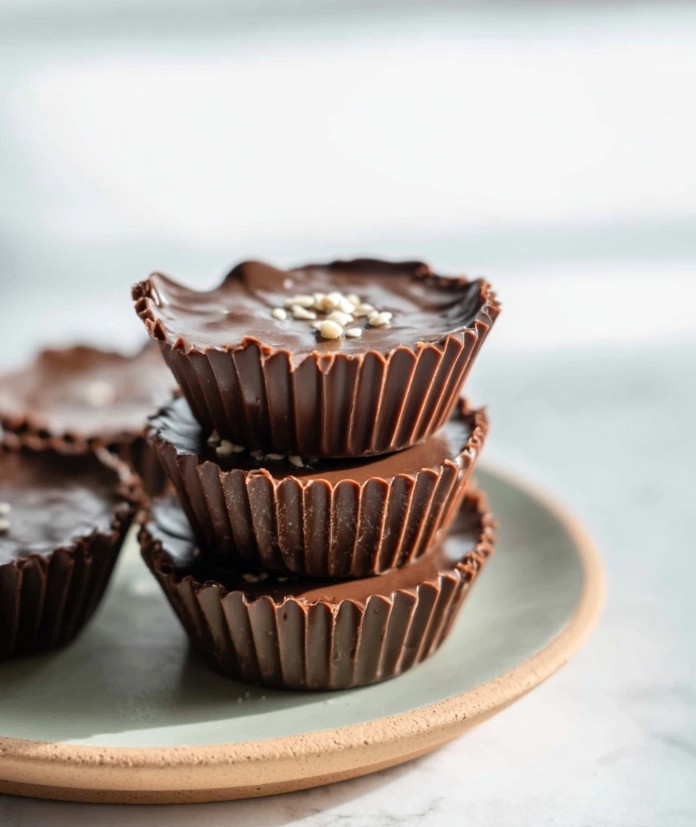












This is a great list of snack ideas, but I’m a bit confused about the recommendations for fruit. I’ve always been told that fruit, especially at night, is a no-no for diabetics because of the sugar content. While the article mentions berries, it also suggests apples and peanut butter. Aren’t apples pretty high in sugar? And how much peanut butter are we talking about here? I could easily eat half a jar in one sitting! Also, are there any specific statistics on how these snacks affect blood sugar levels, particularly in different racial groups, as I’ve heard diabetes affects us all differently? I’m African American, if that helps. Thanks!
Hi Lia, thanks for your question! You’re right to be cautious about fruit. While fruits do contain natural sugars, they also offer fiber, which helps slow down sugar absorption. Apples, in moderation, can be a good choice, especially when paired with a protein and fat source like peanut butter, which further slows down digestion. A good rule of thumb is to stick to a small apple and about 1-2 tablespoons of peanut butter. The key is portion control and choosing lower-sugar fruits like berries whenever possible. As for your question about statistics and racial groups, you are correct that diabetes can affect different populations differently. Studies have shown that African Americans, Hispanic Americans, American Indians, and some Asian Americans are at a higher risk of developing type 2 diabetes. While the snacks in this article are generally safe for most people with diabetes, individual responses to food can vary. For example, a study published in the Journal of the American Medical Association (JAMA) found that the prevalence of diabetes among non-Hispanic Black adults was 18.7%, compared to 15.1% in Hispanic adults and 10.2% in non-Hispanic White adults. There isn’t a large body of research specifically examining the impact of different bedtime snacks on blood sugar in different racial groups, but portion control and monitoring your blood sugar levels before and after snacking are always recommended. It’s always best to consult with your doctor or a registered dietitian who can provide personalized advice based on your individual needs and medical history.
As a registered nurse, I often get asked about healthy bedtime snacks by my patients with diabetes. This article is a good starting point, but I’m wondering about the practicality of some of these suggestions. For example, “chia seed pudding” sounds great in theory, but who has time to make that every night? Also, while air-popped popcorn is mentioned, there’s no warning about the flavored varieties that are often loaded with salt and unhealthy fats. Are there any recommendations for quick, grab-and-go options that don’t require any preparation? And for those who are lactose intolerant, what are some good alternatives to the dairy-based suggestions like yogurt and cheese?
Sara, thank you for your comment and for the important work you do as a nurse! You’re right, not everyone has the time or energy for elaborate snack preparation. While the article provides a variety of options, some quicker, no-prep options include a handful of nuts, seeds, a hard-boiled egg (which can be prepared in advance), or a small portion of edamame. For those who are lactose intolerant, non-dairy alternatives like unsweetened almond milk yogurt or soy-based cheese are great substitutes. As for popcorn, you’re absolutely correct to point out the potential pitfalls of flavored varieties. The article emphasizes air-popped popcorn specifically to avoid those added unhealthy ingredients. It’s crucial to read labels carefully and choose plain, air-popped versions whenever possible. It’s always important to adjust the recommendations according to what every person can do and is willing to do. Thanks for bringing up these important points!
This is a helpful list of snack ideas, especially for those late-night cravings. I’m a little confused about the timing, though. The article talks about the Somogyi effect and dawn phenomenon. Does this mean I should be eating a snack every night before bed, even if I’m not hungry, to prevent these? Or is it only if I wake up hungry?
Hi Mary, thanks for your great question! It’s important to clarify the timing of bedtime snacks in relation to the Somogyi effect and dawn phenomenon. You shouldn’t necessarily eat a snack every single night if you’re not hungry. The goal is to address potential blood sugar fluctuations, not to force yourself to eat.
Here’s a breakdown:
If you regularly experience low blood sugar during the night (Somogyi effect): A bedtime snack, carefully chosen from the options in the article, can be beneficial to help prevent those nighttime lows. Discuss this with your doctor or a registered dietitian, as they can help determine the right type and amount of snack.
If you experience high blood sugar in the morning (dawn phenomenon): A bedtime snack may or may not be helpful, and the type of snack is very important. In some cases, a small amount of protein and healthy fats may help mitigate the dawn phenomenon, but in other cases, it might not make a significant difference. Again, consulting with your healthcare team is essential.
If you simply experience occasional late-night hunger: Then, choosing a healthy snack from this list is a much better option than reaching for sugary or processed foods.
The key is to monitor your blood sugar levels, especially overnight and in the morning, and work with your healthcare provider to determine the best approach for you. Thanks for asking this important question about timing!
This is a really useful article! I’m always looking for new snack ideas. I’m wondering about the portion sizes, though. The article mentions portion control, but doesn’t give specific amounts for each snack. For example, ‘a handful of nuts’ can vary greatly. Could you provide some more specific portion size recommendations for some of these snacks?
Hi Linda, thanks for your feedback! You’re absolutely right; portion control is crucial, and ‘a handful’ is a very subjective measurement. Here are some more specific portion size recommendations for a few of the snacks listed:
Hummus and Vegetables: 1/4 cup of hummus with 1 cup of raw vegetables (like carrot sticks, cucumber slices, or bell pepper strips).
Low-Fat Cheese and Whole-Wheat Crackers: 1 ounce of low-fat cheese with 2-4 whole-wheat crackers (depending on the size of the crackers).
Seeds: 1/4 cup of seeds (like sunflower or pumpkin seeds).
Whole-Grain Toast with Avocado: 1 slice of whole-grain toast with 1/4 of a medium avocado.
Nuts: 1/4 cup of nuts (about a small handful).
Low-Fat Cottage Cheese with Berries: 1/2 cup of low-fat cottage cheese with 1/2 cup of berries.
Apples and Peanut Butter: 1 small apple with 1 tablespoon of peanut butter.
Alright, I’ll admit, some of these snacks sound pretty good. But “low-sugar Jello”? Seriously? Is that even a thing? And who has time to make chia seed pudding before bed? I’m usually so tired by then, I can barely brush my teeth! Also, I’ve heard that eating before bed is bad for you, even if it’s healthy. Isn’t it better to just go to bed hungry than to risk messing up your sleep with digestion and all that? Plus, how many Americans have diabetes? are there any statistics about diabetes across the races?
Hey Melissa, thanks for the comment! I hear you on the Jello – it sounds a little suspect, doesn’t it? But trust me, it exists! You can find it in most grocery stores, usually near the regular Jello. And yeah, chia seed pudding does require a little bit of prep, but you can make a big batch on the weekend and have it ready to go for the whole week. It’s actually pretty easy – just mix chia seeds with some almond milk and let it sit in the fridge for a few hours. But if that’s still too much work, there are plenty of other quick options on the list, like a handful of nuts or some string cheese. As for eating before bed, it’s true that for some people, it can disrupt sleep. But for diabetics, having a small, healthy snack can actually help stabilize blood sugar levels overnight and prevent those dreaded morning highs. It’s all about finding what works best for you. Also, you asked a really important question about the statistics regarding diabetes in America and across races. According to the CDC, as of 2023, an estimated 37.3 million Americans have diabetes, which is about 11.3% of the population. The prevalence of diabetes varies significantly across racial and ethnic groups. Non-Hispanic Black adults have the highest age-adjusted prevalence at 14.7%, followed by Hispanic adults at 12.5%, non-Hispanic Asian adults at 9.2%, and non-Hispanic white adults at 7.4%. These disparities are influenced by a combination of genetic, socioeconomic, and lifestyle factors. Addressing these disparities requires targeted interventions and culturally appropriate care.
This is all great in theory, but what about when you have a REAL craving? Like, sometimes I just want a cookie or a bowl of ice cream before bed. Are there any “cheat” snacks that are still relatively okay for diabetics? And what about portion sizes? How much hummus is too much hummus? Also, my doctor told me to avoid carbs before bed altogether. Is that outdated advice? What are some natural ways of managing diabetes? Any suggestions?
Hi Jennifer, I totally get it – sometimes you just need a treat! And that’s okay! The key is moderation and making smart choices. Instead of regular ice cream, try a small scoop of sugar-free ice cream or some frozen yogurt. Or, have a square or two of dark chocolate (70% cacao or higher) – it’s lower in sugar and has antioxidants. As for cookies, there are some decent low-carb recipes out there that use almond flour and sugar substitutes, but be mindful of the portion size. Speaking of portions, it’s a good idea to stick to the recommended serving sizes on food labels. For hummus, that’s usually about 2 tablespoons. And about carbs before bed, it’s not necessarily outdated advice, but it’s not a one-size-fits-all rule. Some people find that a small amount of complex carbs, like those in whole-wheat crackers or a few berries, can actually help stabilize their blood sugar overnight. It’s really about experimenting and seeing what works best for your body. Also, in addition to the tips I mentioned in the article, there are several natural ways to help manage diabetes. These include things like getting regular exercise, managing stress through techniques like yoga or meditation, and incorporating certain spices like cinnamon into your diet, which some studies suggest may help improve insulin sensitivity. Some people also find that practices like intermittent fasting can be beneficial, but it’s crucial to talk to your doctor before making any significant changes to your diet or routine, especially if you’re on medication. Remember, I’m not a doctor, so it’s always best to consult with your healthcare provider for personalized advice. They can help you create a plan that’s tailored to your specific needs. 😊