We all want that one natural loophole: a sweetener that tastes like comfort but somehow sneaks past our blood sugar radar. For many of us, honey feels like it should be the exception to the rule.
It comes from bees, it’s minimally processed, and it carries a wholesome, earthy reputation. But if you are actively managing your metabolic health, the relationship between honey and diabetes requires a slightly closer look at what happens after the spoon leaves the jar.
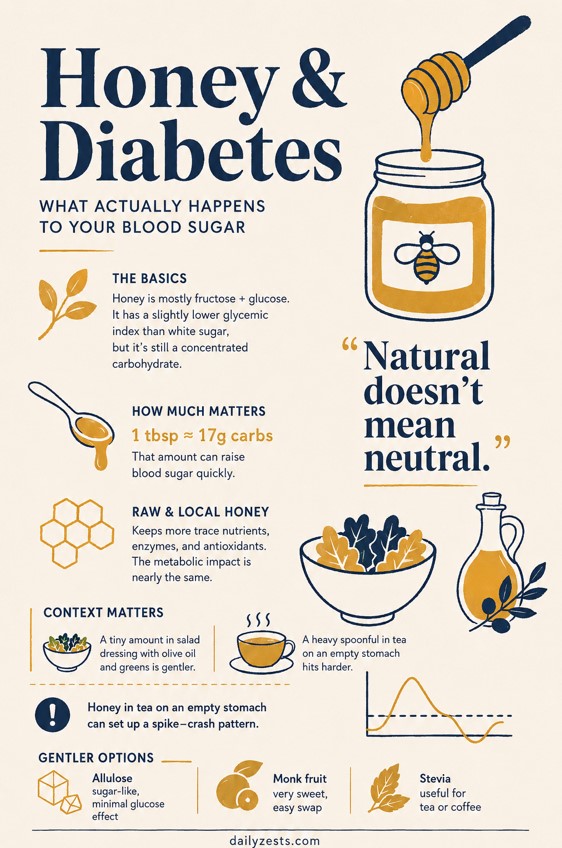
To understand how our bodies handle honey, we have to look at what it actually is. At its core, honey is a mixture of water and two simple sugars: fructose and glucose.
Table sugar is roughly 50 percent fructose and 50 percent glucose. Honey is usually a bit heavier on the fructose side. Because fructose doesn’t raise blood glucose quite as rapidly as pure glucose does, honey often has a slightly lower Glycemic Index (GI) than standard white sugar.
This is the detail that often leads to confusion. You might read that honey has a “lower GI” and assume it gets a free pass. But “lower than table sugar” doesn’t mean “low.” Honey is still a concentrated source of carbohydrates. A single tablespoon contains about 17 grams of carbs, and your digestive system breaks those down into sugar rapidly.
When you are researching honey for diabetics, the gentle truth is this: your body does not know the sugar came from a local farm. It only knows it has to manage the incoming carbohydrate load.
My Own Lesson in Morning Sugar
I learned this the hard way when I was first trying to understand my own insulin resistance. I thought I was making a healthy, mindful choice by swapping my usual heavily sweetened coffee creamers for a “natural” alternative.
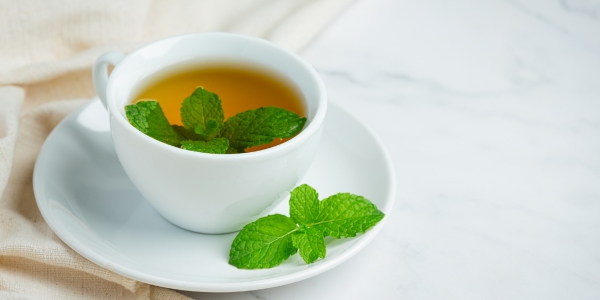
I would sit on the porch in the mornings with my dog, Barnaby, sipping a massive mug of black tea heavily laced with local wildflower honey. It felt wholesome. Yet, without fail, the dreaded 3 PM crash would hit. My energy would completely bottom out, leaving me feeling like I was walking through wet cement.
I was confused because I thought I was doing everything right. It wasn’t until I started measuring my body’s actual responses that I realized my “healthy” morning tea was sending my blood sugar on a steep roller coaster ride, guaranteeing that afternoon plunge.
What About Raw or Local Honey?
A common question that comes up is whether raw honey behaves differently in the body than the clear, pasteurized honey sitting in plastic bears at the grocery store.
Raw honey absolutely retains more of its natural trace minerals, enzymes, and antioxidants because it hasn’t been heated or heavily filtered. If someone without blood sugar concerns is choosing a sweetener, raw honey is a beautiful option.
However, from a purely metabolic standpoint, the carbohydrate content remains nearly identical. The trace amounts of zinc, iron, and antioxidants in a teaspoon of raw honey aren’t substantial enough to offset the insulin response it demands. If your primary goal is keeping your blood sugar stable, raw honey will still trigger a spike.
Finding the Right Balance
Does this mean honey is entirely off-limits forever? Not necessarily. Health shouldn’t feel like a punishment, and rigid restriction often backfires.
If you genuinely love honey, it becomes a matter of portion and context. A half-teaspoon whisked into a savory salad dressing, where it is buffered by olive oil (fat) and greens (fiber), will impact your body very differently than a heavy tablespoon drizzled over a bowl of plain oatmeal on an empty stomach.
But if you rely on sweetness heavily in your daily drinks and baking, you might find more steady energy by exploring natural sweeteners for diabetes that don’t ask so much of your pancreas.
Gentle Alternatives for Sweetness
When you want the comfort of a sweet treat without the afternoon crash, there are wonderful, plant-derived options that have little to no impact on your glycemic response.
Allulose: This is a rare sugar found in tiny quantities in figs and raisins. It tastes incredibly close to regular sugar, browns nicely in baking, and mostly passes through the body with only a negligible effect on blood glucose.
Monk Fruit: Extracted from a small green melon, this sweetener is intensely sweet. It is often blended with erythritol to measure like sugar, making it an easy swap for baking.
Stevia: Derived from the leaves of the stevia plant, this is an excellent, zero-carb option for sweetening liquids like iced tea or morning coffee.
Frequently Asked Questions
Is honey good for diabetics in any amount?
Research suggests that while honey has trace nutrients, it still raises blood glucose. Very small amounts (like a half-teaspoon used as a flavor accent in a high-fiber, high-fat meal) may be manageable for some, but it should be counted as part of your total daily carbohydrate intake.
Does honey raise blood sugar as fast as white sugar?
Honey has a slightly lower Glycemic Index than pure white sugar due to its fructose content. However, the difference is relatively small, and it will still cause a significant and rapid rise in blood sugar levels for most people.
Can I use honey in my tea if I have insulin resistance?
Using honey in liquids on an empty stomach can be a fast way to raise blood sugar, as there is no fiber or fat to slow digestion. If you want a sweet cup of tea without the resulting energy crash, a zero-calorie sweetener like stevia or monk fruit is generally a much gentler choice for your metabolism.
Understanding how our bodies react to different foods is the quietest form of self-care. We don’t have to give up sweetness to feel well; we just have to learn which ingredients love our bodies back.
Kristina Hanson is an independent wellness researcher and the founder of DailyZests. She specializes in translating nutritional science into simple, delicious recipes that fit into real life. When she isn’t in the kitchen, you’ll find her hiking the trails or enjoying a slow morning coffee with her Golden Retriever, Barnaby. Read her full story.
Well, this is certainly a sticky situation! (Pun intended, haha!) I’ve always been told that honey is a big no-no for diabetics. My grandma had type 2 diabetes, and her doctor was super strict about sugar. This article is making me question everything! I love the idea of adding a little honey to my tea, but I’m scared it’ll send my blood sugar through the roof. You mention “moderation,” but what does that even mean for someone with type 2 diabetes? Like, are we talking a drop, a teaspoon, a whole jar? (Just kidding about the jar… mostly.) And is there a specific type of honey that’s best, or is any old honey from the supermarket okay?
Hi Janet, thanks for your comment and the great pun! I understand your hesitation. It’s a common misconception that people with diabetes have to avoid all things sweet, including honey. The truth is, it’s more about the type and quantity of sweetener. “Moderation” can be a tricky word, but for someone with type 2 diabetes, starting with 1-2 teaspoons of honey a day is generally recommended. It’s crucial to monitor your blood sugar levels closely after consuming it to see how your body reacts. Definitely not a whole jar! 😉 As for the type of honey, raw, unprocessed honey is best because it retains more of its beneficial nutrients and enzymes. Look for labels that say “raw” or “unfiltered.” You might find a wider selection at health food stores or farmers’ markets. And remember, it’s always best to consult your doctor or a registered dietitian for personalized advice based on your specific needs. They can help you determine the right amount of honey and how to incorporate it into your meal plan safely.
This article is interesting, but I’m a bit skeptical about the whole honey and type 1 diabetes thing. My daughter was diagnosed with type 1 when she was just 5, and we’ve always been told that sugar is sugar, whether it comes from a candy bar or a beehive. It all affects her blood sugar the same way. Is there any actual proof that honey is safe for type 1 diabetics? I’m not going to risk my daughter’s health based on some internet article. Also, those recipes sound delicious, but are they really practical for a busy mom like me?
Hi Barbara, thanks for raising these important concerns. I completely understand your skepticism, especially when it comes to your daughter’s health. You’re right to be cautious about type 1 diabetes and sugar intake. It’s true that for people with type 1 diabetes, their bodies don’t produce insulin, so any form of sugar, including honey, needs to be carefully managed. While some studies (included as resources in the article) suggest potential benefits of honey, the research on type 1 diabetes specifically is still limited. The studies mentioned mainly focus on type 2 diabetes. Therefore, it’s absolutely crucial to work closely with your daughter’s doctor or a registered dietitian before introducing honey into her diet. They can assess her individual needs and provide the safest and most appropriate guidance. As for the recipes, I understand that time is precious, especially for busy moms! These are just suggestions, and you can always modify them to fit your schedule. For example, the Honey and Yogurt Parfait can be prepped the night before for a quick and easy breakfast. The key takeaway here is that when it comes to type 1 diabetes and honey, professional medical advice is non-negotiable. Your daughter’s health is paramount!
This is really interesting! I always thought honey was a big no-no for diabetics. My grandma has type 2 diabetes, and she loves honey. I’m going to tell her about this, but I’m a little worried she’ll go overboard. How do I convince her that “moderation” is still important? Also, what’s the difference between raw honey and the regular kind you find in the supermarket? Is it worth the extra cost? I saw a “Manuka” honey in the store the other day, and it was super expensive!
Sophia, you’re right to emphasize moderation! Maybe you can frame it as “savoring” the honey instead of just consuming it. As for raw honey, it’s less processed than regular honey, so it retains more of the natural enzymes, antioxidants, and pollen, which are thought to be beneficial. Regular honey is often heated and filtered, which can remove some of these nutrients. Manuka honey is a special type from New Zealand known for its potent antibacterial properties, which is why it’s pricier. Whether it’s worth the extra cost depends on your budget and priorities. For your grandma, starting with a good quality raw honey might be a good compromise.
Okay, so honey might be okay for diabetics in small amounts. But what about other natural sweeteners? What’s the deal with agave nectar, or stevia? Are those better options? I’m trying to cut back on sugar in general, and I’m overwhelmed by all the choices! Also, the honey-mustard dressing sounds yummy, but I hate Dijon mustard. Can I use regular mustard instead? And is this article suggesting that honey can cure diabetes? Because that sounds a little too good to be true, lol.
Harper, you’re asking great questions! Agave nectar has a lower GI than sugar, but it’s high in fructose, which can be problematic in large amounts. Stevia is a natural, calorie-free sweetener that doesn’t raise blood sugar, so it’s a good option for many people with diabetes. It really comes down to personal preference and how your body responds. And yes, you can definitely use regular mustard in the dressing if you prefer! As for curing diabetes, absolutely not! This article is about how honey, in moderation and as part of a healthy diet, might offer some benefits for managing blood sugar levels. It’s definitely not a cure, and it’s always important to work with your doctor or dietitian.




 This post may contain affiliate links.




Well, this is certainly a sticky situation! (Pun intended, haha!) I’ve always been told that honey is a big no-no for diabetics. My grandma had type 2 diabetes, and her doctor was super strict about sugar. This article is making me question everything! I love the idea of adding a little honey to my tea, but I’m scared it’ll send my blood sugar through the roof. You mention “moderation,” but what does that even mean for someone with type 2 diabetes? Like, are we talking a drop, a teaspoon, a whole jar? (Just kidding about the jar… mostly.) And is there a specific type of honey that’s best, or is any old honey from the supermarket okay?
Hi Janet, thanks for your comment and the great pun! I understand your hesitation. It’s a common misconception that people with diabetes have to avoid all things sweet, including honey. The truth is, it’s more about the type and quantity of sweetener. “Moderation” can be a tricky word, but for someone with type 2 diabetes, starting with 1-2 teaspoons of honey a day is generally recommended. It’s crucial to monitor your blood sugar levels closely after consuming it to see how your body reacts. Definitely not a whole jar! 😉 As for the type of honey, raw, unprocessed honey is best because it retains more of its beneficial nutrients and enzymes. Look for labels that say “raw” or “unfiltered.” You might find a wider selection at health food stores or farmers’ markets. And remember, it’s always best to consult your doctor or a registered dietitian for personalized advice based on your specific needs. They can help you determine the right amount of honey and how to incorporate it into your meal plan safely.
This article is interesting, but I’m a bit skeptical about the whole honey and type 1 diabetes thing. My daughter was diagnosed with type 1 when she was just 5, and we’ve always been told that sugar is sugar, whether it comes from a candy bar or a beehive. It all affects her blood sugar the same way. Is there any actual proof that honey is safe for type 1 diabetics? I’m not going to risk my daughter’s health based on some internet article. Also, those recipes sound delicious, but are they really practical for a busy mom like me?
Hi Barbara, thanks for raising these important concerns. I completely understand your skepticism, especially when it comes to your daughter’s health. You’re right to be cautious about type 1 diabetes and sugar intake. It’s true that for people with type 1 diabetes, their bodies don’t produce insulin, so any form of sugar, including honey, needs to be carefully managed. While some studies (included as resources in the article) suggest potential benefits of honey, the research on type 1 diabetes specifically is still limited. The studies mentioned mainly focus on type 2 diabetes. Therefore, it’s absolutely crucial to work closely with your daughter’s doctor or a registered dietitian before introducing honey into her diet. They can assess her individual needs and provide the safest and most appropriate guidance. As for the recipes, I understand that time is precious, especially for busy moms! These are just suggestions, and you can always modify them to fit your schedule. For example, the Honey and Yogurt Parfait can be prepped the night before for a quick and easy breakfast. The key takeaway here is that when it comes to type 1 diabetes and honey, professional medical advice is non-negotiable. Your daughter’s health is paramount!
This is really interesting! I always thought honey was a big no-no for diabetics. My grandma has type 2 diabetes, and she loves honey. I’m going to tell her about this, but I’m a little worried she’ll go overboard. How do I convince her that “moderation” is still important? Also, what’s the difference between raw honey and the regular kind you find in the supermarket? Is it worth the extra cost? I saw a “Manuka” honey in the store the other day, and it was super expensive!
Sophia, you’re right to emphasize moderation! Maybe you can frame it as “savoring” the honey instead of just consuming it. As for raw honey, it’s less processed than regular honey, so it retains more of the natural enzymes, antioxidants, and pollen, which are thought to be beneficial. Regular honey is often heated and filtered, which can remove some of these nutrients. Manuka honey is a special type from New Zealand known for its potent antibacterial properties, which is why it’s pricier. Whether it’s worth the extra cost depends on your budget and priorities. For your grandma, starting with a good quality raw honey might be a good compromise.
Okay, so honey might be okay for diabetics in small amounts. But what about other natural sweeteners? What’s the deal with agave nectar, or stevia? Are those better options? I’m trying to cut back on sugar in general, and I’m overwhelmed by all the choices! Also, the honey-mustard dressing sounds yummy, but I hate Dijon mustard. Can I use regular mustard instead? And is this article suggesting that honey can cure diabetes? Because that sounds a little too good to be true, lol.
Harper, you’re asking great questions! Agave nectar has a lower GI than sugar, but it’s high in fructose, which can be problematic in large amounts. Stevia is a natural, calorie-free sweetener that doesn’t raise blood sugar, so it’s a good option for many people with diabetes. It really comes down to personal preference and how your body responds. And yes, you can definitely use regular mustard in the dressing if you prefer! As for curing diabetes, absolutely not! This article is about how honey, in moderation and as part of a healthy diet, might offer some benefits for managing blood sugar levels. It’s definitely not a cure, and it’s always important to work with your doctor or dietitian.