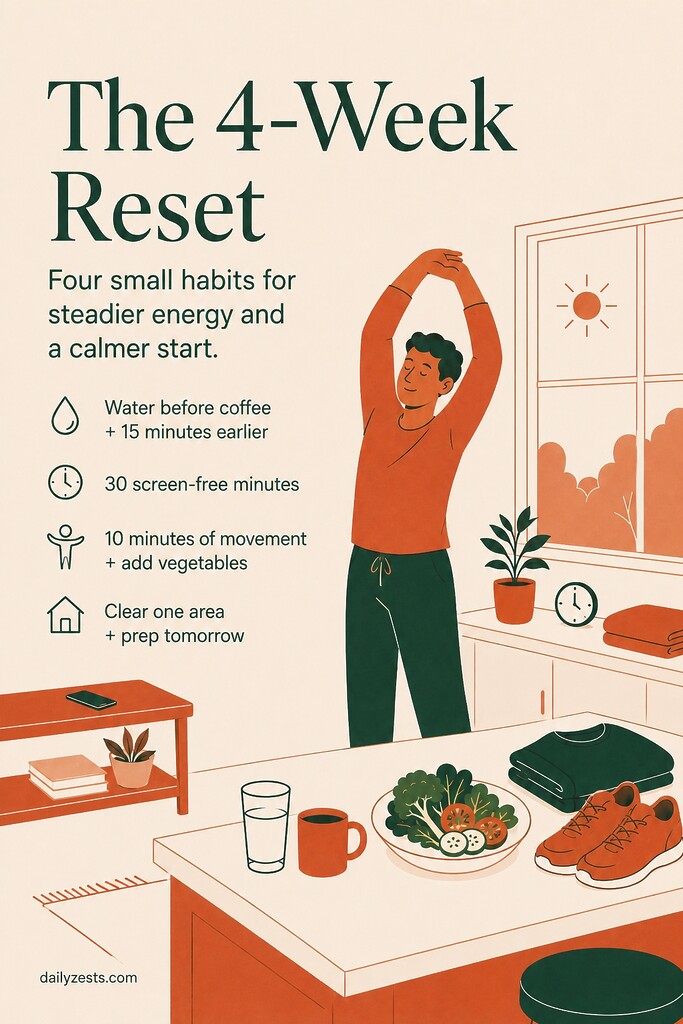
Most 30-day routines fail because they ask you to change your entire personality overnight. Real change is actually much quieter. This 4 week self care plan focuses on small, compounding shifts that rebuild your baseline energy without requiring exhaustion.
Years ago, when I was dealing with severe chronic fatigue, I tried every strict morning regimen I could find online. I dragged myself out of bed for intense workouts and drank complicated smoothies while running on fumes. I thought self-care meant forcing my body into submission.
That approach just dug the hole deeper. The minute a routine feels like a punishment, your brain will find a reason to escape it. I had to learn that treating the body like a machine to be fixed rarely works. It is a system that needs support.
A true self care challenge should not feel like another job. It should feel like setting down a heavy bag. This 28 day self care challenge is designed around understanding your biology instead of fighting it. We will tackle one foundational layer each week.
The 28 Day Self Care Challenge Breakdown
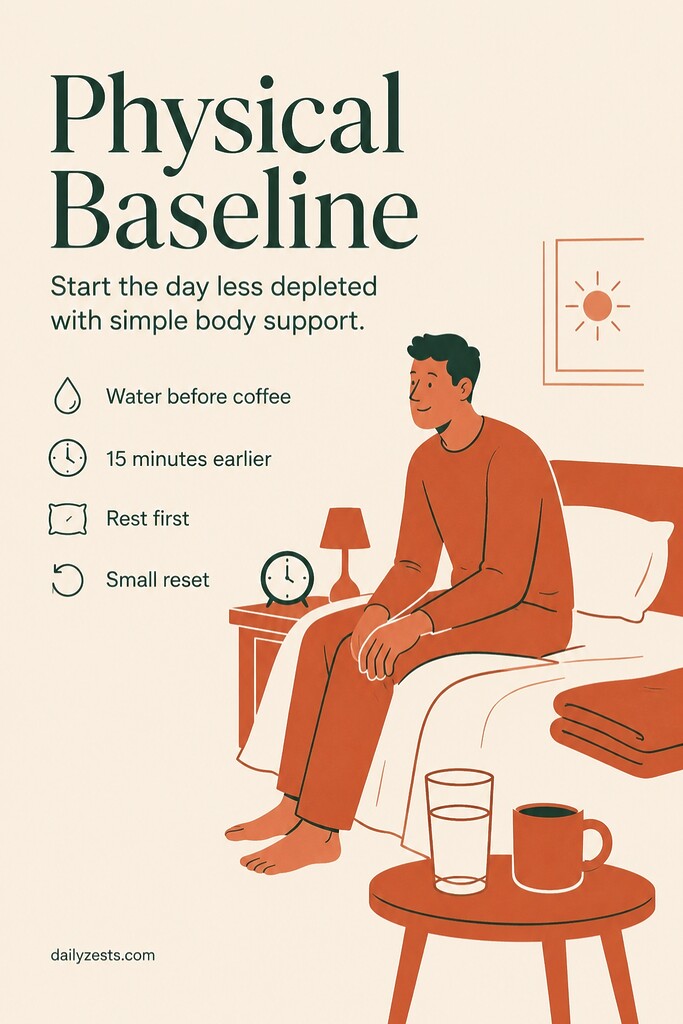
Week 1: The Physical Baseline
You cannot out-meditate exhaustion. Before we touch on mindset or productivity, we have to make sure your cells have the actual resources they need to function.
This week has exactly two rules.
First, drink ten ounces of water before you touch your coffee. Your body loses a significant amount of hydration overnight through respiration. Starting with water first thing helps replace some of that fluid before coffee. Coffee is wonderful, but it does not replace water.
Second, add exactly 15 minutes to your sleep window. Do not attempt to overhaul your entire circadian rhythm. Just get into bed 15 minutes earlier than you did last week.
Okay, with one caveat. If your current life schedule literally does not allow for more sleep, focus entirely on the quality of your waking rest. Sit down while you eat lunch instead of standing at the counter. Find tiny pockets of physical stillness.
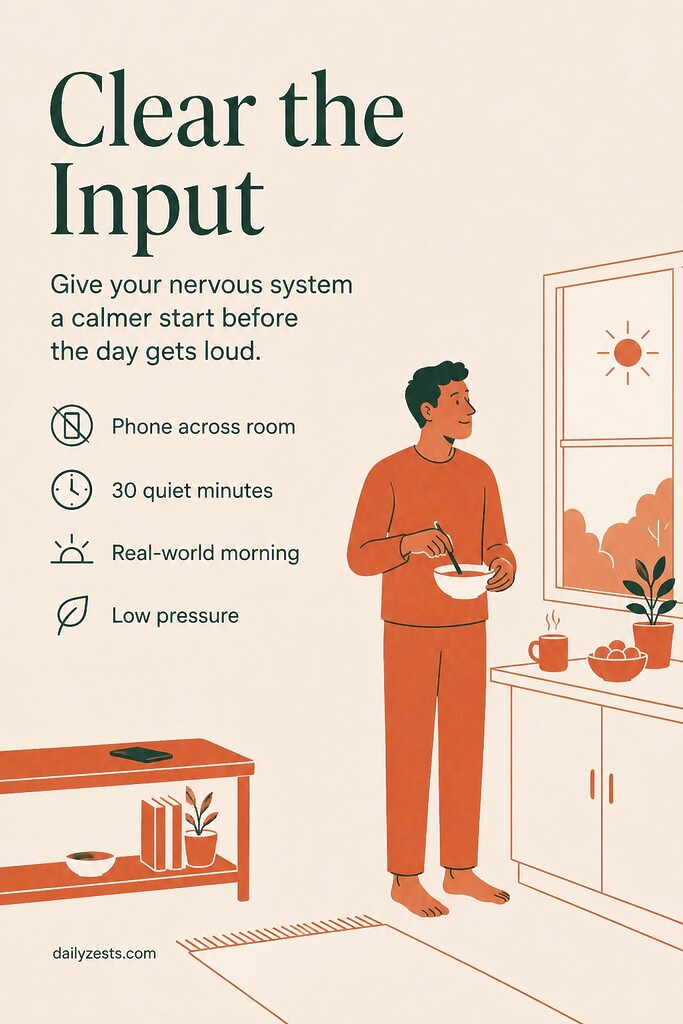
Week 2: Clearing the Input
Now that you are slightly better rested and hydrated, we look at what you are absorbing mentally. Your nervous system is constantly processing data from screens, news, and notifications. Constant input keeps your brain in a low-grade state of alert.
This week, you will create a buffer. Keep your phone out of your bedroom, or at least across the room. Give yourself the first 30 minutes of the morning without looking at a screen. Let your brain wake up in the real world before you invite the digital world into your head.
Fill that 30 minutes with something low-pressure. Make breakfast. Look out the window. Sit on the porch. That morning quiet is often the most restorative part of my day.
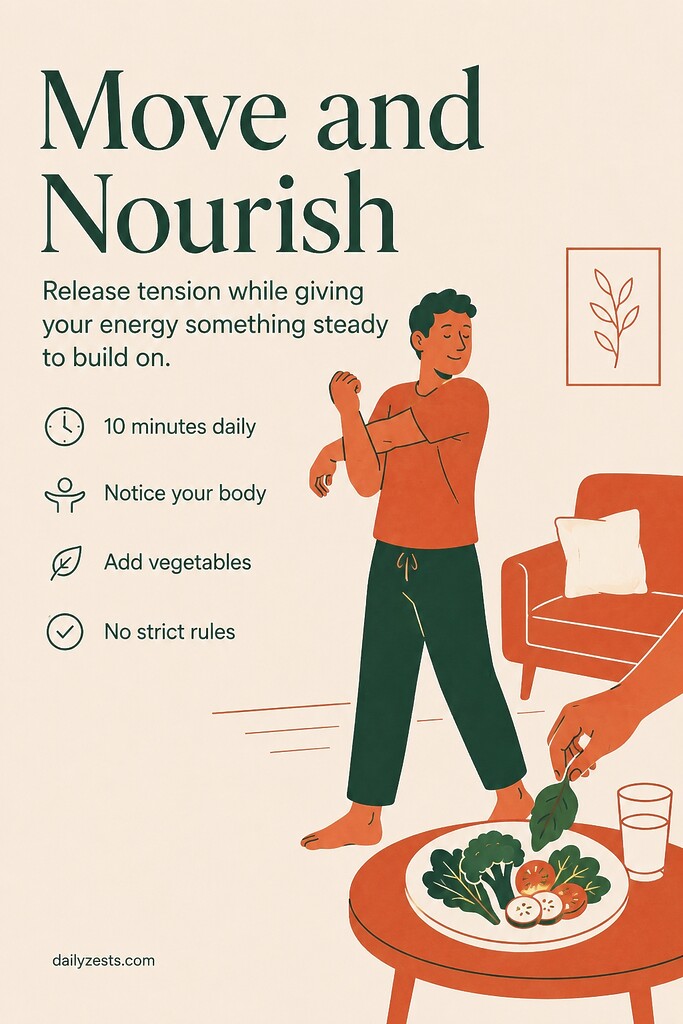
Week 3: Unhurried Movement and Fuel
Physical support is not about burning calories. It is about circulation and keeping your joints healthy. When you are constantly running on adrenaline, your body holds onto tension. Moving helps release that physical grip.
Your goal this week is ten minutes of purposeful movement daily. It does not need to happen in a gym. My morning walks with my dog Barnaby count just as much as a structured workout. Stretching on the living room rug counts. The only requirement is that you pay attention to how your body feels while doing it.
For your meals, focus on addition rather than restriction. Ask yourself what you can add to your plate to support your energy. A handful of spinach in your eggs. An extra serving of vegetables at dinner. When you focus on nourishing your body, the urgency to follow strict dietary rules starts to fade.
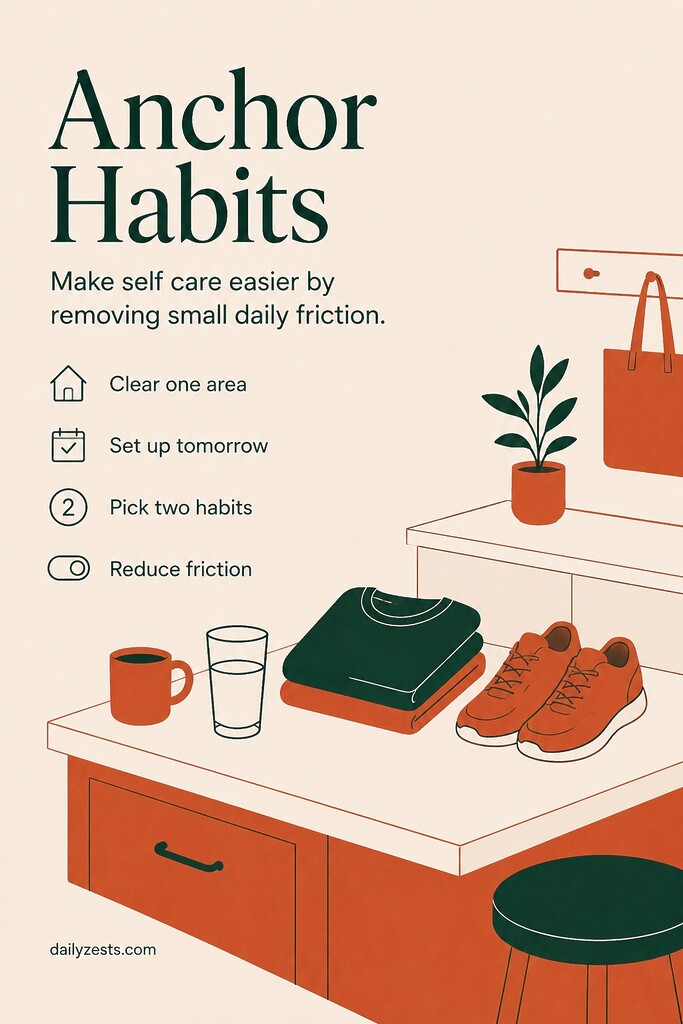
Week 4: Environment and Anchor Habits
By week four, you are drinking water, resting a bit more, managing your screen time, and moving your body. Now we protect those habits by shaping your environment.
Pick one small area of your home that causes daily friction and simplify it. It might be clearing off the kitchen island so making breakfast is easier. It might be setting your work clothes out the night before. You are doing a favor for your future self.
This is also the week to notice which habits from the past three weeks felt the best. You do not have to carry all of them forward perfectly. Pick the two that made the biggest difference in your daily energy and let those become your anchors.
What Real Life Actually Looks Like
You will probably miss a day. You might sleep poorly on a Tuesday or scroll on your phone for an hour in bed on a Thursday. Many people abandon a plan the moment they stumble because they think the value is in a perfect streak.
The magic is not in the streak. It is in the return. When you drop a habit, simply pick it back up the next morning without analyzing your failure. Your body does not keep a scorecard. It only responds to the support you give it today.
Frequent Questions About the Process
Do I need to buy anything to start?
Absolutely nothing. You do not need expensive supplements, a new yoga mat, or a premium app subscription. The most effective forms of physical support are usually free. Water, sleep, and fresh air cost nothing.
What if week two feels harder than week one?
Restricting screen time is often much harder than drinking water because it tugs on attention and reward habits. If 30 minutes without a phone feels impossible, start with 10 minutes. The goal is steady progress, not sudden perfection.
Building a life that feels good on the inside takes time. But it starts with deciding you are worth the effort of a quiet, steady morning.
Kristina Hanson is an independent wellness researcher and the founder of DailyZests. She specializes in translating nutritional science into simple, delicious recipes that fit into real life. When she isn’t in the kitchen, you’ll find her hiking the trails or enjoying a slow morning coffee with her Golden Retriever, Barnaby. Read her full story.



 This post may contain affiliate links.