It is easy to hold your head high on a Saturday morning with a coffee in one hand and my dog, Barnaby, leaning against my leg. It is an entirely different story on a Tuesday afternoon when you are four hours deep into a screen.
I know exactly when my posture gives up. Right around 3 PM, when my old insulin resistance fatigue tries to creep in and my energy dips, my body slowly folds over the keyboard. But instead of buying an expensive ergonomic chair or forcing a rigid, uncomfortable posture, you can use these three quiet resets right where you are.
Most of us were told as kids to pull our shoulders back and suck our stomachs in. But fighting your body with tension rarely works for long. If you rigidly pinch your shoulder blades together, your upper back muscles will be screaming by lunchtime. True alignment shouldn’t feel like a punishment.
Research on posture changes suggests that taking brief, frequent moments to realign your joints does more for your spine than trying to hold one perfect position all day. Here is how to check in with your body gently.
1. The Collarbone Smile
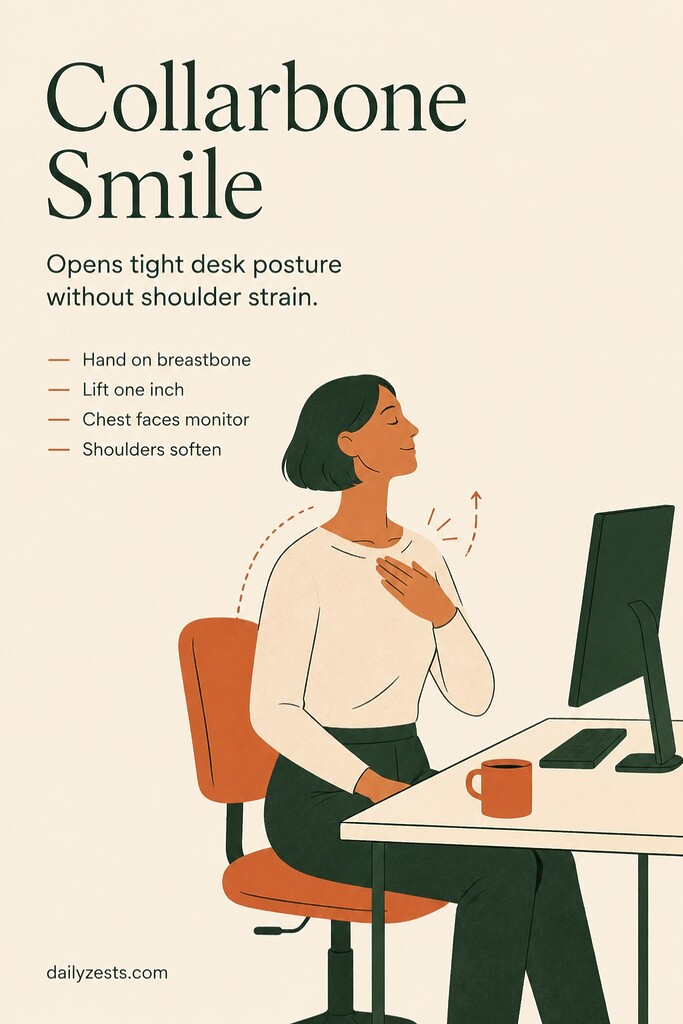
When we get stressed or focused, our shoulders naturally round forward to protect our chest. Instead of aggressively pulling your shoulders back, try thinking about the front of your body.
Imagine your collarbones are gently widening, almost like they are smiling. As you broaden your chest, your shoulder blades will naturally drop down and settle against your back without any forced pinching. This small shift opens up your breathing immediately.
The quick check: Place a hand lightly on your breastbone. Is it pointing down at your keyboard, or straight ahead at your monitor? Lift it just an inch so it faces forward.
2. The Ear-to-Shoulder Glide
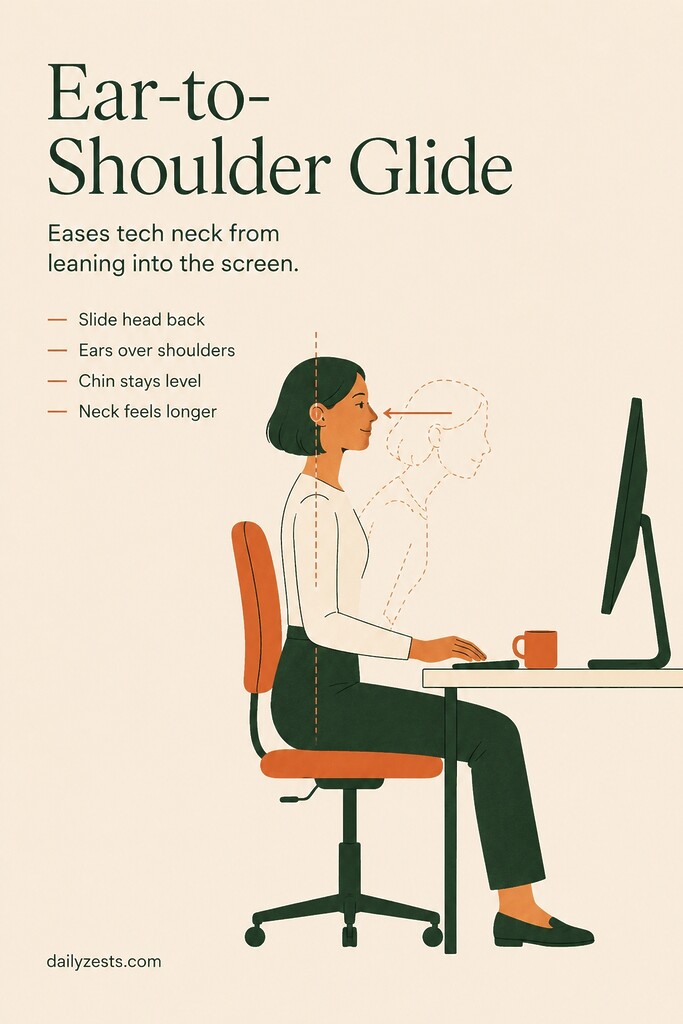
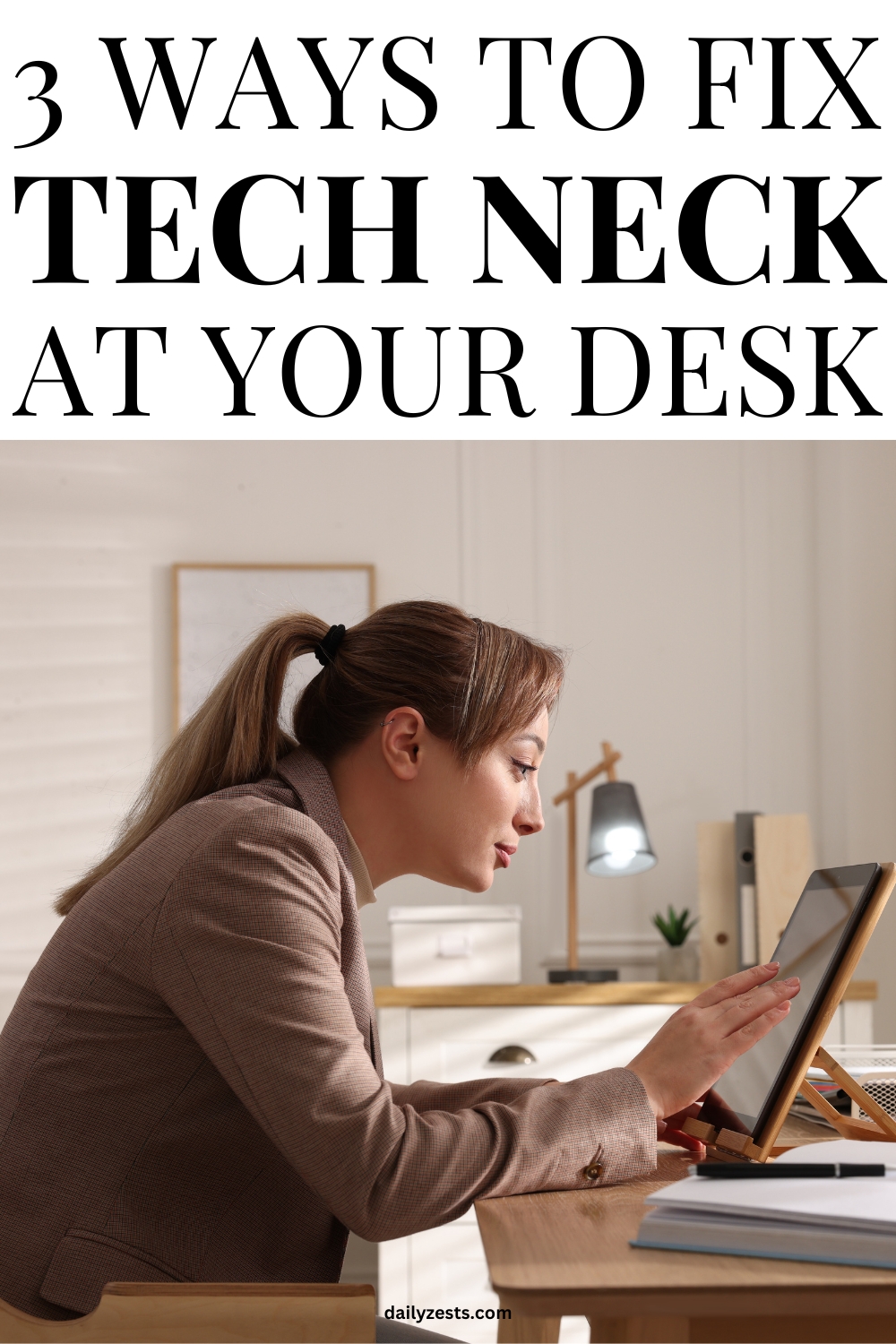
When you lean in to read a tiny font or scrutinize a complex email, your head inevitably drifts forward. This is called “tech neck,” and as your head tilts forward, the load on your neck can rise from about 10 to 12 pounds in neutral to 27 pounds at 15 degrees and 60 pounds at 60 degrees.
To fix it, don’t just tilt your chin up. Instead, imagine your head is resting on a horizontal track. Gently slide your entire head straight back until your ears are stacked directly over your shoulders. You will likely feel a slight stretch at the base of your skull; that is a good sign you are releasing tension you’ve been holding for hours.
3. The Ribcage Stack
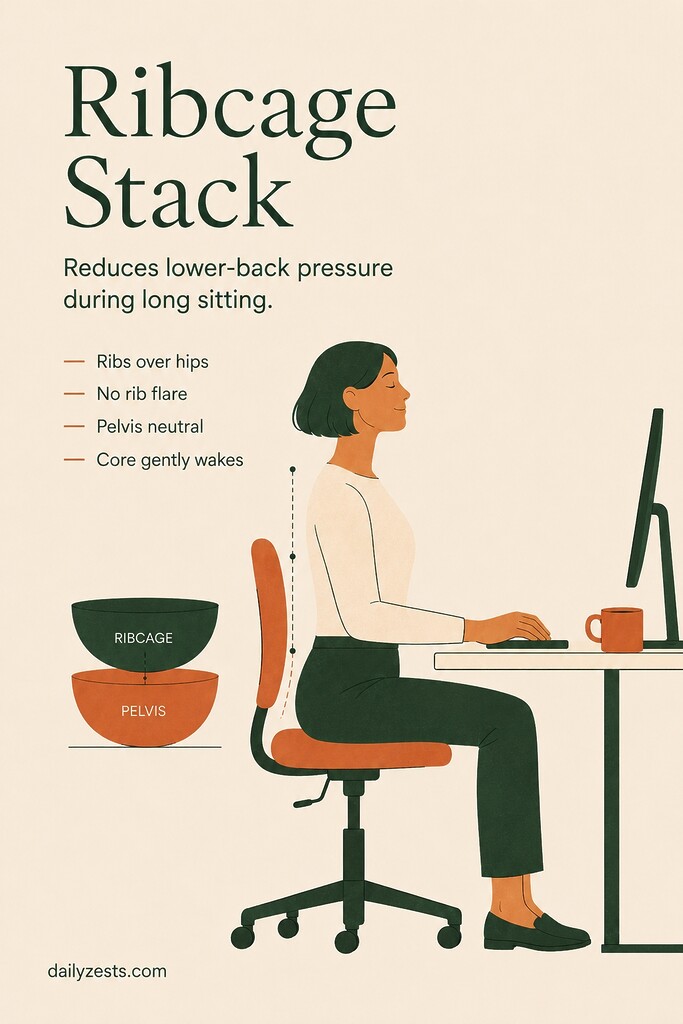
The lower back often takes the hardest hit during a long workday. We tend to either slump back into the chair so our pelvis tucks under, or we sit aggressively upright, flaring our ribs out and arching our lower backs sharply.
Think of your ribcage as a heavy bowl, and your pelvis as another bowl right beneath it. You want the top bowl to balance perfectly over the bottom one. If your ribs are flaring out, the bowls spill backward. If you are hunched, they spill forward.
Just gently shift your torso until your ribs are resting squarely over your hips. When you hit the right spot, your core muscles will naturally engage a tiny bit to hold you there, taking some pressure off your lower back.
Stacking Your Checks
Knowing how to check your posture doesn’t matter if you never remember to actually do it. And relying on willpower alone is a losing game when you have deadlines piling up.
What worked for me was tying these three checks to a habit I already do constantly: taking a sip of water. Every time I reach for my glass, I broaden my collarbones, glide my head back, and stack my ribs. It takes less than two seconds.
You don’t need to hold the position perfectly for the next hour. You will inevitably slouch again, and that is completely fine. The goal isn’t absolute perfection; it’s just giving your body a gentle reminder of where home is, a few times a day.
Kristina Hanson is an independent wellness researcher and the founder of DailyZests. She specializes in translating nutritional science into simple, delicious recipes that fit into real life. When she isn’t in the kitchen, you’ll find her hiking the trails or enjoying a slow morning coffee with her Golden Retriever, Barnaby. Read her full story.


 This post may contain affiliate links.