When you first start managing your blood sugar, every meal can feel like a stressful math problem. But cooking for insulin resistance shouldn’t mean a lifetime of plain, steamed chicken. Flavor is exactly how we make healthy habits stick.
I remember the early days of trying to figure out my own insulin resistance. I spent a lot of time reading labels in the grocery store aisle, frustrated by how many pre-packaged taco seasonings and meat rubs were loaded with brown sugar, maltodextrin, and unnecessary starches. Those hidden additives were a big part of the 3 PM blood sugar crashes I was working so hard to avoid.
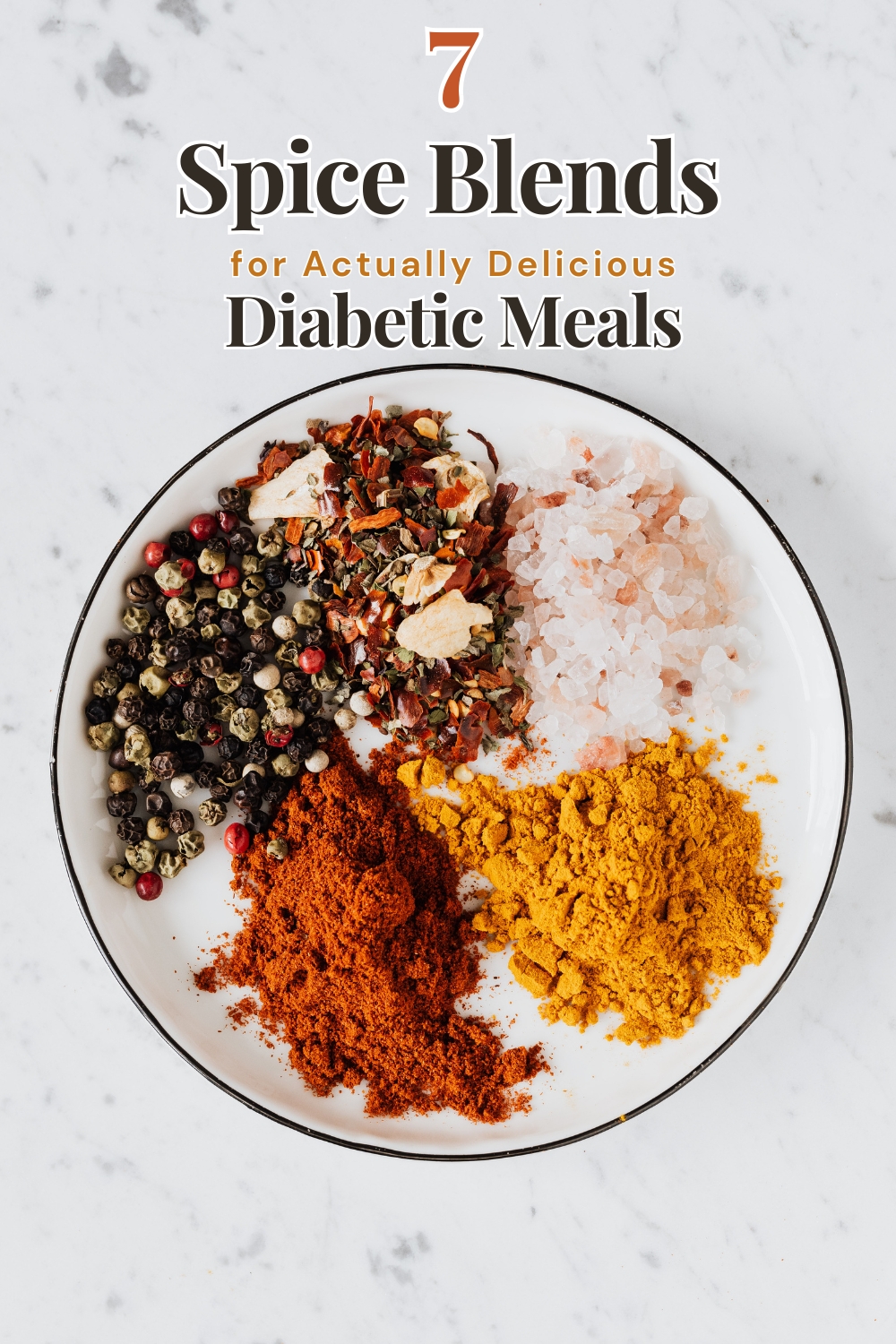
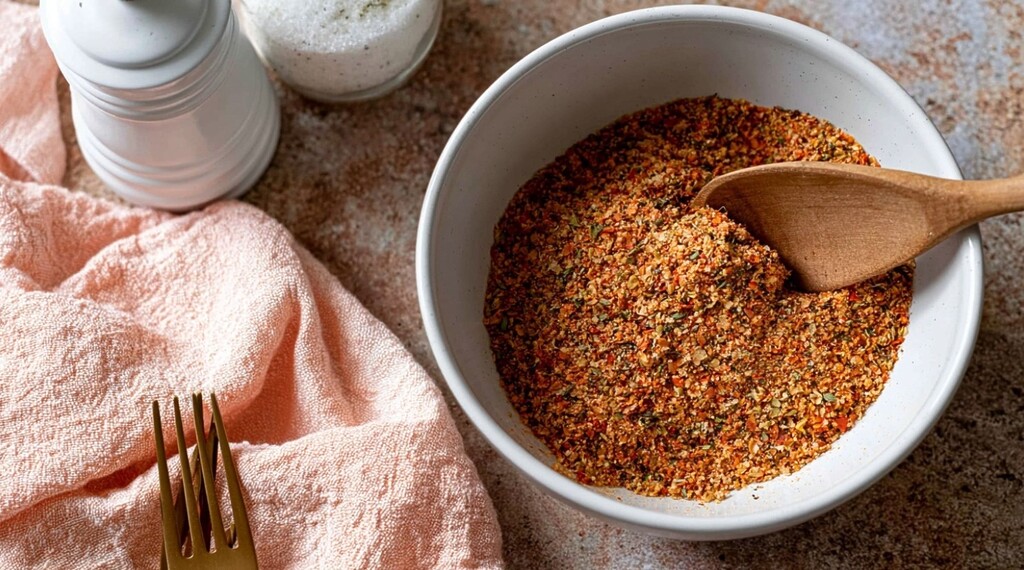
The easiest fix I found was to build my own flavor profiles at home. Making your own spice blends takes about three minutes, saves money, and gives you complete control over what goes into your body. Spices and herbs are naturally low in carbohydrates, and they transform simple, blood-sugar-friendly ingredients into meals you actually look forward to eating.
Here are seven simple, sugar-free spice blends you can mix up in your own kitchen today.
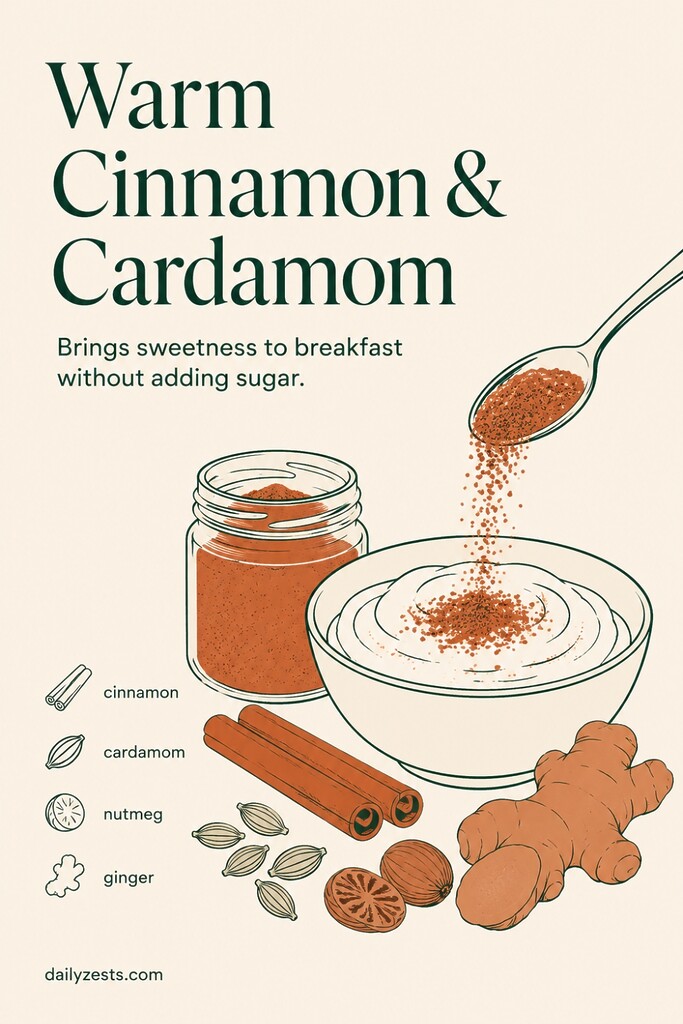
1. The Warm Cinnamon & Cardamom Blend
If you miss sweetened breakfasts, this is your new best friend. Warm spices like cinnamon, nutmeg, and cardamom naturally trick our brains into perceiving sweetness, even when there is no actual sugar present. Research also suggests that cinnamon may be supportive of healthy blood sugar levels, making it a staple in my pantry.
The Mix:
2 tablespoons ground cinnamon
1 teaspoon ground cardamom
1 teaspoon ground nutmeg
1/2 teaspoon ground ginger
How to use it: Stir a spoonful into plain Greek yogurt, sprinkle it over almond flour pancakes, or mix it into your morning coffee grounds before brewing.
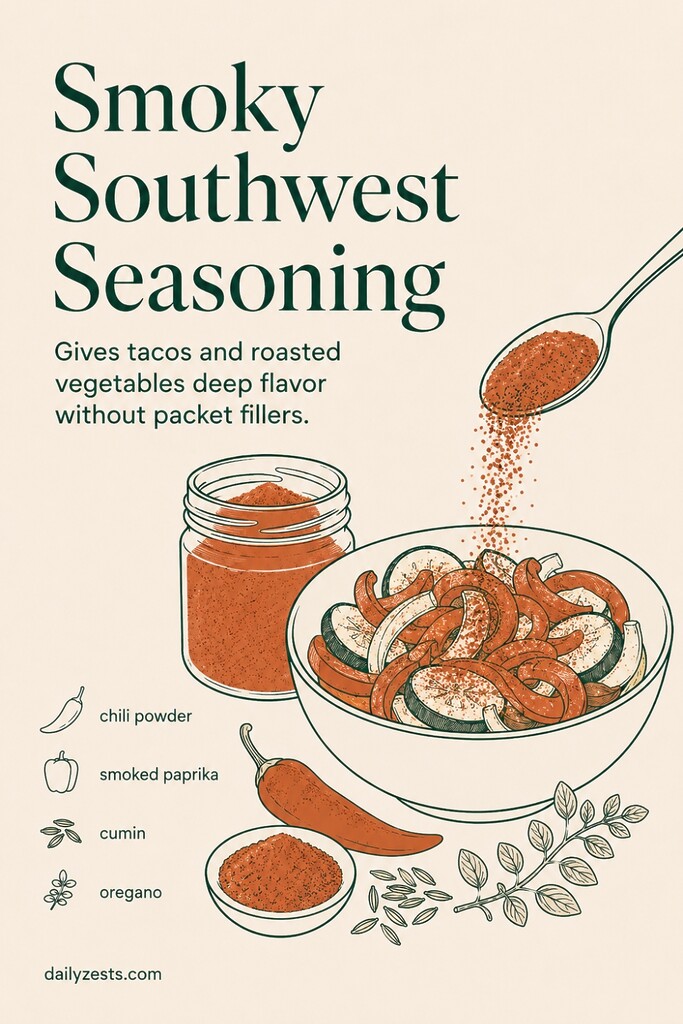
2. Smoky Southwest Seasoning
Store-bought taco seasonings are notorious for hiding cornstarch and sugar. This homemade version delivers all the smoky, savory depth you want for taco Tuesday without the unnecessary additives.
The Mix:
2 tablespoons chili powder
1 tablespoon smoked paprika
1 tablespoon ground cumin
1 teaspoon garlic powder
1 teaspoon dried oregano
1/2 teaspoon salt
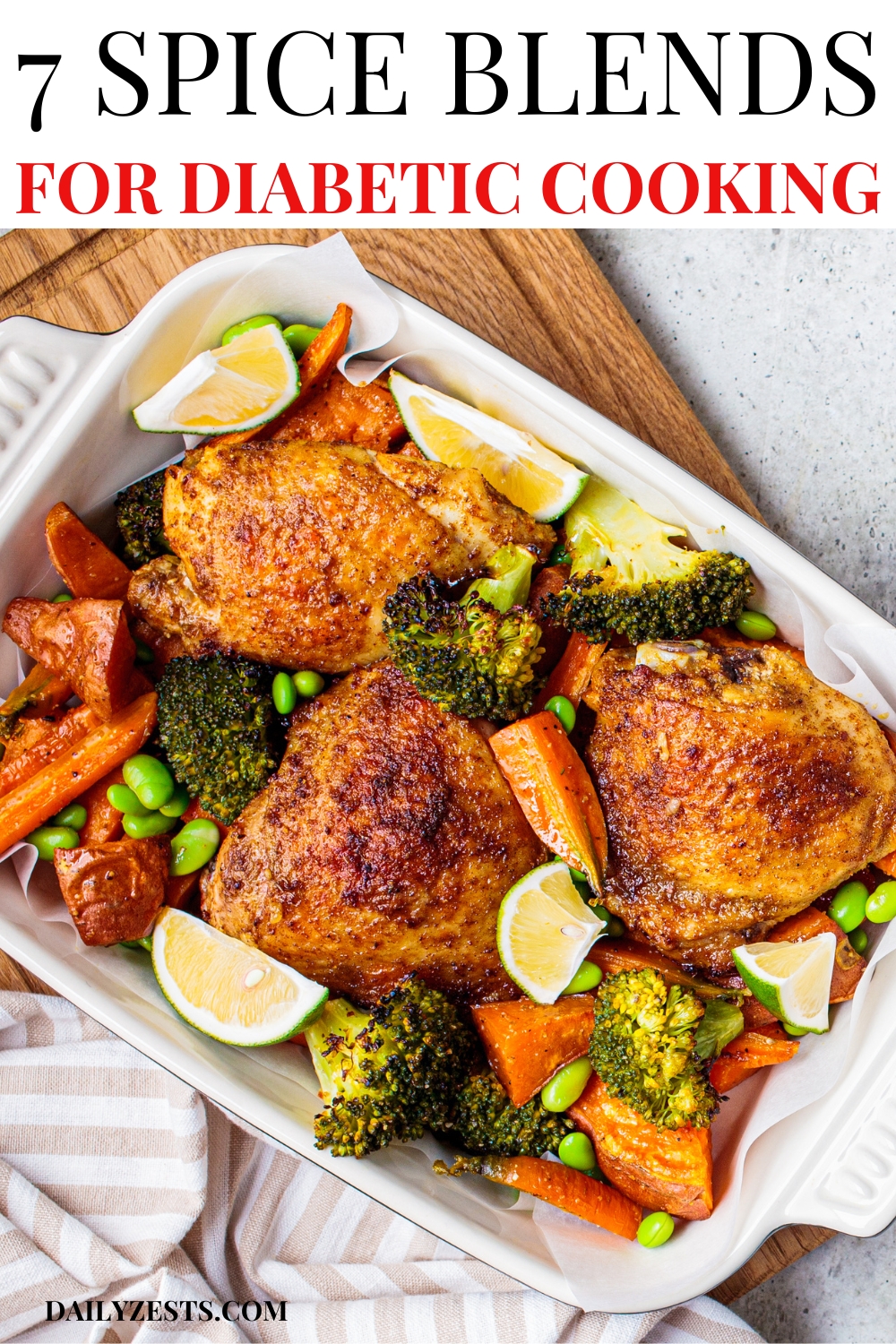
How to use it: Rub it heavily on chicken thighs before roasting, mix it into ground turkey for lettuce wraps, or toss it with zucchini and bell peppers before grilling.
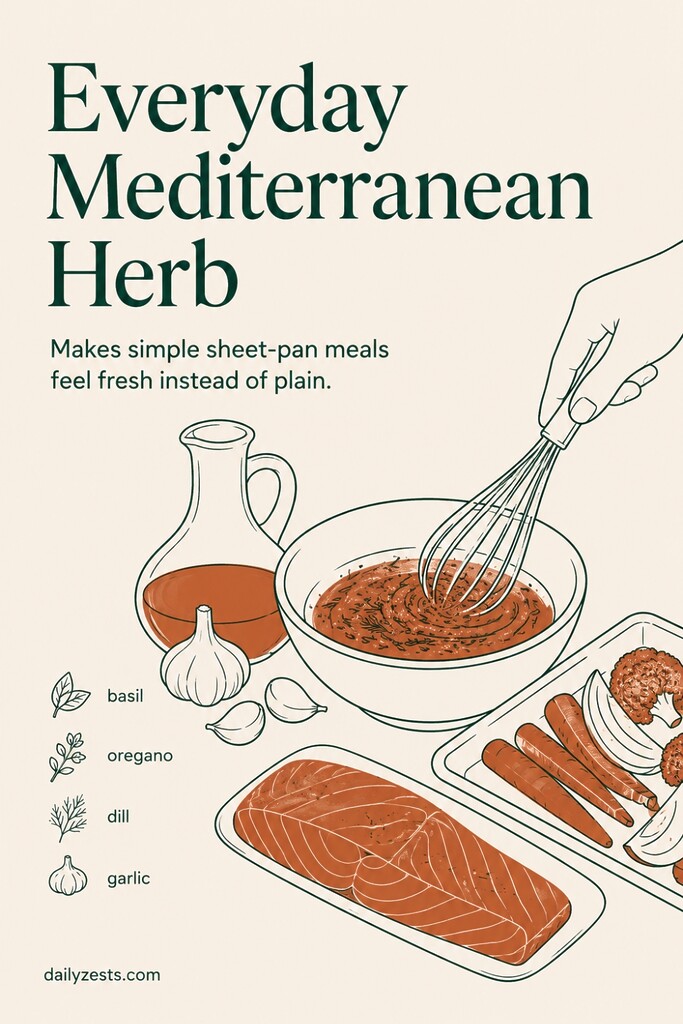
3. Everyday Mediterranean Herb
On days when I am tired and just want to throw some vegetables on a sheet pan, this is the blend I reach for. It is bright, earthy, and works beautifully with the heart-healthy olive oil that forms the base of so many great meals.
The Mix:
1 tablespoon dried basil
1 tablespoon dried oregano
1 teaspoon dried dill
1 teaspoon garlic powder
1/2 teaspoon onion powder
How to use it: Whisk it into olive oil and vinegar for a quick salad dressing, season fish fillets, or fold it into your morning eggs.
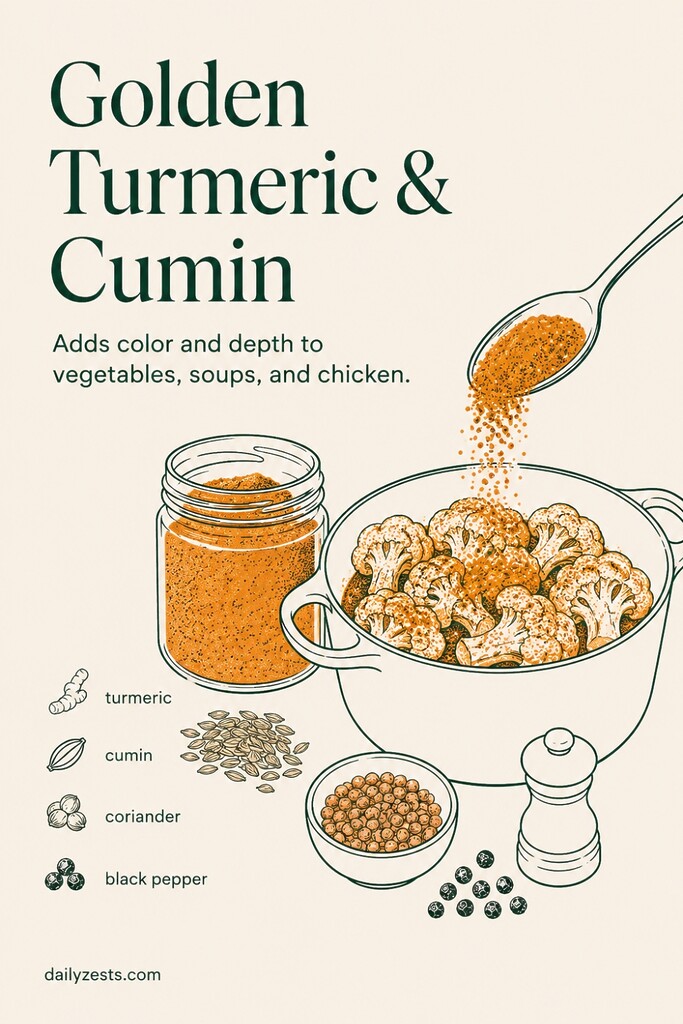
4. Golden Turmeric & Cumin
Turmeric is famous for its vibrant color and its active compound, curcumin, which is known for its anti-inflammatory properties. The trick with turmeric is that you always want to pair it with black pepper. The piperine in black pepper may help your body absorb more curcumin, which is why the two are often paired.
The Mix:
2 tablespoons ground turmeric
1 tablespoon ground cumin
1 teaspoon ground coriander
1/2 teaspoon black pepper
1/4 teaspoon cayenne (optional)
How to use it: Toss it with cauliflower florets before roasting, stir it into a hearty lentil soup, or use it to season chicken skewers.
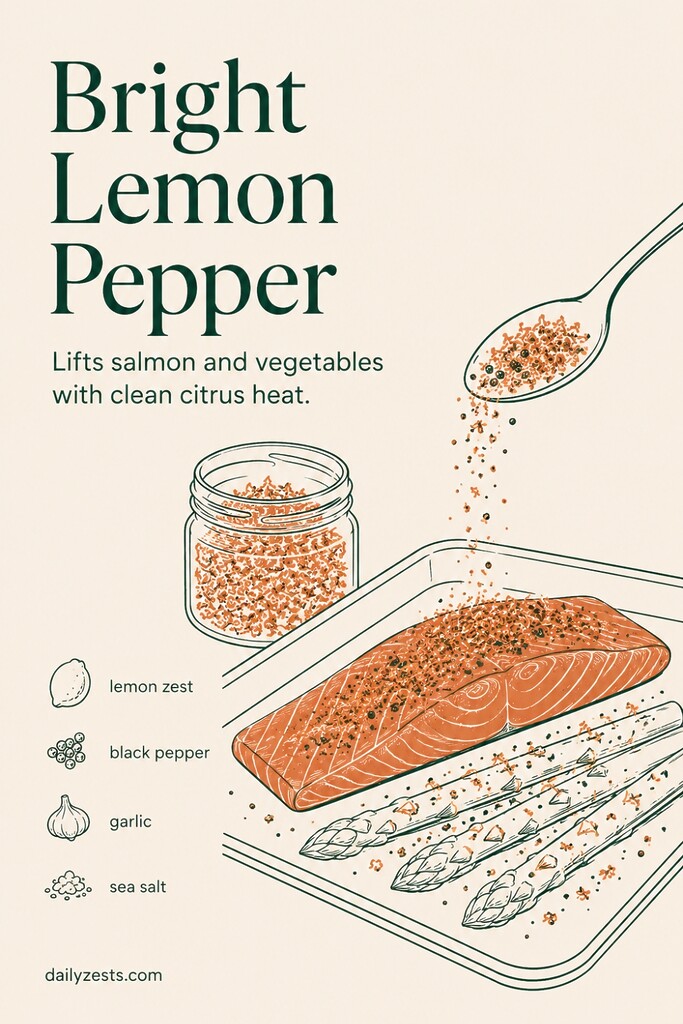
5. Bright Lemon Pepper
Lemon pepper is a classic, but commercial brands often use citric acid and sugar instead of real lemon. Making it yourself gives you a much fresher, cleaner flavor that brightens up heavy proteins.
The Mix:
2 tablespoons dried lemon zest
1 tablespoon coarsely ground black pepper
1 teaspoon garlic powder
1 teaspoon sea salt
How to use it: This is my absolute favorite seasoning for baked salmon. It also works beautifully on roasted asparagus or tossed with green beans.
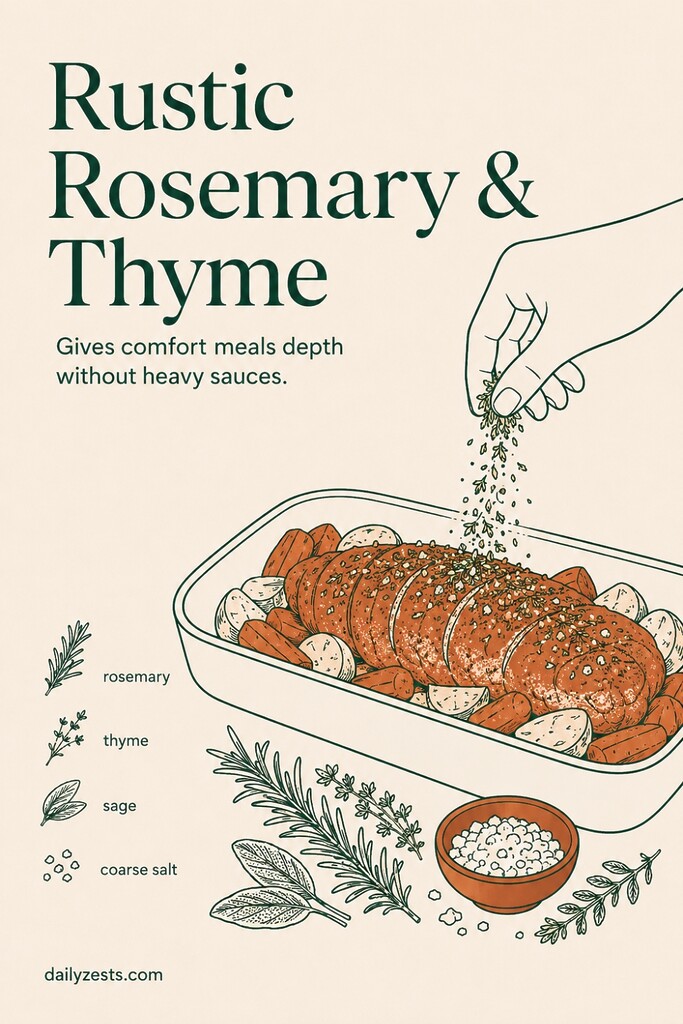
6. Rustic Rosemary & Thyme
This is a cozy, grounding blend. When the weather gets cooler and I start relying on heavier, comforting meals, these woodsy herbs bring a lot of depth to the table without needing heavy gravies or flour-based sauces.
The Mix:
1 tablespoon crushed dried rosemary
1 tablespoon dried thyme
1 teaspoon dried sage
1/2 teaspoon coarse salt
How to use it: Rub it on pork tenderloin, season a whole roasted chicken, or sprinkle it over root vegetables before they go into the oven.
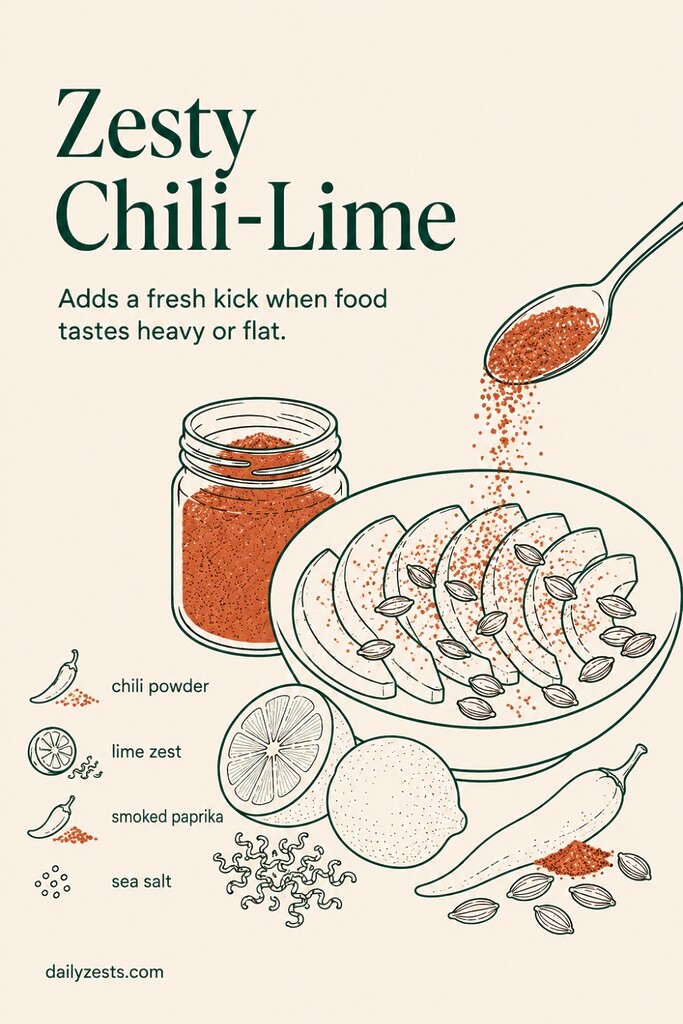
7. Zesty Chili-Lime
When food feels too heavy or flat, acid is usually the missing ingredient. This blend provides a tart, spicy kick that wakes up your palate. It is especially good for warmer months when you want something fresh and vibrant.
The Mix:
2 tablespoons mild chili powder
1 tablespoon dried lime zest
1/2 teaspoon smoked paprika
1/2 teaspoon sea salt
How to use it: Sprinkle it directly onto fresh avocado slices, use it to rim a glass for sparkling water, or toss it with pumpkin seeds for a crunchy, low-carb snack.
Frequently Asked Questions
Do spices have carbohydrates?
Most pure herbs and spices contain a very small amount of carbohydrates, but because you use them in such tiny quantities, the net carbs are generally negligible. They can be an excellent way to add flavor to a diabetic diet with little to no blood sugar impact for most people.
Is it cheaper to make your own spice blends?
Yes. Buying individual spices in bulk and mixing them at home is almost always more cost-effective than buying tiny, pre-mixed packets. Plus, homemade blends easily last up to six months in an airtight container in your pantry.
How can I reduce the sodium in these blends?
The beauty of making your own mixes is total control. If you are watching your blood pressure alongside your blood sugar, simply cut the salt measurements in half, or omit the salt entirely and rely purely on the herbs for flavor.
A quick note from me: I am a researcher and fellow traveler on this metabolic journey, not a doctor. The information shared here is based on what worked for me and general nutritional research. Always consult with your healthcare provider or a registered dietitian before making major changes to your diet, especially if you are managing a medical condition or taking glucose-lowering medications.
Finding joy in the kitchen again is one of the best things you can do for your long-term health. Mix up a few of these jars this weekend, keep them near the stove, and let your food taste good again.
Kristina Hanson is an independent wellness researcher and the founder of DailyZests. She specializes in translating nutritional science into simple, delicious recipes that fit into real life. When she isn’t in the kitchen, you’ll find her hiking the trails or enjoying a slow morning coffee with her Golden Retriever, Barnaby. Read her full story.