If you are managing diabetes, you have probably been told that a comforting bowl of spaghetti is completely off the table. But keeping your blood sugar steady does not have to mean breaking up with your favorite foods.
Before I understood my own insulin resistance, I thought my only choices were eating what I loved and suffering the inevitable 3 PM crash, or living on dry salads forever. I spent a lot of afternoons feeling completely drained before I finally started looking at the science of how we digest food.
It turns out, the issue usually isn’t the pasta itself. It is how we cook it, what we pair it with, and how much of the plate it takes up. You can still enjoy pasta. We just need to change the choreography.
A quick note from my porch to yours: I am an independent researcher sharing what has helped me manage my own metabolic health and what the current science suggests. I am not a doctor, so always run dietary changes by your own medical team.
Act 1: Rethinking the Noodle
The traditional white flour noodle digests rapidly, flooding the bloodstream with glucose. But the grocery store aisle looks completely different than it did ten years ago.
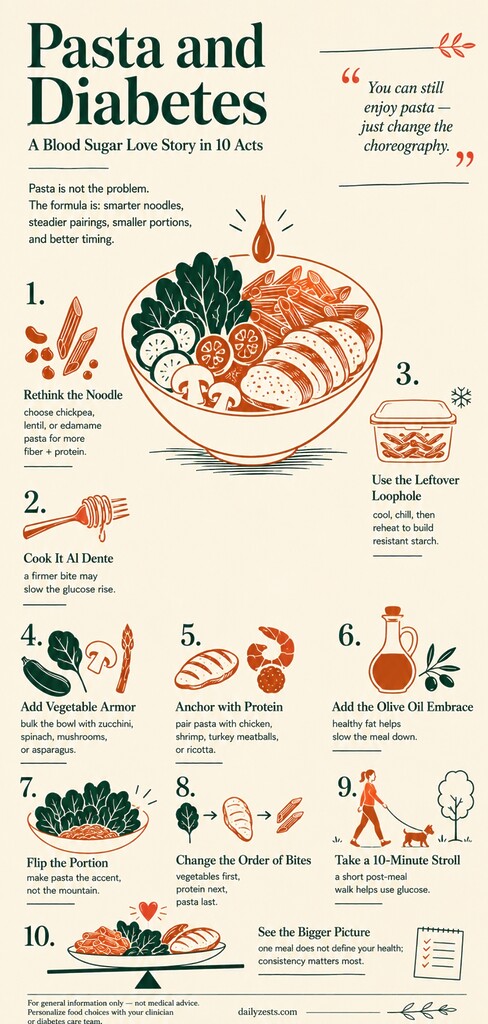
Instead of wheat, look for pastas made from chickpeas, red lentils, or edamame. These legumes naturally carry a heavy dose of fiber and protein baked right into the noodle. That built-in armor slows down how quickly your body converts the food to sugar, according to research on legume pasta. If you are standing in the aisle feeling overwhelmed, I put together the helpful guide below to help you get started.
Act 2: The Magic of Al Dente
In Italy, pasta is cooked “to the tooth”, meaning it still has a firm bite. This isn’t just a culinary preference; it may be a metabolic advantage.
When you boil pasta until it is completely soft and limp, you are essentially pre-digesting it in the pot. The starches break down, making them incredibly easy for your body to absorb all at once. By keeping the noodle al dente, the starch structure remains tighter, a point supported by research on pasta cooking time. Your digestive system has to work harder to break it down, which may translate to a slower, gentler release of glucose into your bloodstream.
Act 3: The Leftover Loophole
This is one of my absolute favorite tricks, mostly because it feels a little like magic. Research suggests, including one study on cooled and reheated pasta, that if you cook your pasta, cool it in the refrigerator overnight, and then reheat it the next day, it changes the molecular structure of the food.
The cooling process creates something called “resistant starch.” Just like the name implies, this type of starch resists digestion in the small intestine. Instead of turning into sugar, it acts more like a fiber, feeding the good bacteria in your gut. It is a brilliant way to handle carbohydrates.
Act 4: The Vegetable Armor
We usually treat vegetables as a side dish. When you are eating pasta for diabetics, the vegetables need a promotion.
Fiber is your body’s natural speed bump for sugar absorption. When you mix roasted zucchini, spinach, mushrooms, or asparagus right into the sauce, you are building a physical barrier that slows digestion. Plus, it bulks up the bowl so you still get a deeply satisfying, hearty meal. If you struggle to get your greens in, there are some pretty clever ways to sneak veggies into your meals without making it feel like a chore.
Act 5: The Protein Anchor
Never eat a “naked” carbohydrate. Eating pasta by itself, or just with a simple tomato sauce, is an invitation for a blood sugar spike.
Protein takes a long time to digest. When you anchor your pasta with a solid source of protein, like grilled chicken, shrimp, turkey meatballs, or a generous scoop of ricotta, research suggests you can help slow the meal down, so the carbs do not hit your bloodstream quite so fast.
Act 6: The Olive Oil Embrace
Just like protein, healthy fats are incredibly supportive of steady blood sugar. Fat slows the emptying of your stomach.
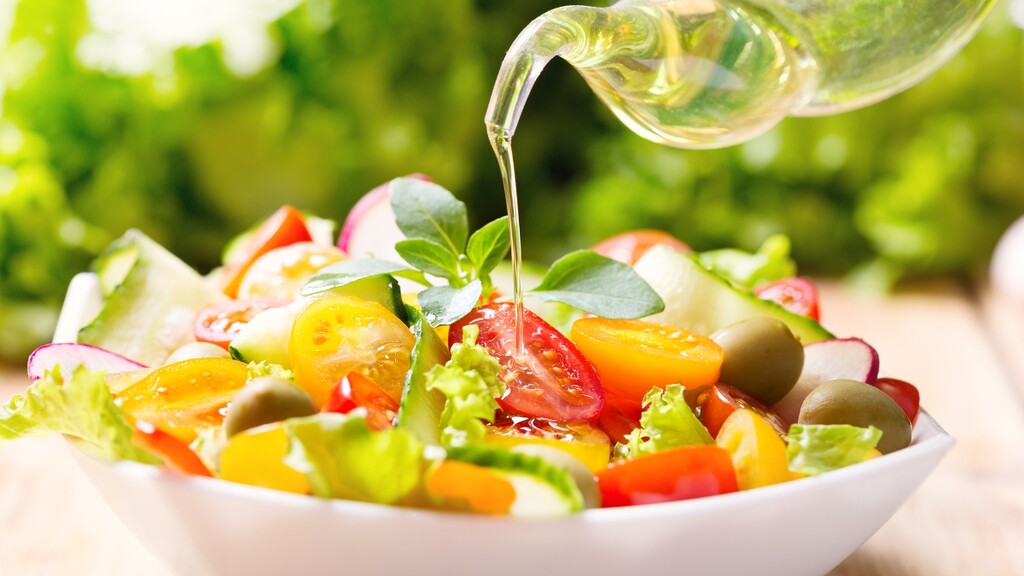
A generous drizzle of high-quality, extra-virgin olive oil over your finished dish isn’t just a flavor enhancer. It can slow stomach emptying, which may slow down how quickly those starches show up as glucose, as seen in one study on olive oil with a starchy meal. Fat also sends a strong signal to your brain that you are full, helping you walk away from the table feeling truly satisfied.
Act 7: The Portion Flip
For most of my life, a pasta dinner meant a mountain of noodles with a little bit of stuff on top. Managing insulin resistance taught me to simply flip the ratio.
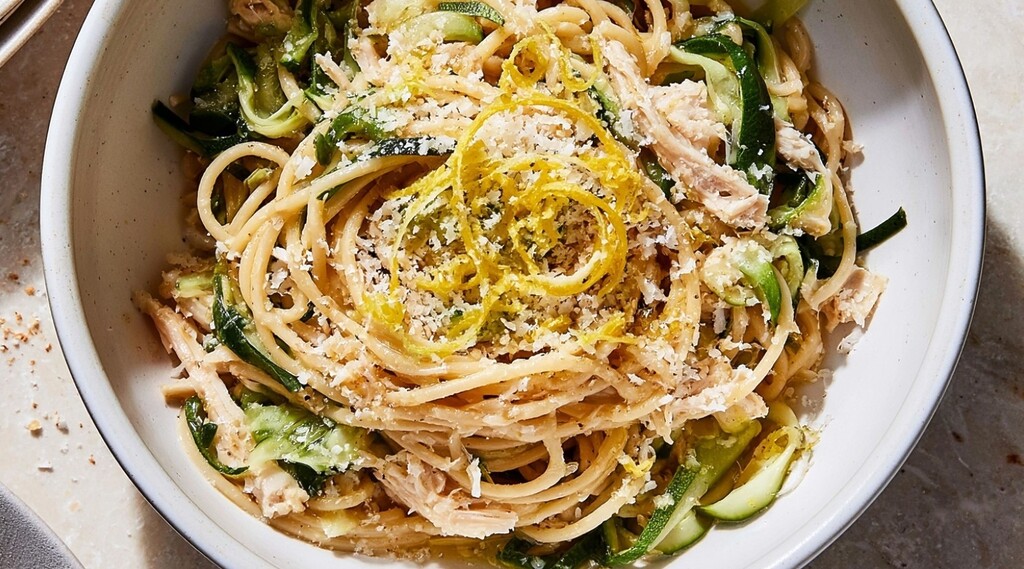
Think of pasta as the condiment rather than the main event. Fill your bowl with roasted vegetables, a great protein, and a rich sauce, then toss in a half-cup or cup of cooked noodles to tie it all together. You still get the taste and the texture of the pasta in every bite, without overloading your system.
Act 8: The Order of Bites
Believe it or not, the order in which you eat your food matters. If you start your meal by eating a forkful of bare pasta, your body reacts instantly.
Try starting with your vegetables or a side salad first. Eat your protein next. Save the starchy noodles for the end of the meal. By the time the carbohydrates hit your digestive tract, they are landing on a thick cushion of fiber and protein, and research suggests this can significantly blunt the glucose response.
Act 9: The Ten-Minute Stroll
One of the most effective habits I ever built was the post-meal walk. After dinner, I leash up my Golden Retriever, Barnaby, and we just walk around the neighborhood for ten or fifteen minutes.
When you move your muscles shortly after eating, your body uses the glucose floating in your bloodstream for immediate energy, shuttling it straight into your muscles without needing as much insulin; one study on post-meal walking found improved post-meal glucose response in people with type 2 diabetes. It is one of the most reliable habits you can build, and it feels wonderful after a heavy meal.
Act 10: The Bigger Picture
A single meal doesn’t define your health. If you occasionally have a plate of regular, soft-cooked pasta, your body will handle it. The goal is to build a baseline of habits that support you most of the time.
When you zoom out, fitting meals like this into a broader meal plan takes all the anxiety out of eating. You stop seeing food as a trap, and start seeing it as a tool you know how to use.
Frequently Asked Questions
Can diabetics eat regular white pasta?
Research suggests it is possible in small, carefully managed portions alongside heavy protein and fiber. However, white flour digests very quickly. You will likely find that bean or lentil-based options offer a much gentler, more predictable blood sugar response.
How much pasta is a safe portion?
Many find that keeping the cooked pasta portion to about a half-cup or one cup helps, but current ADA guidance treats the safest amount as something to personalize with your glucose meter, CGM, and medical team. The trick is filling the rest of the plate with generous amounts of vegetables and protein so you don’t leave the table hungry.
Does the resistant starch trick really work?
Cooling and reheating pasta does increase resistant starch, which digests slower than freshly cooked starch. It is not a magic eraser for carbohydrates, but it is a highly effective tool to add to your overall blood sugar strategy.
The next time you are craving a bowl of comfort, don’t ignore it. Just invite a little fiber, a good protein, and some healthy fats to the party.
Kristina Hanson is an independent wellness researcher and the founder of DailyZests. She specializes in translating nutritional science into simple, delicious recipes that fit into real life. When she isn’t in the kitchen, you’ll find her hiking the trails or enjoying a slow morning coffee with her Golden Retriever, Barnaby. Read her full story.
Wow, this is such a helpful article! I’ve been struggling to enjoy pasta since my Type 2 diagnosis. I especially love the idea of bean-based pasta – I had no idea that was even a thing! I’m a little confused about the portion sizes though. 1/2 cup cooked seems so small. Is that really enough to feel full? I usually eat at least double that! Also, does it have the same texture? I love pasta, but I don’t know if I am ready to sacrifice the texture for health! I’ll probably go for whole grain pasta instead, do you think it’s okay?
Hi Aiden, thanks for your comment! I’m glad you found the article helpful. You’re right, 1/2 cup cooked pasta might seem small at first, but it’s a great starting point for managing blood sugar. When you pair it with plenty of veggies and lean protein, it becomes a very satisfying meal. Also, bean-based pasta has a slightly different texture, it’s a bit chewier, but many people find it just as delicious as regular pasta! I encourage you to give it a try, but if you don’t think it is for you, whole grain pasta is totally okay! As for feeling full, try filling half your plate with non-starchy vegetables – they add volume and fiber, which will help you feel satisfied without overdoing the carbs. You can also experiment with slightly larger portions of pasta, but be sure to monitor your blood sugar levels to see how your body responds. Let me know how it goes!
Okay, I’m intrigued by this vinegar tip! I’ve never heard of using vinegar to help with blood sugar. Does it really work, or is it just some old wives’ tale? Also, can I use any type of vinegar? I have some balsamic vinegar in my pantry, but I’m not a huge fan of the taste. And what if I add some honey or maple syrup to my sauce for sweetness? Will that cancel out the vinegar’s effect? This is a very interesting read, I never thought I could eat pasta again!
Hi Catherine, great question! The vinegar tip is actually backed by scientific research. Studies have shown that acetic acid, the main component of vinegar, can help improve insulin sensitivity and reduce blood sugar spikes after meals. Balsamic vinegar will work, but if you’re not a fan of the taste, you can try apple cider vinegar or white wine vinegar. They have similar effects. As for adding sweeteners to your sauce, it’s best to avoid or minimize added sugars like honey or maple syrup, as they can raise blood sugar levels. If you need a touch of sweetness, try using a small amount of a low-calorie sweetener like stevia or erythritol, or better yet, let the natural sweetness of the tomatoes shine through! Let me know if you have any other questions, I am always happy to answer.
Okay, I’m intrigued by this bean-based pasta idea. Chickpea penne? Sounds…healthy. But does it actually taste like pasta, or am I going to feel like I’m just eating a bowl of glorified beans? Also, ‘Act 2: Bean There, Done That’ – seriously? 😉 I appreciate the attempt at humor, but I need honest opinions here. Has anyone actually tried this and lived to tell the tale? I’m a pasta lover, but I also don’t want to sacrifice flavor for my blood sugar. Help a girl out!
Hi Brenda! I totally get the hesitation. I was skeptical too, at first. But honestly, some of these bean-based pastas are surprisingly good! The texture is a bit different, a little chewier, but they hold sauce well. The lentil and chickpea ones are my favorite – they have a mild flavor that doesn’t overpower the dish. Black bean pasta is a bit earthier, so it depends on your preference. I’d say give it a shot, maybe start with a small portion mixed with regular whole-wheat pasta to ease into it. And yes, the ‘Bean There, Done That’ was a bit cheesy, I’ll admit! 😄 Let me know what you think if you try it!
This is all great in theory, but who has time to make homemade sauce and chop a million vegetables every night? I work full time, and by the time I get home, I’m exhausted. Plus, my kids are picky eaters, so getting them to eat a plate full of veggies is like trying to herd cats. Any tips for making this actually practical for busy families? And is balsamic vinegar really that magical? I love the stuff, but it seems too good to be true that it can actually help with blood sugar.
Nancy, I hear you! Life gets crazy, and sometimes a bowl of pasta is the only thing that sounds doable. Here’s the good news: you can make this work without spending hours in the kitchen. Frozen veggies are your friend – they’re just as nutritious as fresh and require zero chopping. Jarred marinara sauce can be a lifesaver too, just check the label for added sugars. As for picky eaters, try sneaking pureed veggies into the sauce (they’ll never know!). And yes, balsamic vinegar does have some science-backed benefits for blood sugar, thanks to the acetic acid. It’s not a magic bullet, but a drizzle here and there can help. Every little bit counts! You got this!


 This post may contain affiliate links.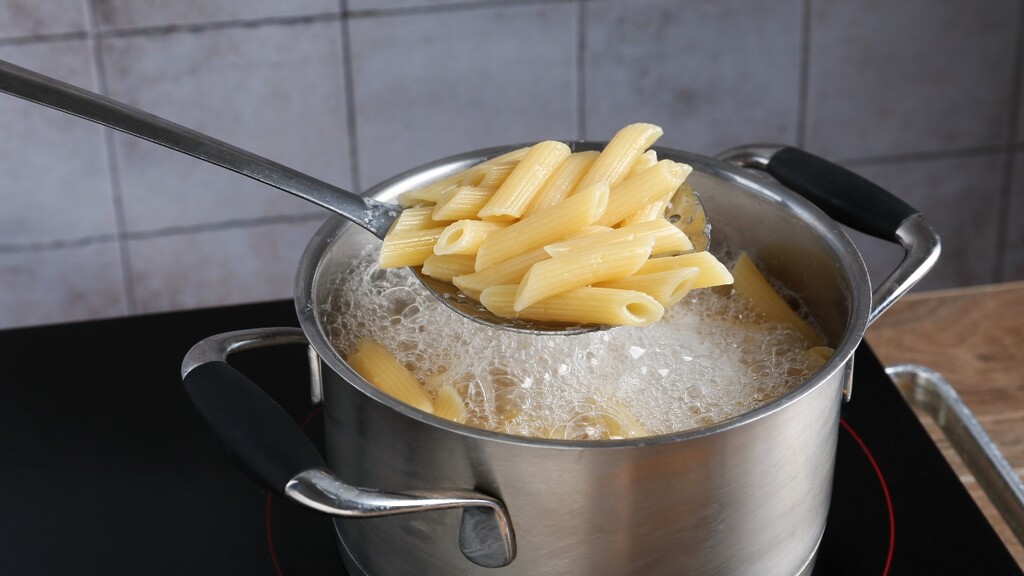






Wow, this is such a helpful article! I’ve been struggling to enjoy pasta since my Type 2 diagnosis. I especially love the idea of bean-based pasta – I had no idea that was even a thing! I’m a little confused about the portion sizes though. 1/2 cup cooked seems so small. Is that really enough to feel full? I usually eat at least double that! Also, does it have the same texture? I love pasta, but I don’t know if I am ready to sacrifice the texture for health! I’ll probably go for whole grain pasta instead, do you think it’s okay?
Hi Aiden, thanks for your comment! I’m glad you found the article helpful. You’re right, 1/2 cup cooked pasta might seem small at first, but it’s a great starting point for managing blood sugar. When you pair it with plenty of veggies and lean protein, it becomes a very satisfying meal. Also, bean-based pasta has a slightly different texture, it’s a bit chewier, but many people find it just as delicious as regular pasta! I encourage you to give it a try, but if you don’t think it is for you, whole grain pasta is totally okay! As for feeling full, try filling half your plate with non-starchy vegetables – they add volume and fiber, which will help you feel satisfied without overdoing the carbs. You can also experiment with slightly larger portions of pasta, but be sure to monitor your blood sugar levels to see how your body responds. Let me know how it goes!
Okay, I’m intrigued by this vinegar tip! I’ve never heard of using vinegar to help with blood sugar. Does it really work, or is it just some old wives’ tale? Also, can I use any type of vinegar? I have some balsamic vinegar in my pantry, but I’m not a huge fan of the taste. And what if I add some honey or maple syrup to my sauce for sweetness? Will that cancel out the vinegar’s effect? This is a very interesting read, I never thought I could eat pasta again!
Hi Catherine, great question! The vinegar tip is actually backed by scientific research. Studies have shown that acetic acid, the main component of vinegar, can help improve insulin sensitivity and reduce blood sugar spikes after meals. Balsamic vinegar will work, but if you’re not a fan of the taste, you can try apple cider vinegar or white wine vinegar. They have similar effects. As for adding sweeteners to your sauce, it’s best to avoid or minimize added sugars like honey or maple syrup, as they can raise blood sugar levels. If you need a touch of sweetness, try using a small amount of a low-calorie sweetener like stevia or erythritol, or better yet, let the natural sweetness of the tomatoes shine through! Let me know if you have any other questions, I am always happy to answer.
Okay, I’m intrigued by this bean-based pasta idea. Chickpea penne? Sounds…healthy. But does it actually taste like pasta, or am I going to feel like I’m just eating a bowl of glorified beans? Also, ‘Act 2: Bean There, Done That’ – seriously? 😉 I appreciate the attempt at humor, but I need honest opinions here. Has anyone actually tried this and lived to tell the tale? I’m a pasta lover, but I also don’t want to sacrifice flavor for my blood sugar. Help a girl out!
Hi Brenda! I totally get the hesitation. I was skeptical too, at first. But honestly, some of these bean-based pastas are surprisingly good! The texture is a bit different, a little chewier, but they hold sauce well. The lentil and chickpea ones are my favorite – they have a mild flavor that doesn’t overpower the dish. Black bean pasta is a bit earthier, so it depends on your preference. I’d say give it a shot, maybe start with a small portion mixed with regular whole-wheat pasta to ease into it. And yes, the ‘Bean There, Done That’ was a bit cheesy, I’ll admit! 😄 Let me know what you think if you try it!
This is all great in theory, but who has time to make homemade sauce and chop a million vegetables every night? I work full time, and by the time I get home, I’m exhausted. Plus, my kids are picky eaters, so getting them to eat a plate full of veggies is like trying to herd cats. Any tips for making this actually practical for busy families? And is balsamic vinegar really that magical? I love the stuff, but it seems too good to be true that it can actually help with blood sugar.
Nancy, I hear you! Life gets crazy, and sometimes a bowl of pasta is the only thing that sounds doable. Here’s the good news: you can make this work without spending hours in the kitchen. Frozen veggies are your friend – they’re just as nutritious as fresh and require zero chopping. Jarred marinara sauce can be a lifesaver too, just check the label for added sugars. As for picky eaters, try sneaking pureed veggies into the sauce (they’ll never know!). And yes, balsamic vinegar does have some science-backed benefits for blood sugar, thanks to the acetic acid. It’s not a magic bullet, but a drizzle here and there can help. Every little bit counts! You got this!