I remember the 3 PM crash like clockwork. That overwhelming heaviness behind my eyes, the sudden drop in focus, and the inevitable trip to the kitchen for something sweet to keep me awake. For a long time, I thought I just lacked willpower. When I finally learned I was dealing with insulin resistance, it was a profound relief. My body was not failing me. It was simply responding exactly as biology dictates to the way I was eating.
You do not have to fight your body to find steady energy. Research suggests that keeping your blood sugar stable is less about restriction and more about understanding how to support your system. By making a few practical shifts, you can build a steady foundation of energy that lasts from morning until night.
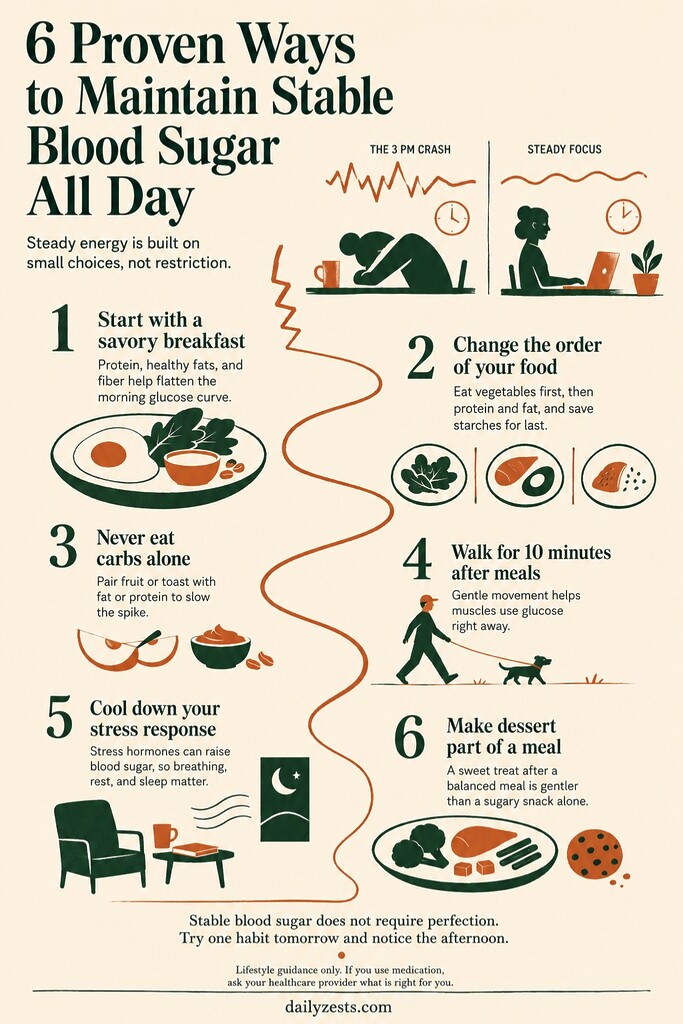
How you start your morning sets the metabolic tone for the rest of your day. A breakfast built on refined carbohydrates or sugar can cause a sharper rise and fall in blood glucose over the next few hours. That drop triggers cravings, and the cycle continues.
Shifting to a savory breakfast was the single most impactful change I made for my own energy levels. Prioritizing protein, healthy fats, and fiber keeps the morning glucose curve flat and calm. Think eggs cooked in olive oil, a handful of spinach, or leftover roasted vegetables from dinner. If you do not have time to cook, a serving of unsweetened Greek yogurt topped with walnuts and chia seeds works just as well.
2. Change the order of your food
You can often eat the exact same meal and experience a entirely different blood sugar response simply by changing the order in which you eat the food on your plate. It sounds almost too simple to be true, but the science backing it is fascinating.
When you eat vegetables first, the fiber-rich part of the meal can slow digestion and glucose absorption. If you follow the vegetables with protein and fats, and save the starchy carbohydrates for last, that fiber and protein slow down the absorption of glucose from the carbs. This simple habit smooths out the spike without requiring you to change a single ingredient in your meal.
3. Never eat carbohydrates naked
Many of us grew up hearing that carbohydrates are the enemy. The truth is much more nuanced. Carbohydrates are a fuel source. The problem only arises when they arrive in our digestive system completely alone.
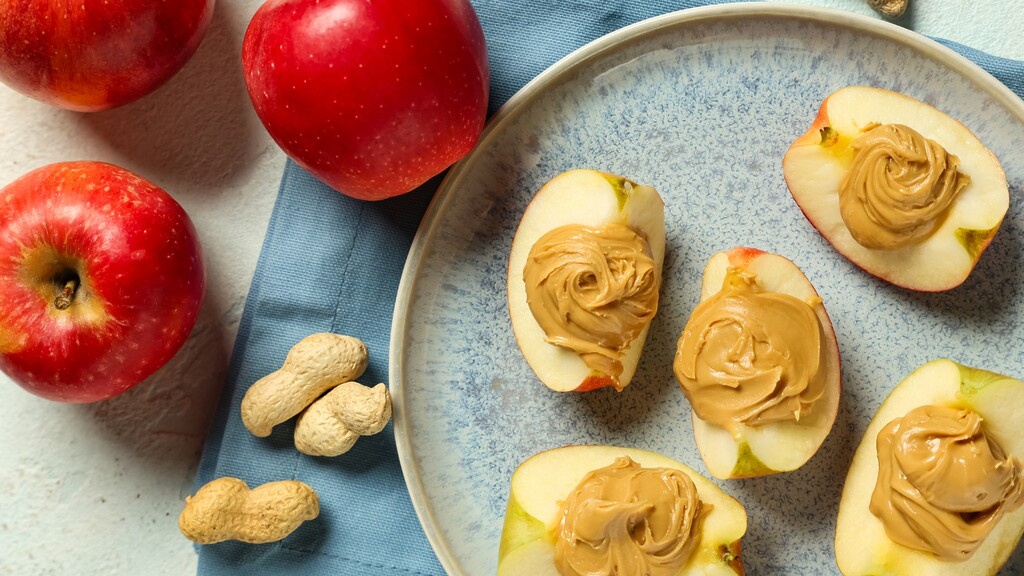
Eating an apple by itself will raise your blood sugar faster than eating that same apple with a spoonful of almond butter. The fat and protein in the almond butter act as a buffer. If you want a slice of toast, add avocado or an egg. If you are having berries, pair them with cheese or yogurt. Giving your carbs a “friend” changes how your body processes them.
4. Add gentle movement after meals
You do not need an intense workout to support your metabolism. A quiet, ten-minute walk after a meal is highly effective. I started doing this just by taking my dog Barnaby out for a short stroll around the block right after lunch, and I noticed the difference in my afternoon focus almost immediately.
When we move our bodies, our working muscles need immediate energy. They pull glucose straight out of the bloodstream to use as fuel. Because the muscles are actively using the sugar, your pancreas does not have to produce as much insulin to clear it away. It is a quiet, natural assist for your digestive system.
5. Cool down your stress response
We usually associate blood sugar strictly with food, but our nervous system plays a massive role. When we are deeply stressed, our bodies release a hormone called cortisol. Cortisol tells the liver to make more glucose and raises the amount of glucose in the blood. Biologically, this is meant to give us the quick energy we need to escape a physical threat.
The issue is that modern stress usually involves sitting at a desk worrying about an email, not running from a predator. The sugar floods the bloodstream, but we do not physically use it. Finding ways to step away, take a few deep breaths, or prioritize sleep is a legitimate metabolic strategy. It is not just about feeling calm. It is about telling your liver that it is safe to hold onto its reserves.
6. Rethink your dessert timing
You do not have to completely give up your favorite sweet treat. Okay, with one caveat. You might need to change when you eat it.
Eating a cookie by itself on an empty stomach mid-afternoon guarantees a rapid spike. However, if you eat that same cookie right after a balanced dinner full of fiber, fat, and protein, the absorption is significantly slowed down. The dinner acts as a buffer. If you are going to enjoy dessert, let it truly be dessert. Enjoy it at the end of a meal, rather than treating it as a standalone snack.
A quick note on safety: I am sharing the lifestyle habits that helped me find steady energy, but I am not a doctor. Always consult with your healthcare provider to tailor these ideas to your specific metabolic needs, especially if you take medication to manage your blood sugar.
Steady energy is built on small choices
Balancing your blood sugar does not require perfection. It does not require an empty pantry or a rigid, punishing schedule. It is simply a matter of learning how your body works and giving it a little help along the way. Try picking just one of these habits tomorrow morning, perhaps saving your toast for the end of the meal or taking a ten-minute walk after lunch. See how the afternoon feels.
Kristina Hanson is an independent wellness researcher and the founder of DailyZests. She specializes in translating nutritional science into simple, delicious recipes that fit into real life. When she isn’t in the kitchen, you’ll find her hiking the trails or enjoying a slow morning coffee with her Golden Retriever, Barnaby. Read her full story.


 This post may contain affiliate links.