If the base of your skull feels incredibly tight by 3 PM, you are not alone. Our bodies simply weren’t designed to stare down at screens all day long. These simple tech neck stretches offer a quiet, practical reset for tight muscles and heavy shoulders.
Back when I was navigating years of chronic fatigue, I assumed my exhaustion was entirely internal. It took a while to realize how much my physical posture was draining my energy reserves. My shoulders were constantly hiked up to my ears, and my head was perpetually pushed forward toward a laptop screen. My muscles were working overtime just to hold my head upright.
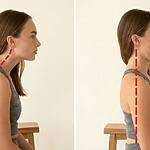
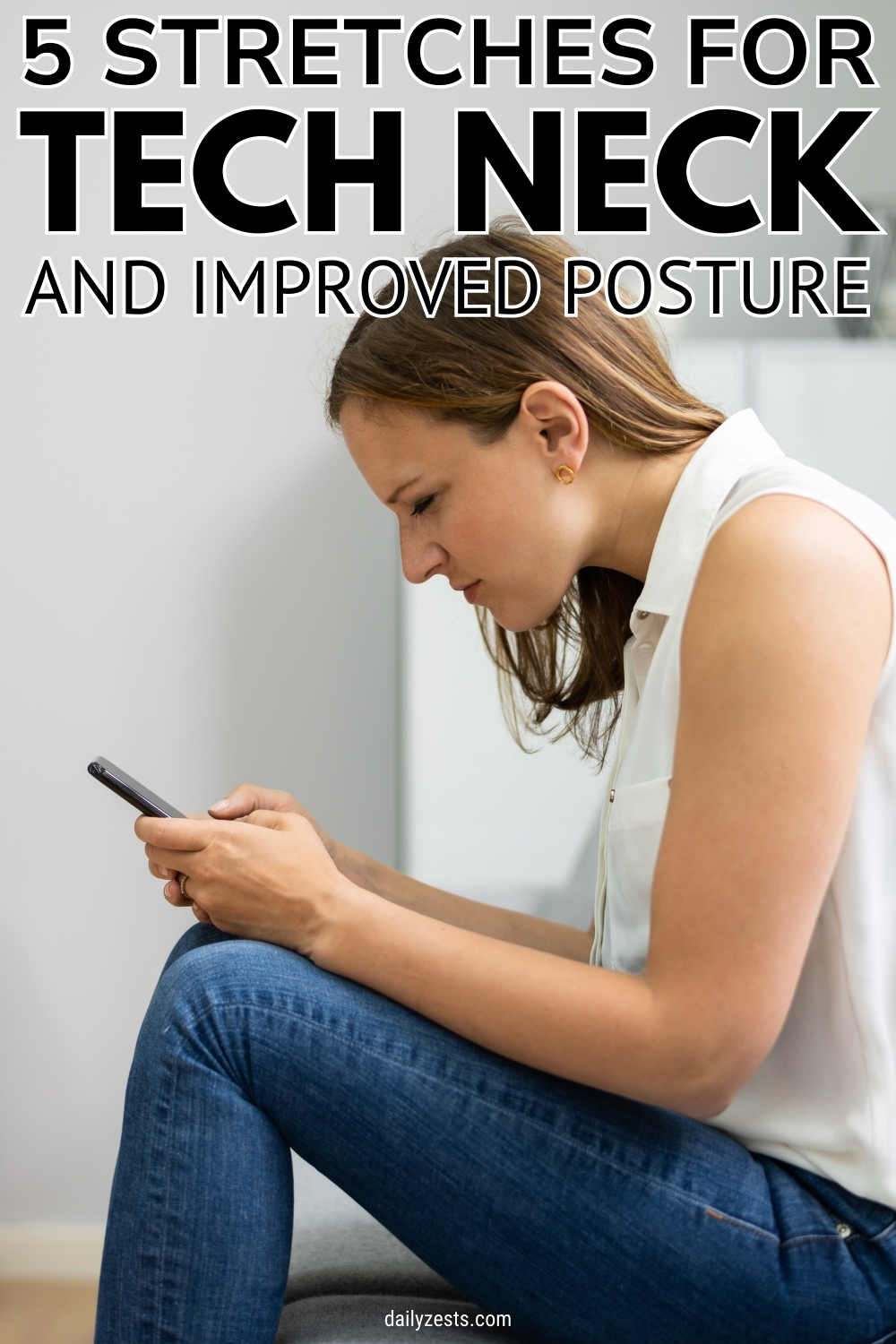
Here is the physical reason behind the tension: as your head drifts forward, biomechanical research shows that the physical load your neck has to support rises sharply. Over time, the muscles in the front of your chest and neck shorten, while the muscles in your back overstretch and weaken.
Improving your posture shouldn’t feel like a punishment. You don’t need rigid back braces or an hour of intense exercise to see a difference. We just need to invite a little structural balance back into our day.
A quick note: I am a wellness researcher, not a physical therapist. These are the movements that helped me find relief. Always listen to your body, stretching should feel like a satisfying release, never sharp or pinching pain.
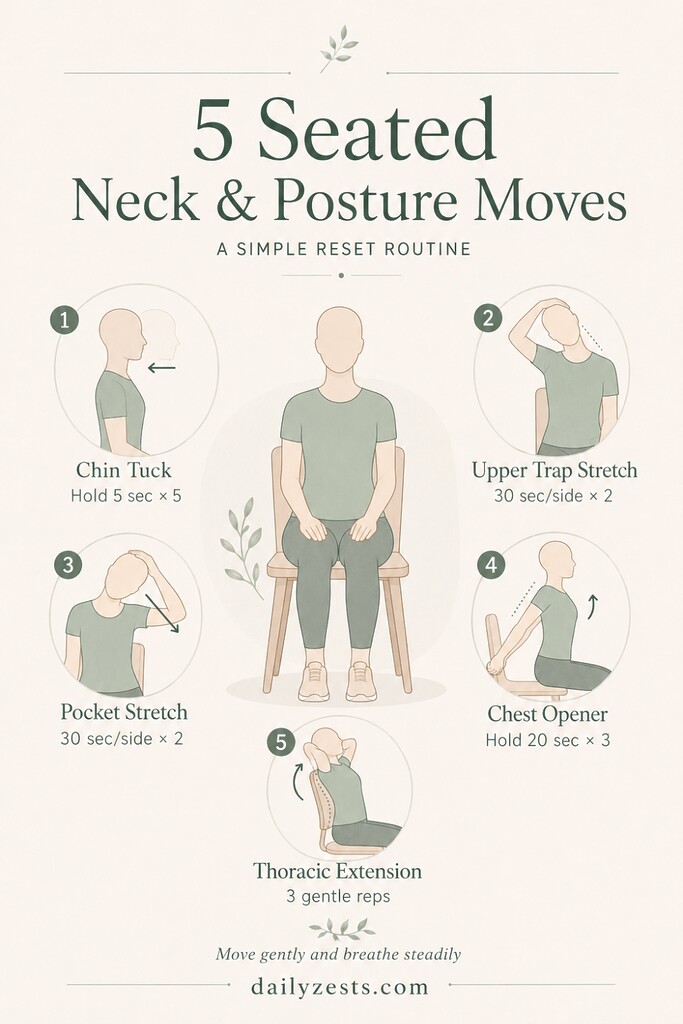
The 5 Best Desk Neck Stretches for Posture Relief
You can do this entire sequence while seated at your desk. Move slowly, breathe deeply, and hold each position for about 20 to 30 seconds, keeping the stretch in a gentle, comfortable range just as Mayo Clinic experts recommend.
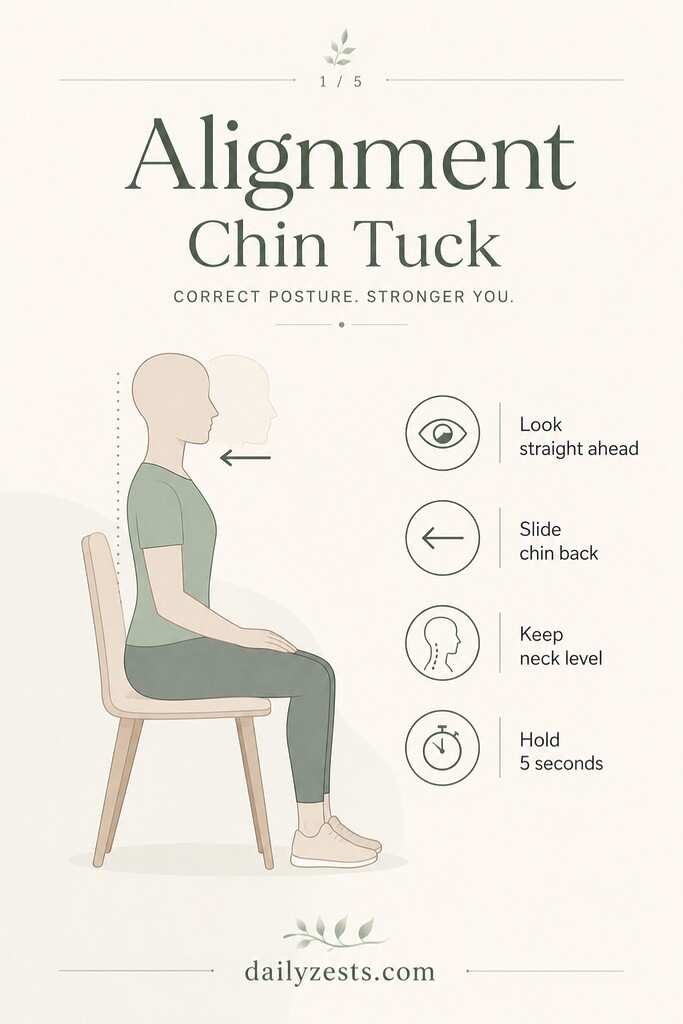
1. The Alignment Chin Tuck
Before we stretch the tight muscles, we need to activate the weak ones. The chin tuck is less of a stretch and more of an alignment reset. It strengthens the deep cervical flexors at the front of your neck, pulling your head back over your shoulders where it belongs, a gentle movement that clinical research suggests is highly effective for neck support.
Sit up tall and look straight ahead.
Place two fingers on your chin.
Without tilting your head up or down, gently pull your chin straight back, as if you are trying to make a double chin.
Hold for 5 seconds, release, and repeat 10 times.
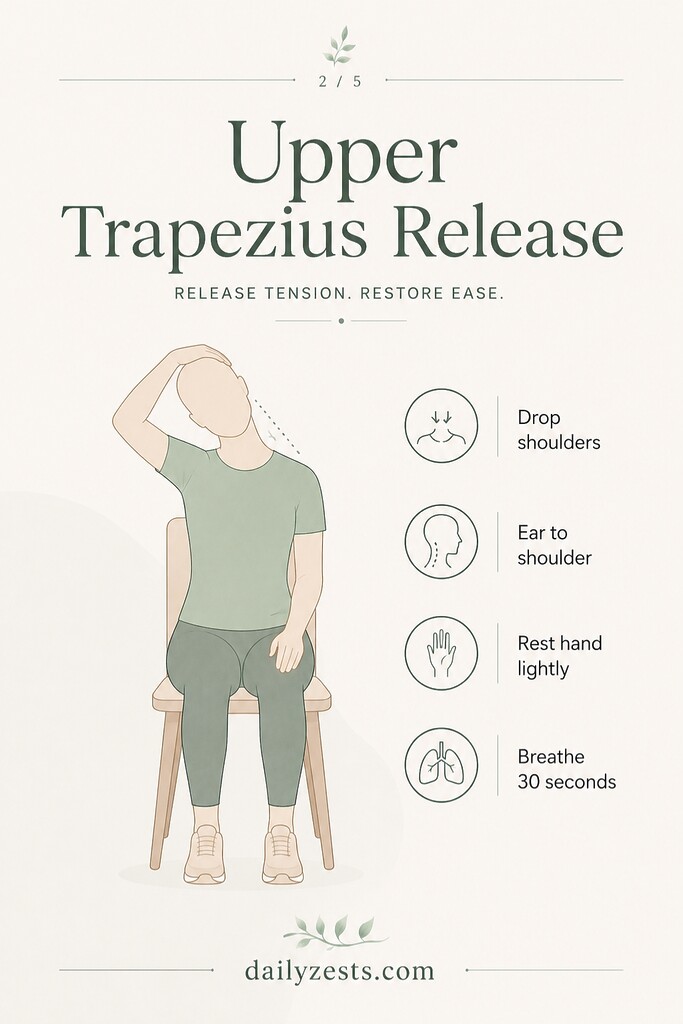
2. The Upper Trapezius Release
The upper trapezius muscles carry a lot of our daily stress. When we type, we often unconsciously shrug our shoulders upward, leaving these muscles permanently tense.
Sit tall and relax your shoulders down away from your ears.
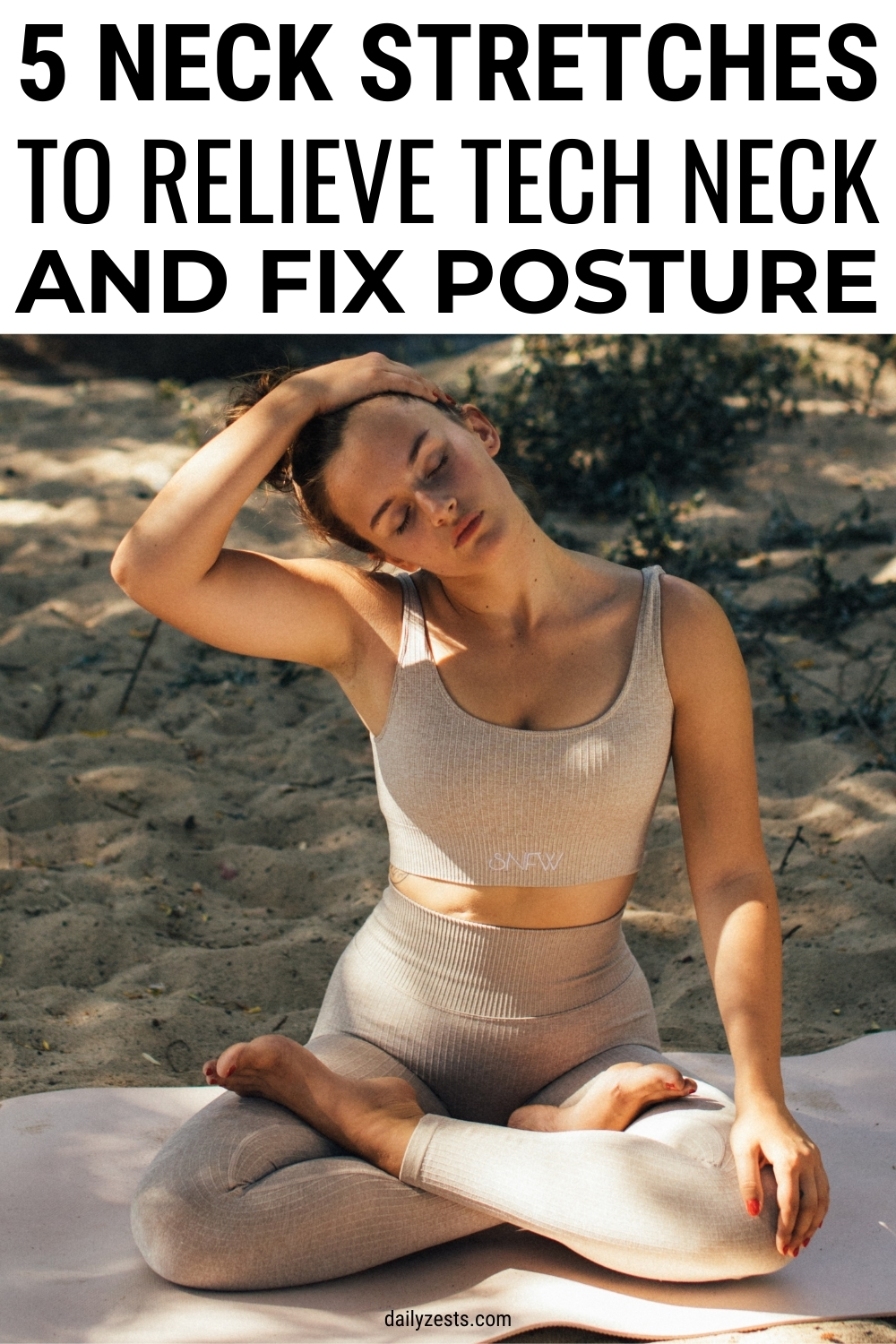
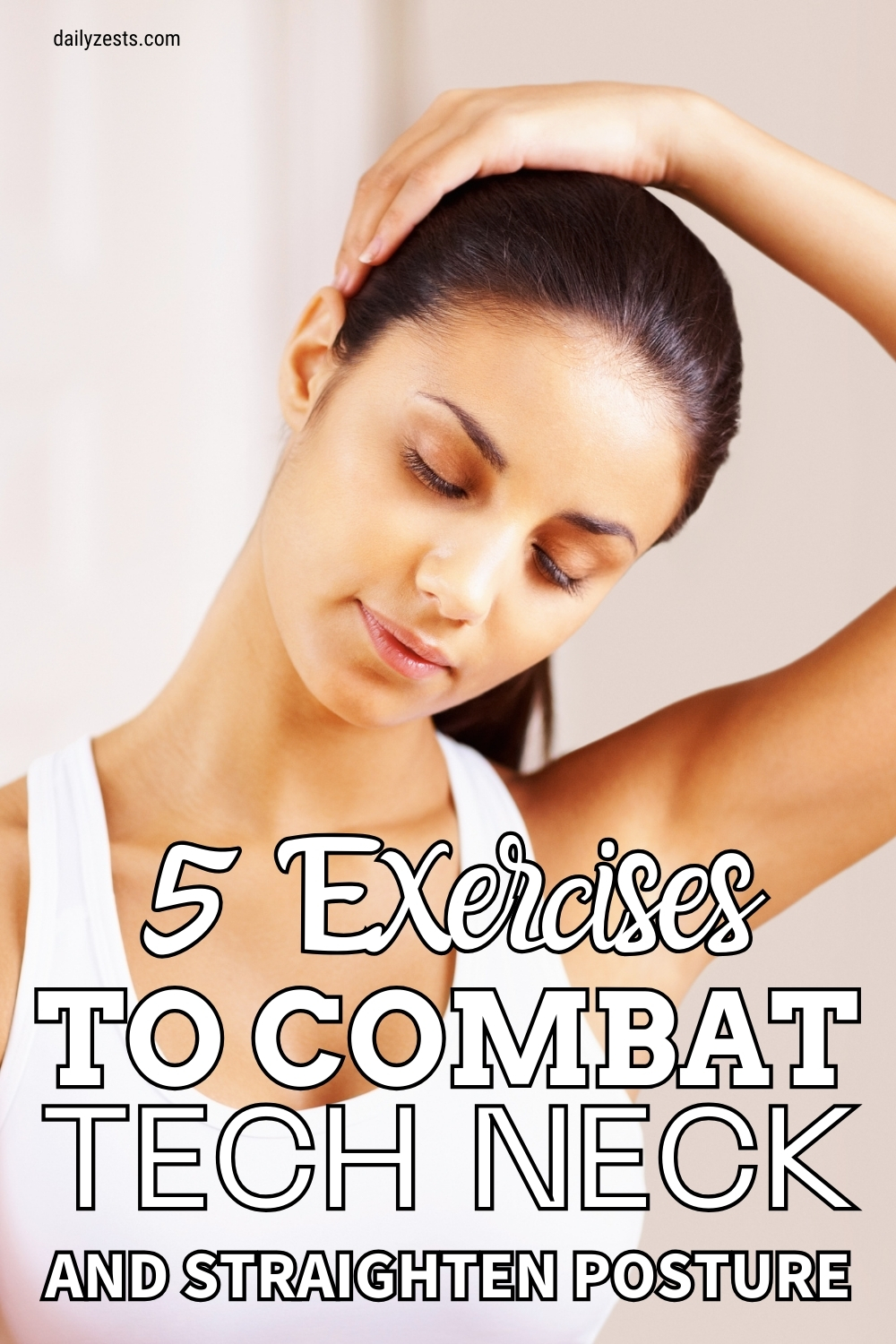
Gently drop your right ear toward your right shoulder.
For a slightly deeper stretch, you can rest your right hand lightly on the left side of your head. Do not pull, just let the natural weight of your arm deepen the stretch.
Breathe deeply for 30 seconds, then switch sides.
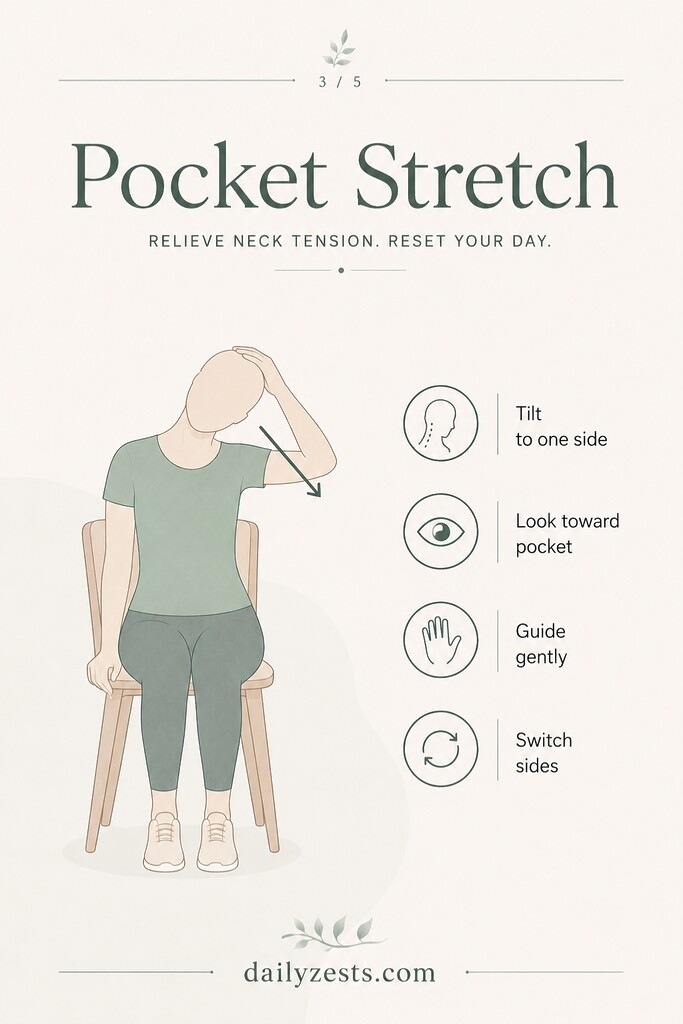
3. The Levator Scapulae “Pocket” Stretch
The levator scapulae runs down the side and back of your neck. It is the muscle most responsible for that stiff, “I slept on my neck wrong” feeling. I actually like to do this one on the porch with my morning coffee while my Golden Retriever, Barnaby, investigates the garden, it is a wonderful way to wake up the upper body.
Drop your right ear toward your right shoulder, just like the previous stretch.
Now, rotate your head slightly down, as if you are trying to look at your right front pocket or sniff your armpit.
Rest your right hand on the back of your head for gentle guidance.
Hold for 30 seconds, breathing into the back of your neck, and switch sides.
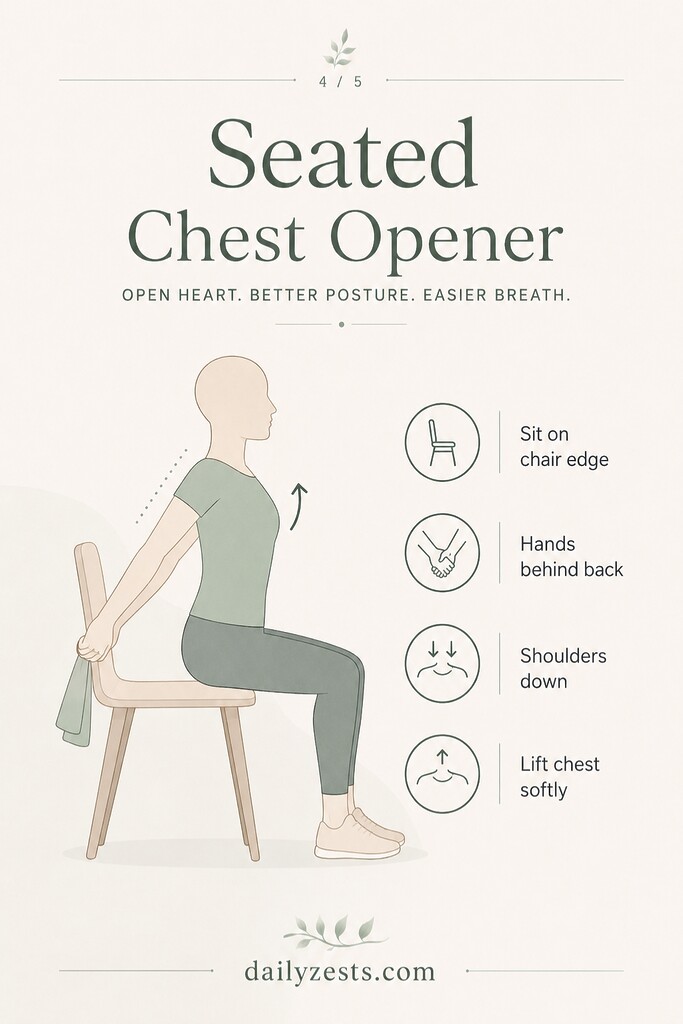
4. The Seated Chest Opener
We cannot fix tech neck without addressing the chest. Because our arms are always out in front of us (typing, driving, cooking), our pectoral muscles get incredibly tight. That tightness pulls the shoulders forward, which then pulls the neck forward, which is exactly why posture correction research almost always looks at the neck, shoulders, and upper back as one connected unit.
Sit on the edge of your chair.
Reach behind you and interlace your fingers. If you can’t reach, grab a towel or a sweater with both hands.
Roll your shoulders back and down, and gently lift your hands away from your body while puffing your chest slightly forward.
Hold for 30 seconds, focusing on taking deep breaths into your collarbones.
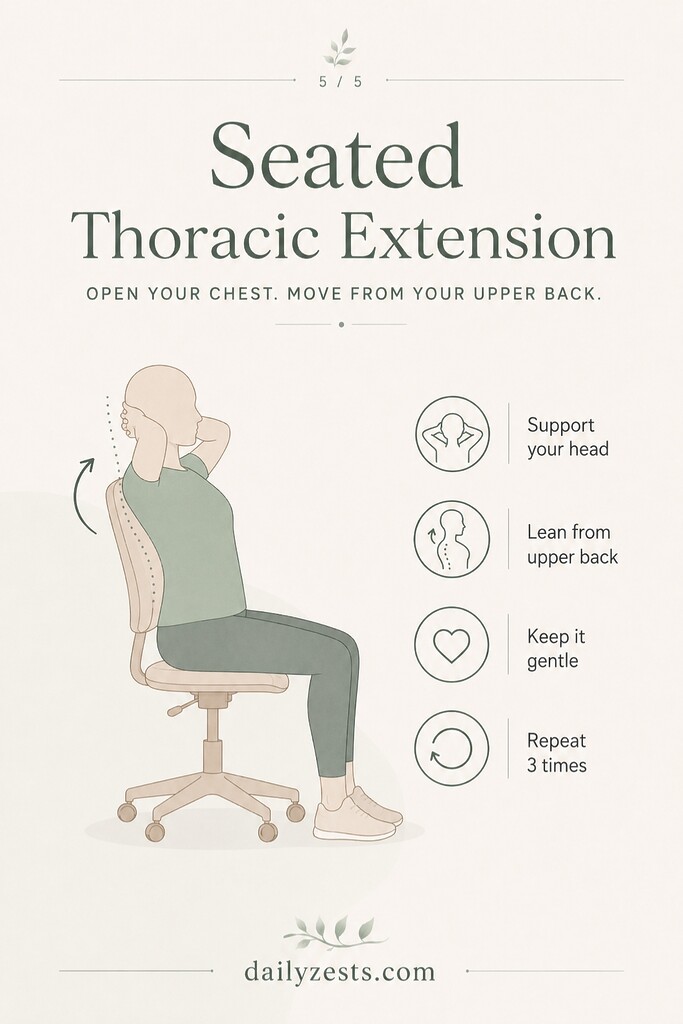
5. Seated Thoracic Extension
When the upper back (the thoracic spine) rounds forward into a hunch, the neck has to crane upward just so you can look straight ahead. Extending the upper spine brings immediate relief to the neck stretches for posture you just completed. That upper-back piece matters; in fact, clinical findings show that opening up the upper spine can naturally improve a forward-leaning head.
Sit all the way back in your desk chair so your upper back rests against the top edge of the chair back.
Interlace your hands behind your head to support your neck.
Gently lean backward over the chair, pointing your elbows toward the ceiling.
Hold for a few breaths, come back to neutral, and repeat 3 times.
Frequently Asked Questions
How often should I do these neck stretches for posture?
Consistency matters more than duration. You may get better results doing this five-minute routine twice a day, perhaps once mid-morning and once in the afternoon, than trying to make up for desk tension once a week. Office worker research shows that a short, twice-daily stretching routine can reduce neck and shoulder pain and improve function over four weeks. Frequent, gentle reminders work best for retraining the body.
Is it normal to feel a little sore after stretching my neck?
A mild sensation of muscles waking up is completely normal, especially if you have been holding tension for months or years. However, you should never push into pain. If a stretch causes a sharp, pinching sensation, ease up immediately. The goal is a gentle release, not forced flexibility.
A Practical Step Forward
When our bodies are locked in tension, everything else in life feels a little harder. Releasing that tightness isn’t just about standing up straight; it is about reclaiming your energy.
Once your neck begins to feel a bit freer, you might want to broaden your focus to your whole body to keep those tight desk-habit muscles soft, open, and supported for the long run.
Kristina Hanson is an independent wellness researcher and the founder of DailyZests. She specializes in translating nutritional science into simple, delicious recipes that fit into real life. When she isn’t in the kitchen, you’ll find her hiking the trails or enjoying a slow morning coffee with her Golden Retriever, Barnaby. Read her full story.



 This post may contain affiliate links.