Let’s be honest: for a long time, cauliflower was just the pale, over-boiled vegetable pushed around the dinner plate. But if you are managing blood sugar or looking for smarter ways to eat the comforting meals you love, this humble vegetable is about to become your favorite kitchen staple.
When I was first trying to figure out my own insulin resistance, the hardest part was the afternoons. I would eat a typical lunch—maybe a sandwich or a rice bowl—and by 3 PM, the crash was so brutal I could barely keep my eyes open. I didn’t want to give up the heavy, comforting dinners and sides I loved, but my body was asking for a change.
That is when I started experimenting with cauliflower. Once you understand how it behaves in the body, and more importantly, how it behaves in a hot skillet, it completely changes how you build a plate.
Just a quick note: While I love sharing the nutritional research and what has worked in my own kitchen, I am not a doctor. Always check with your healthcare team before making major shifts to your diet or management plan.
The Gentle Science of Cauliflower and Blood Sugar
There is a reason you see cauliflower for diabetes management recommended so frequently. It comes down to how our bodies process different types of carbohydrates.
Traditional white potatoes and white rice break down rapidly in the digestive tract. This sends a quick surge of glucose into the bloodstream, requiring a large output of insulin to handle it. For those of us with metabolic challenges, that rapid spike can sometimes be followed by an exhausting dip.
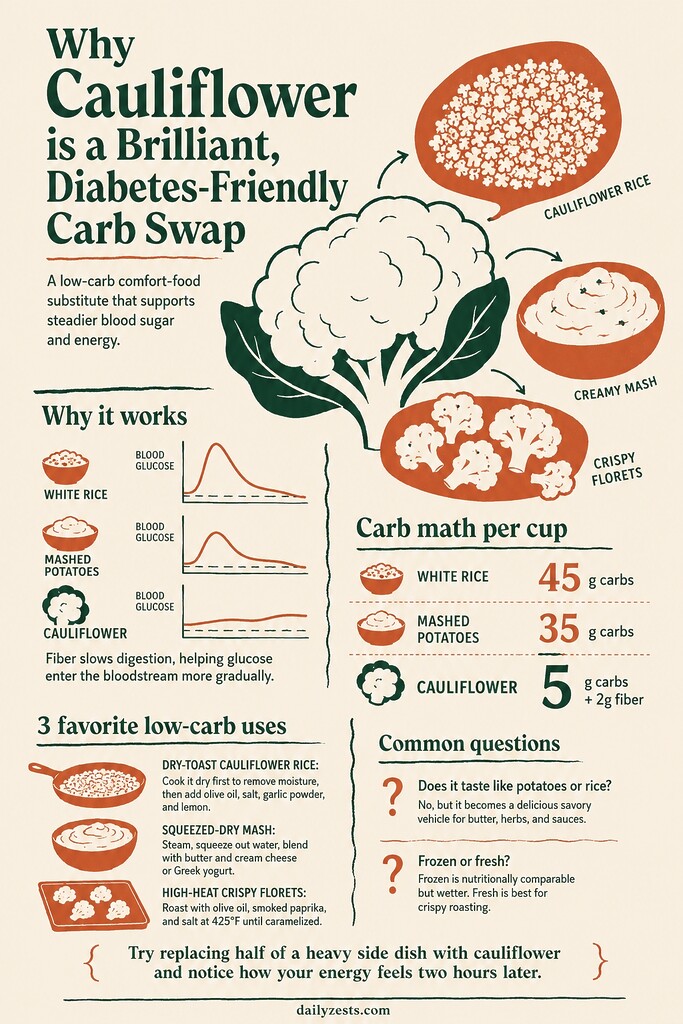
Cauliflower offers a much gentler path. It is a non-starchy vegetable, meaning it naturally contains far fewer carbohydrates. But part of the magic is the fiber. Fiber slows down digestion. It acts as a natural buffer, releasing glucose into your system at a slow, steady trickle rather than a flood. This slow release is highly supportive of steady energy levels and more predictable blood sugar readings.
The Carbohydrate Math
Sometimes it helps to just look at the numbers. The difference between a diabetes friendly cauliflower side and a traditional starchy side is staggering when you measure them cup for cup.
White Rice: About 45 grams of carbohydrates per cooked cup.
Mashed Potatoes: Roughly 35 grams of carbohydrates per cup.
Because the net carbs in cauliflower are so low, it frees up room on your plate. You can enjoy a massive, filling portion without stressing over the math or waiting anxiously for your post-meal glucose reading.
My 3 Favorite Low Carb Cauliflower Recipes
Knowing the science is fine, but it doesn’t matter if the food tastes terrible. The biggest reader hesitation I hear is simply, “I tried it once, and it was a watery, tasteless mess.”
Cauliflower is essentially a flavor sponge. If you boil it and serve it plain, it will taste like sad water. But if you treat it with a little respect, it transforms.
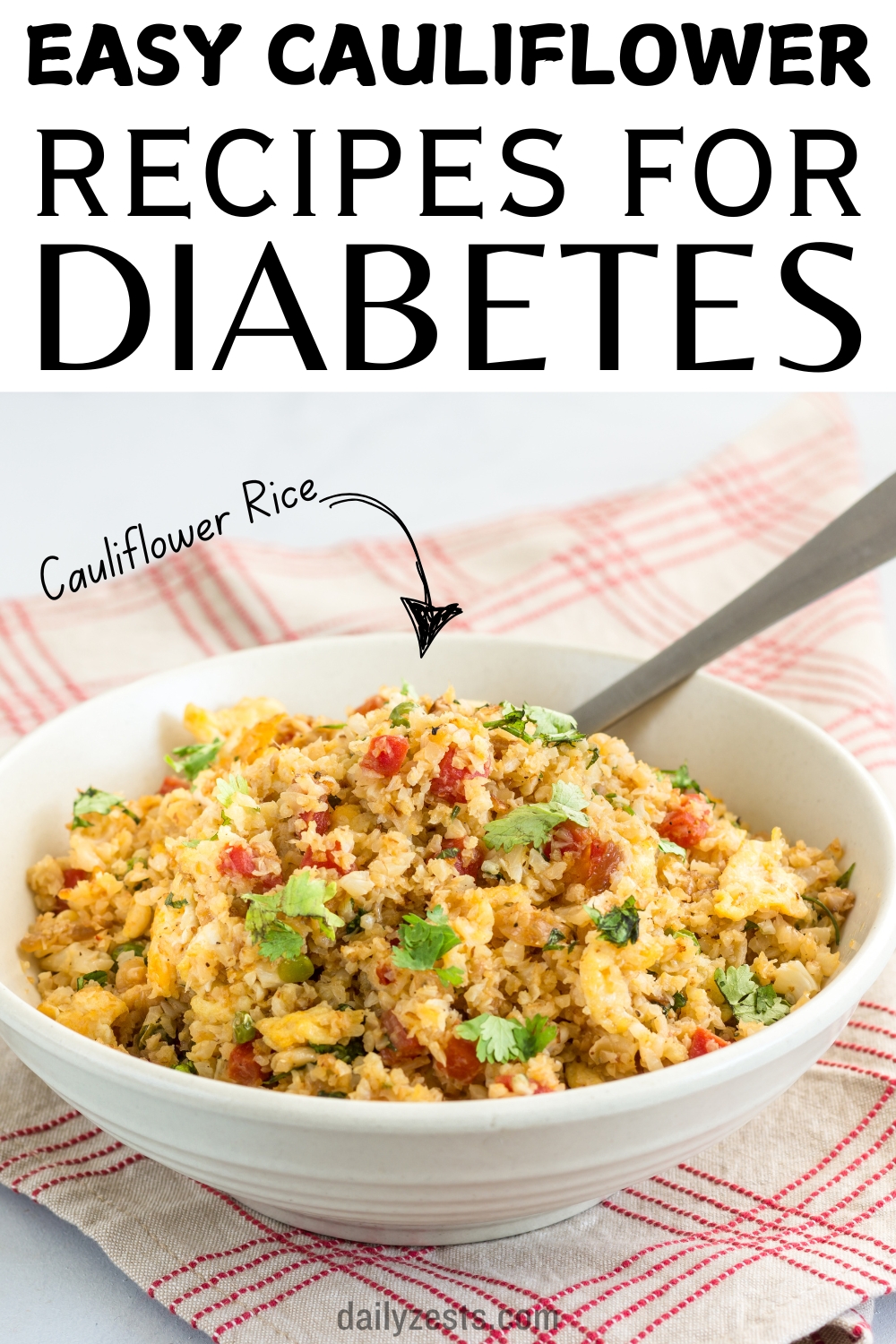
1. The “Dry Toast” Cauliflower Rice
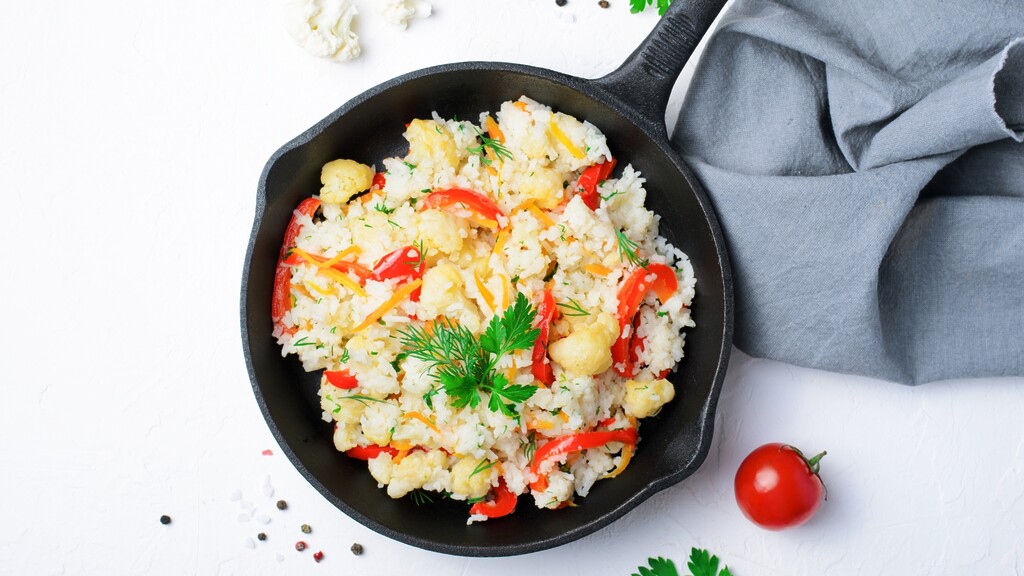
If you buy bags of riced cauliflower from the grocery store, do not just microwave them and dump them on your plate. The secret to good cauliflower rice is removing the excess moisture.
Heat a wide skillet over medium heat with absolutely no oil. Pour in your riced cauliflower and dry-toast it for about five minutes. You will see the steam rising off the pan. Once the moisture has evaporated, then you add a tablespoon of olive oil, salt, garlic powder, and a squeeze of fresh lemon. The texture goes from mushy to light and fluffy.
2. The Squeezed-Dry Mash
To make a mash that actually feels like comfort food, steam the cauliflower until it is fork-tender. Here is the crucial step: let it cool slightly, dump it into a clean kitchen towel, and squeeze out as much water as humanly possible. You will be shocked by how much liquid drains out.
Transfer the dry cauliflower to a food processor with a little butter, salt, and two tablespoons of cream cheese or full-fat Greek yogurt. The fat gives it that rich, creamy mouthfeel, and because you removed the water, it stays thick enough to hold up your favorite gravy or roasted chicken.
3. High-Heat Crispy Florets
When in doubt, roast it. Toss medium-sized florets in olive oil, smoked paprika, and salt. Spread them out on a baking sheet—don’t crowd them, or they will steam instead of crisping. Roast at 425°F for 25 to 30 minutes until the edges are dark brown and caramelized. These are so good I often eat them right off the pan before dinner is even ready.
Common Questions Before You Cook
Does it actually taste like potatoes or rice?
I will always give it to you straight: no. Cauliflower tastes like cauliflower. It is a biological impossibility to make a brassica vegetable taste exactly like a starchy root. But if you stop expecting a perfect clone and start treating it as a delicious, savory vehicle for butter, herbs, and sauces, you will stop being disappointed and start genuinely craving it.
Is frozen cauliflower as good as fresh?
Nutritionally, yes. Frozen vegetables are often comparable to fresh, especially once fresh produce has spent a few days in the fridge. Practically, frozen cauliflower holds a lot more water. It is excellent for soups, smoothies, or mashed recipes (if you squeeze it dry), but if you want crispy roasted florets, stick to fresh.
A Gentler Way to Build a Plate
You don’t have to overhaul your entire life by tomorrow morning. Managing blood sugar is not about perfection, and it certainly shouldn’t feel like a daily punishment at the dinner table.
Next time you are craving a heavy, carbohydrate-dense side dish, try replacing just half of it with roasted or riced cauliflower. See how you feel two hours later. Pay attention to your energy, your focus, and your body. Sometimes, the smallest swaps are the ones that end up changing everything.
Kristina Hanson is an independent wellness researcher and the founder of DailyZests. She specializes in translating nutritional science into simple, delicious recipes that fit into real life. When she isn’t in the kitchen, you’ll find her hiking the trails or enjoying a slow morning coffee with her Golden Retriever, Barnaby. Read her full story.
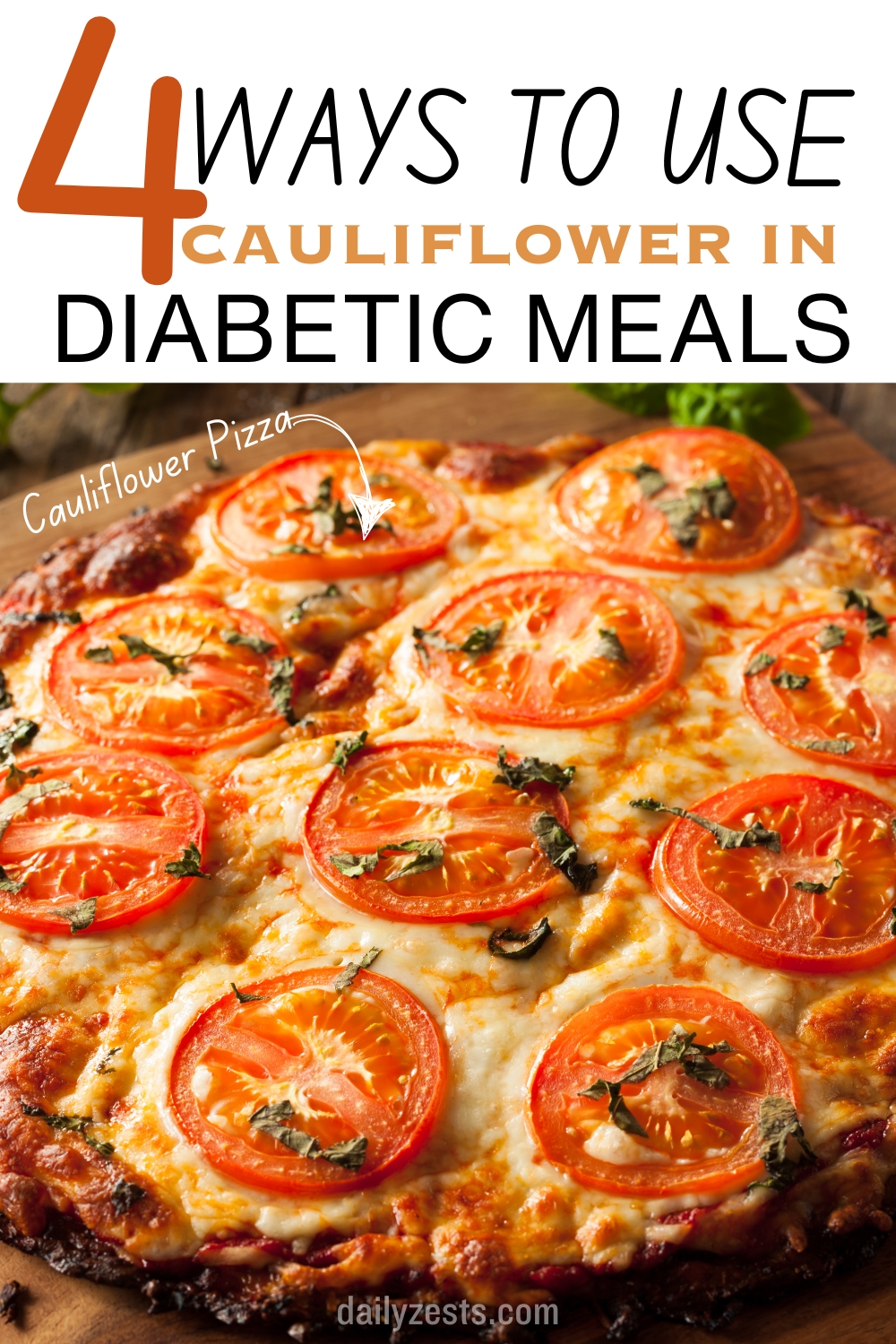
Okay, I’ll admit, the title got me. “Secret Weapon”? Sounds a bit dramatic, don’t ya think? I mean, it’s cauliflower, not a magic wand. I’m all for healthy eating, and I know I need to watch my carbs, but cauliflower pizza crust? I’m skeptical. Can it really taste like pizza? And is it really that much better than just having a small slice of regular pizza once in a while? Also, you mention a study about low-GI foods and blood sugar, but you didn’t link to it. I’d like to read it for myself. I’m not saying cauliflower is bad, but let’s be real, it’s not going to make me forget about real mashed potatoes anytime soon! 😜
Hey Debra, thanks for your comment and for being honest! I totally get the skepticism – cauliflower pizza does sound a bit out there. But trust me, it’s surprisingly good! It’s not exactly like traditional pizza, but it definitely satisfies that pizza craving without the carb overload. And you’re right, moderation is key. If you can enjoy a small slice of regular pizza without it messing with your blood sugar, go for it! As for the study, you’re right, I should have linked it! I mentioned many studies at the end of the article under the “Resources” section, the first study in the list is the one you are looking for. It’s all about finding what works for you and your body. And hey, maybe with a little experimentation, you’ll find a cauliflower mash recipe that gives those real mashed potatoes a run for their money! 😉 Thanks for keeping it real!
I’m intrigued by the cauliflower gnocchi. Never heard of that before! But is it really diabetes-friendly if it has eggs and Parmesan cheese? Those have fat and calories, you know. And how does it compare, carb-wise, to regular gnocchi? Also, the article talks a lot about how great cauliflower is, but what about the downsides? I’ve heard it can cause, ahem, gas. And, if I’m being honest, preparing it seems like a lot of work. Chopping, ricing, roasting… Is it really worth all the effort? I’m a busy mom, I don’t have time for complicated recipes!
Hi Emilia, great questions! The cauliflower gnocchi is a game-changer, for real! Yes, it has eggs and Parmesan, but remember, we’re focusing on carbs here. Compared to traditional potato gnocchi, the cauliflower version is much lower in carbs, which is the key for managing blood sugar. And those ingredients add flavor and help bind the gnocchi together. As for the, ahem, gas, yes, cauliflower can have that effect on some people. It’s due to the fiber content. Starting with small portions and gradually increasing your intake can help your body adjust. And regarding the effort, I hear you! It does take a bit more work than opening a box of pasta, but I think it’s worth it. Maybe try making a big batch of cauliflower rice on the weekend and freezing it in portions? That way, you’ll have it ready to go for quick weeknight meals. There are also many ready-to-use products in many stores nowadays, which will save you time and effort! You can also add anti-gas spices like cumin and fennel to your cauliflower dishes, it really helps! Hope that helps! Let me know if you give the gnocchi a try!
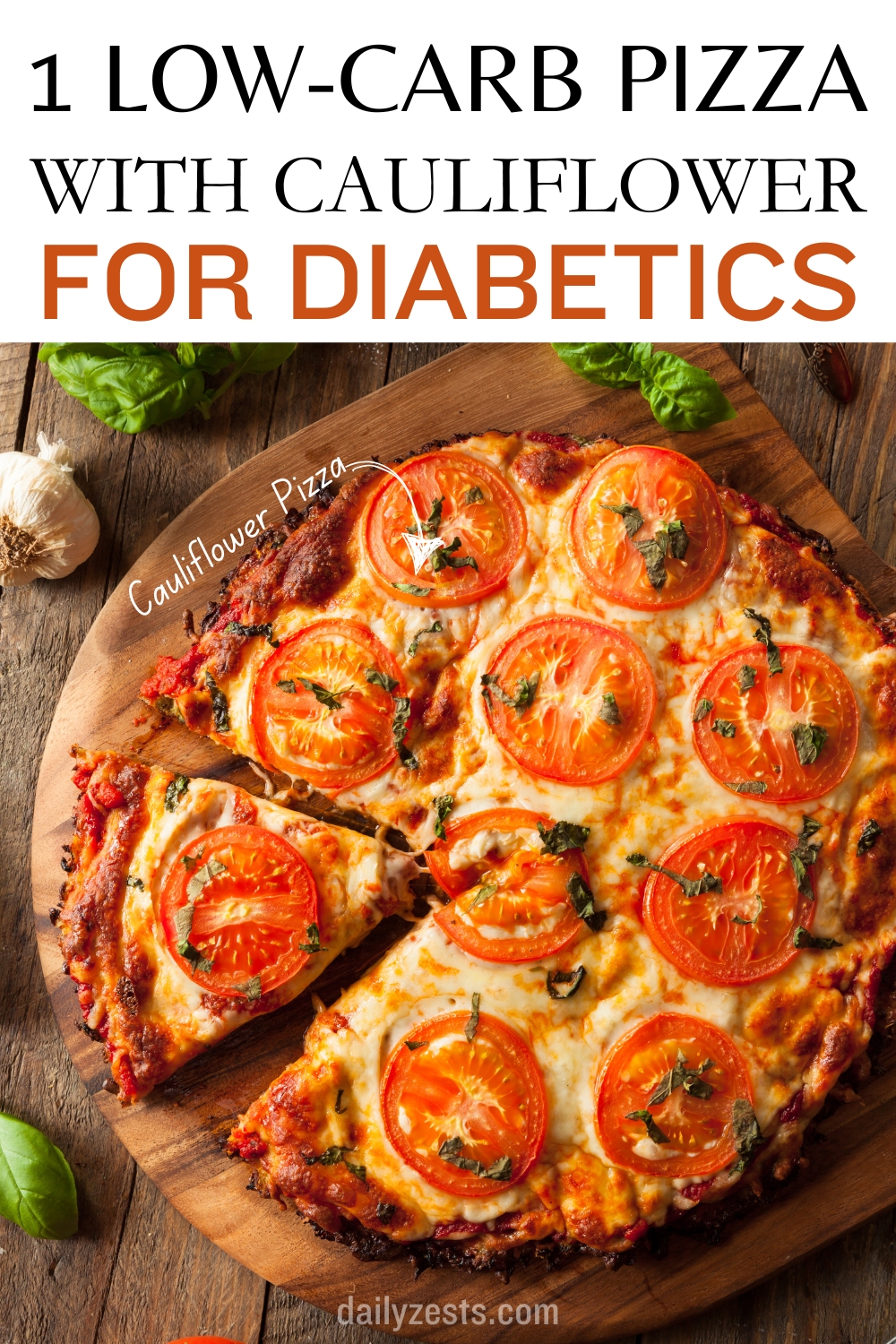
This article is making me rethink my whole relationship with cauliflower! I’ve always thought of it as that boring, bland veggie my mom used to boil to death. LOL! But a pizza crust made out of cauliflower? That’s wild! I’m intrigued, but also a little skeptical. Does it actually taste like pizza crust? And is it really sturdy enough to hold toppings? Also, you mention that cauliflower is a good source of fiber, but how much is in, say, a cup of cauliflower rice compared to a cup of regular rice? I’m trying to get my husband on the low carb train with me, so I need some hard facts to convince him.
Hi Aurora! I’m so glad to hear I might be converting you to a cauliflower fan! I totally understand your skepticism about the pizza crust. It’s not exactly the same as a traditional crust, but it definitely satisfies that pizza craving. It has a slightly nutty, savory flavor, and if you pre-bake it well, it should be sturdy enough to hold your favorite toppings. Just don’t overload it! As for the fiber content, 1 cup of cooked cauliflower rice has about 3 grams of fiber, while 1 cup of cooked white rice has less than 1 gram. Brown rice has a little more, around 3.5 grams, but cauliflower is still a great low-carb, high-fiber option. Hopefully, that info will help win over your husband!
I’m always looking for new ways to incorporate veggies into my diet, and this article has definitely given me some ideas. But I have a picky eater at home (my daughter!), and I’m not sure she’d be thrilled about cauliflower showing up on her plate, even in disguise. Any tips for sneaking it into meals without causing a riot? Also, I’m a bit confused about the cauliflower mash. You mention adding cream cheese or Greek yogurt. Wouldn’t that add a lot of fat and calories? Are there any lighter alternatives? I’m trying to eat healthy, but I don’t want to sacrifice flavor. It’s a struggle, you know?
Hi Manon! I hear you on the picky eater struggle! One trick for sneaking cauliflower into meals is to finely grate it and mix it into ground meat dishes, like meatballs or meatloaf. You can also puree cooked cauliflower and add it to sauces or soups – it adds a creamy texture without being noticeable. As for the cauliflower mash, you’re right, cream cheese and Greek yogurt do add some fat and calories. But they also add creaminess and flavor! Lighter alternatives include a little bit of milk (dairy or non-dairy), a touch of butter, or even just some chicken broth. You can also experiment with herbs and spices to boost the flavor without adding extra fat. It’s all about finding that balance between healthy and delicious!



 This post may contain affiliate links.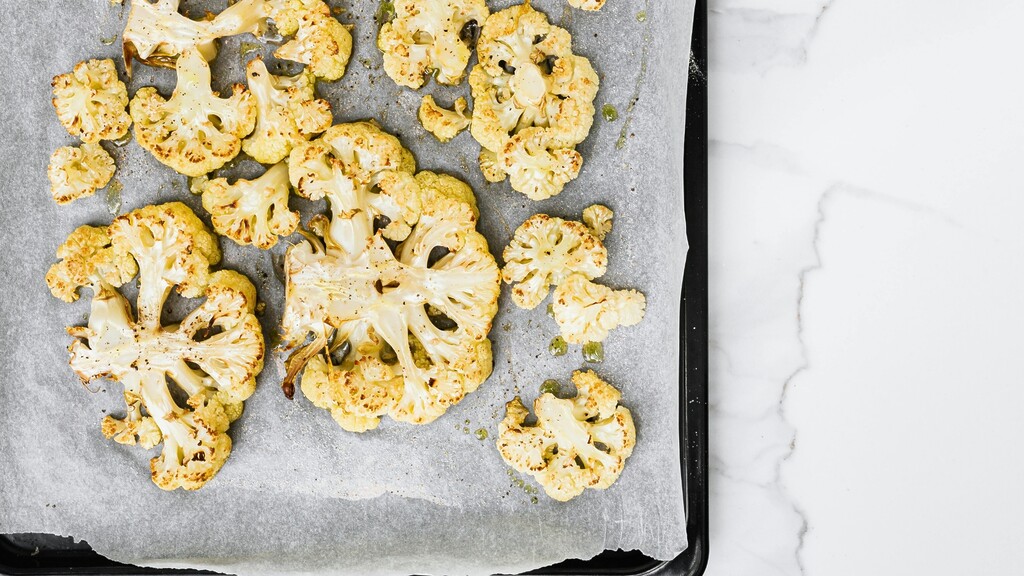




Okay, I’ll admit, the title got me. “Secret Weapon”? Sounds a bit dramatic, don’t ya think? I mean, it’s cauliflower, not a magic wand. I’m all for healthy eating, and I know I need to watch my carbs, but cauliflower pizza crust? I’m skeptical. Can it really taste like pizza? And is it really that much better than just having a small slice of regular pizza once in a while? Also, you mention a study about low-GI foods and blood sugar, but you didn’t link to it. I’d like to read it for myself. I’m not saying cauliflower is bad, but let’s be real, it’s not going to make me forget about real mashed potatoes anytime soon! 😜
Hey Debra, thanks for your comment and for being honest! I totally get the skepticism – cauliflower pizza does sound a bit out there. But trust me, it’s surprisingly good! It’s not exactly like traditional pizza, but it definitely satisfies that pizza craving without the carb overload. And you’re right, moderation is key. If you can enjoy a small slice of regular pizza without it messing with your blood sugar, go for it! As for the study, you’re right, I should have linked it! I mentioned many studies at the end of the article under the “Resources” section, the first study in the list is the one you are looking for. It’s all about finding what works for you and your body. And hey, maybe with a little experimentation, you’ll find a cauliflower mash recipe that gives those real mashed potatoes a run for their money! 😉 Thanks for keeping it real!
I’m intrigued by the cauliflower gnocchi. Never heard of that before! But is it really diabetes-friendly if it has eggs and Parmesan cheese? Those have fat and calories, you know. And how does it compare, carb-wise, to regular gnocchi? Also, the article talks a lot about how great cauliflower is, but what about the downsides? I’ve heard it can cause, ahem, gas. And, if I’m being honest, preparing it seems like a lot of work. Chopping, ricing, roasting… Is it really worth all the effort? I’m a busy mom, I don’t have time for complicated recipes!
Hi Emilia, great questions! The cauliflower gnocchi is a game-changer, for real! Yes, it has eggs and Parmesan, but remember, we’re focusing on carbs here. Compared to traditional potato gnocchi, the cauliflower version is much lower in carbs, which is the key for managing blood sugar. And those ingredients add flavor and help bind the gnocchi together. As for the, ahem, gas, yes, cauliflower can have that effect on some people. It’s due to the fiber content. Starting with small portions and gradually increasing your intake can help your body adjust. And regarding the effort, I hear you! It does take a bit more work than opening a box of pasta, but I think it’s worth it. Maybe try making a big batch of cauliflower rice on the weekend and freezing it in portions? That way, you’ll have it ready to go for quick weeknight meals. There are also many ready-to-use products in many stores nowadays, which will save you time and effort! You can also add anti-gas spices like cumin and fennel to your cauliflower dishes, it really helps! Hope that helps! Let me know if you give the gnocchi a try!
This article is making me rethink my whole relationship with cauliflower! I’ve always thought of it as that boring, bland veggie my mom used to boil to death. LOL! But a pizza crust made out of cauliflower? That’s wild! I’m intrigued, but also a little skeptical. Does it actually taste like pizza crust? And is it really sturdy enough to hold toppings? Also, you mention that cauliflower is a good source of fiber, but how much is in, say, a cup of cauliflower rice compared to a cup of regular rice? I’m trying to get my husband on the low carb train with me, so I need some hard facts to convince him.
Hi Aurora! I’m so glad to hear I might be converting you to a cauliflower fan! I totally understand your skepticism about the pizza crust. It’s not exactly the same as a traditional crust, but it definitely satisfies that pizza craving. It has a slightly nutty, savory flavor, and if you pre-bake it well, it should be sturdy enough to hold your favorite toppings. Just don’t overload it! As for the fiber content, 1 cup of cooked cauliflower rice has about 3 grams of fiber, while 1 cup of cooked white rice has less than 1 gram. Brown rice has a little more, around 3.5 grams, but cauliflower is still a great low-carb, high-fiber option. Hopefully, that info will help win over your husband!
I’m always looking for new ways to incorporate veggies into my diet, and this article has definitely given me some ideas. But I have a picky eater at home (my daughter!), and I’m not sure she’d be thrilled about cauliflower showing up on her plate, even in disguise. Any tips for sneaking it into meals without causing a riot? Also, I’m a bit confused about the cauliflower mash. You mention adding cream cheese or Greek yogurt. Wouldn’t that add a lot of fat and calories? Are there any lighter alternatives? I’m trying to eat healthy, but I don’t want to sacrifice flavor. It’s a struggle, you know?
Hi Manon! I hear you on the picky eater struggle! One trick for sneaking cauliflower into meals is to finely grate it and mix it into ground meat dishes, like meatballs or meatloaf. You can also puree cooked cauliflower and add it to sauces or soups – it adds a creamy texture without being noticeable. As for the cauliflower mash, you’re right, cream cheese and Greek yogurt do add some fat and calories. But they also add creaminess and flavor! Lighter alternatives include a little bit of milk (dairy or non-dairy), a touch of butter, or even just some chicken broth. You can also experiment with herbs and spices to boost the flavor without adding extra fat. It’s all about finding that balance between healthy and delicious!