
10 Fluffy Diabetes-Friendly Breakfast Casseroles Under 500 Calories


Finding a reliable diabetic breakfast casserole doesn’t mean sacrificing the golden, cheesy edges you love. These comforting morning bakes deliver serious savory flavor while keeping net carbs and calories in check. Grab your favorite baking dish—your weekend meal prep is about to get a major upgrade.
 This post may contain affiliate links.
A quick note: The recipes shared here are crafted with carb-conscious macros in mind, but they are absolutely not medical advice. Everyone’s carb tolerance is completely unique, so please consult your healthcare provider and check your blood sugar to see what works best for your personal routine.
The Macro Logic Behind a Carb-Conscious Morning
Building a morning meal around the American Diabetes Association’s Plate Method often means prioritizing lean protein and non-starchy vegetables. This approach is generally considered an effective way to stay full without relying on heavily processed grains or added sugars.
By leaning on wholesome ingredients like eggs, cottage cheese, and fresh greens, a low calorie breakfast casserole can easily fit within a balanced routine. Foods rich in fiber and protein may help support a steadier post-meal response, giving you a deeply satisfying start to your day.
Why These Bakes Earn Their Spot
- Macro-conscious foundations: Every slice keeps a close eye on net carbs while staying safely under 500 calories.
- Whole-food ingredients: We skip the refined flours and rely on fresh vegetables, eggs, and high-quality proteins.
- Meal-prep magic: These bakes reheat beautifully, turning one hour of Sunday prep into four days of effortless mornings.
- Family-approved flavor: No “diet food” vibes here—just classic, comforting textures that everyone at the table will genuinely want to eat.
The Savory Morning Lineup
Fluffy High-Protein Garden Egg Bake
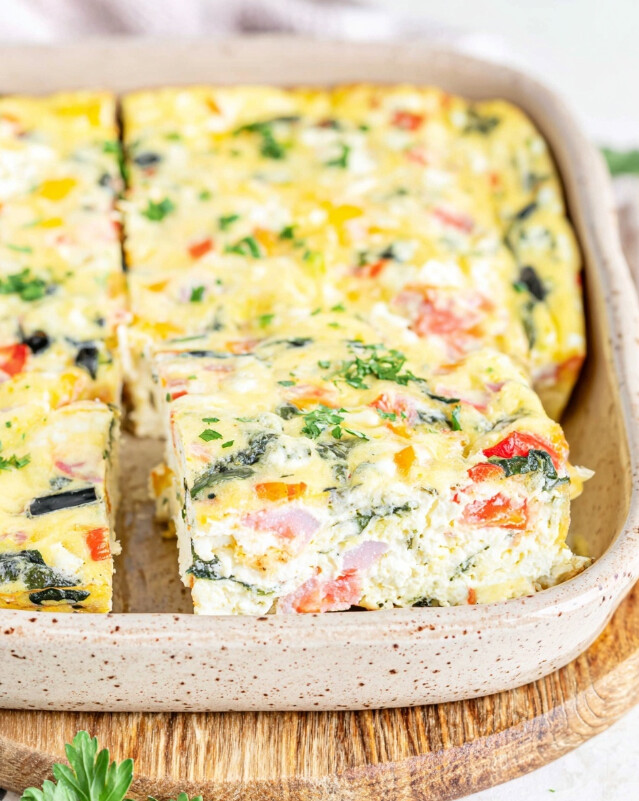
The secret to this light and airy dish lies in whipping cottage cheese directly into the eggs. It creates a velvety, soufflé-like texture without the heaviness of standard cream. This one is a meal-prep champion that reheats beautifully when you need a hearty, savory start to a busy weekday.
Why this bake makes the cut: Clocking in at just 5g net carbs and 235 calories per serving, this dish relies on a high-protein base, which is generally considered a smart way to stay satisfied without leaning on starchy sides.
Tuscan Herb & Mozzarella Egg Bake
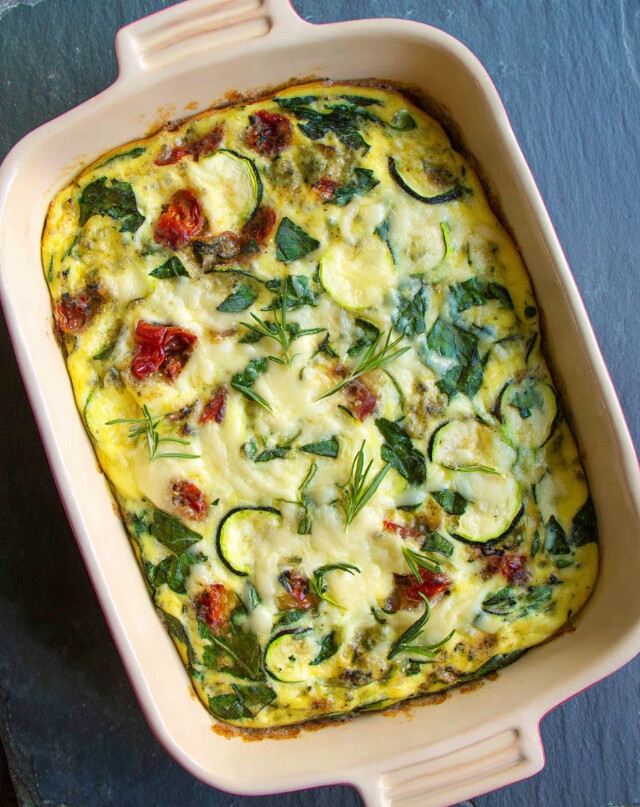
If you love a classic frittata, this airy, garden-packed version is going to be your new go-to. Layers of zucchini and spinach mingle with smooth, melty mozzarella and fresh herbs for a vibrant morning bite. My family clears the pan before it even has time to fully cool down.
The carb-conscious breakdown: By focusing on non-starchy vegetables and skipping the crust entirely, this slice delivers a macro-friendly profile that pairs beautifully with a side of fresh berries for a balanced routine.
Farmhouse Garden Breakfast Casserole
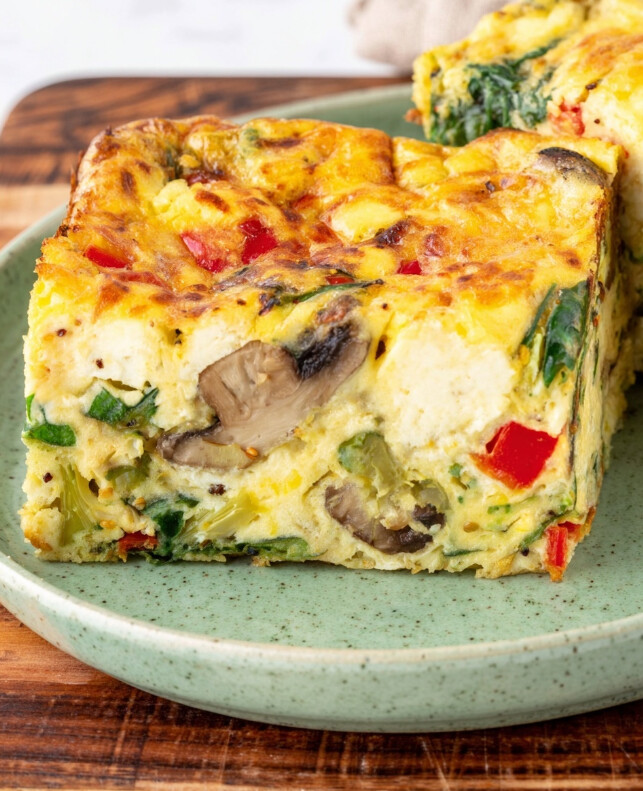
This comforting bake brings a subtle, smoky farmhouse twist to the table with just a hint of smoked paprika. Blending cottage cheese into the mix yields an incredibly rich, satisfying bite that tastes remarkably indulgent. It is the perfect weekend centerpiece when you want something that feels deeply traditional.
How it balances your macros: Packed with 18g of protein and colorful vegetables, this breakfast casserole under 500 calories may help support steady digestion and a feeling of fullness long after the meal is over.
Garden Vegetable & Egg Breakfast Bake
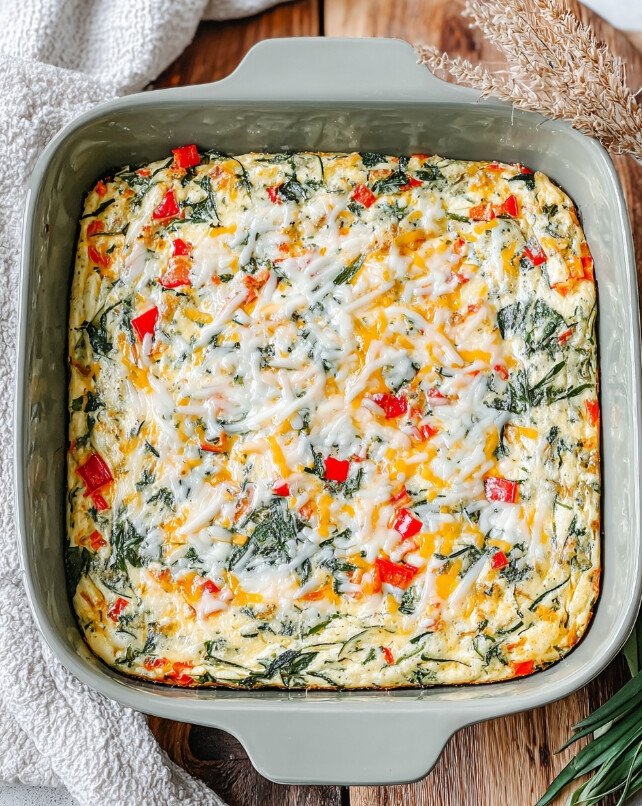
Bringing the garden straight to your breakfast table, this colorful medley features fresh peppers and zucchini in a beautifully fluffy egg base. Swapping heavy cream for half-and-half keeps the texture delightfully light while maintaining that classic American diner omelet flavor. It is simple, savory, and wonderfully straightforward.
The smart-carb logic for this bite: With only 2.5g net carbs, this dish leaves plenty of room on your plate to incorporate a slice of whole-grain toast while keeping your overall macro goals on track.
Classic Farmhouse Ham & Broccoli Breakfast Bake
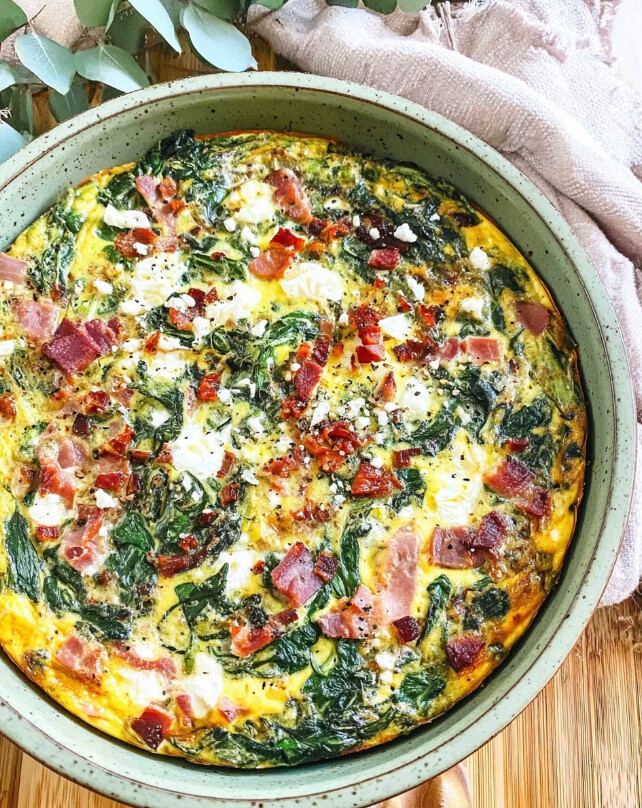
Tender broccoli and savory ham come together in a deeply comforting dish that feels right at home at a bustling Sunday brunch. It delivers that perfect golden, satisfying bite you crave from a hearty bake. Honestly, just reheating a square of this makes my Tuesday mornings infinitely better.
Why this morning meal works: Loading up on fiber-rich green vegetables like broccoli provides essential nutrients and volume, which research suggests can contribute to a more balanced post-meal experience.
Hearty Low-Carb Turkey Breakfast Bake
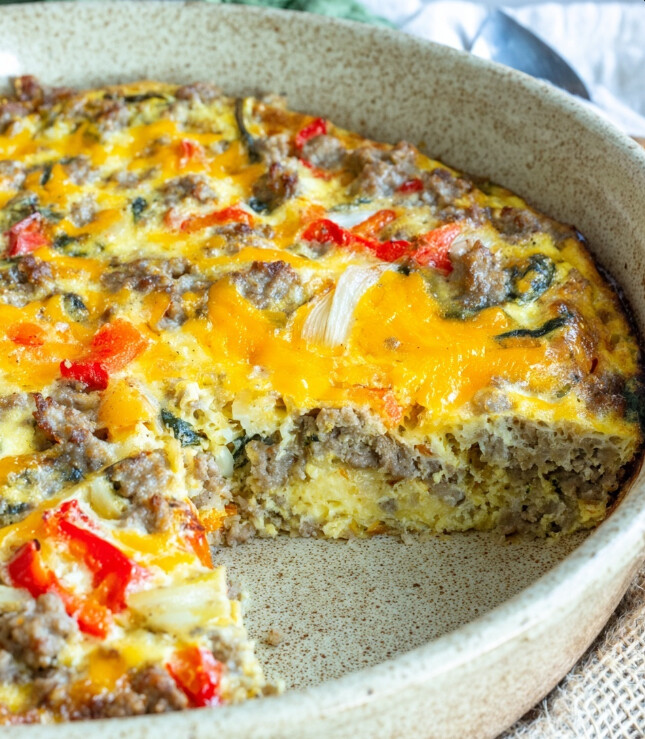
This is a lighter, wildly flavorful take on the traditional heavy pork casserole, and my kids never even notice the swap. Using lean turkey keeps all the savory, juicy satisfaction intact while lightening up the overall feel. It is a wonderfully fluffy, fuss-free option for busy households.
The diabetes-friendly breakfast logic: By utilizing lean poultry instead of heavier meats, this slice provides an impressive 26g of protein while staying at just 3g net carbs and 226 calories.
Savory Turkey Sausage & Broccoli Breakfast Bake
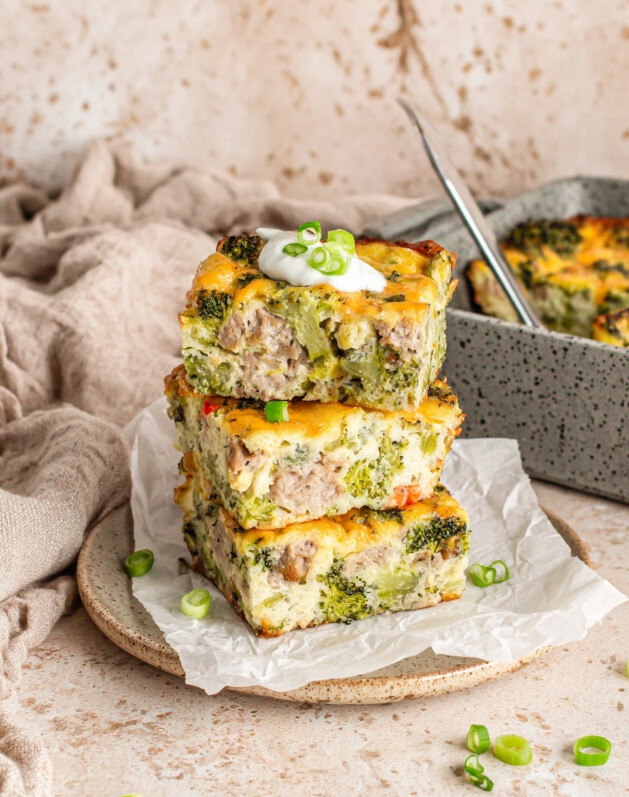
Start your morning with an incredibly satisfying, fluffy texture that tastes wonderfully decadent. The robust flavor of turkey sausage paired with vibrant broccoli makes every forkful interesting. It is the kind of make-ahead miracle that genuinely improves after a day in the fridge, saving your chaotic weekday mornings.
How it fits a balanced routine: Combining quality protein sources with non-starchy vegetables is a cornerstone of the ADA Plate Method, offering a nutrient-dense foundation that is generally considered ideal for macro-conscious eating.
Sunday Morning Turkey Sausage & Sweet Potato Bake
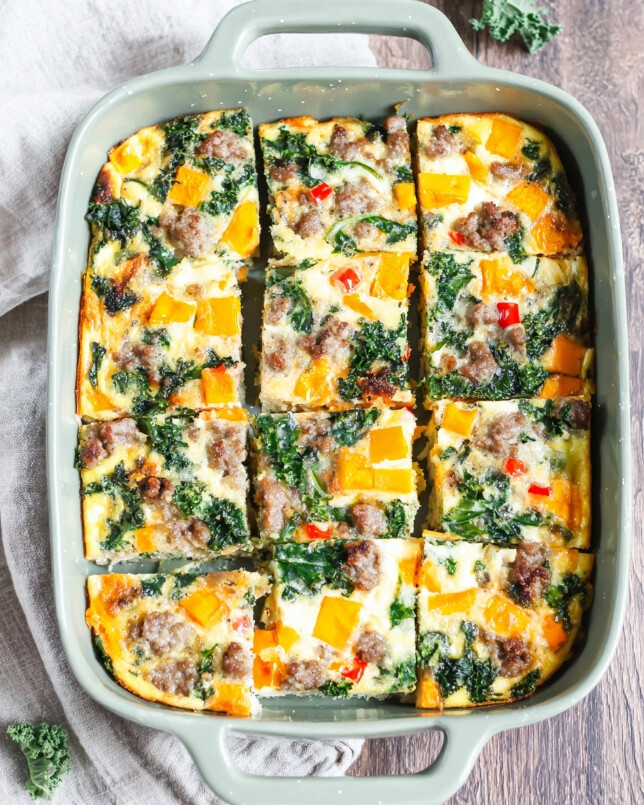
If you love the slight sweetness of roasted root vegetables paired with savory herbs, you will be all over this one. The combination of turkey sausage, hearty kale, and tender sweet potato chunks creates a naturally colorful, deeply comforting dish that feels like a true weekend treat.
The thoughtful ingredient profile: Sweet potatoes provide a complex, fiber-rich carbohydrate source. When paired with 20g of protein, this combination may help support a more gradual breakdown compared to refined grains.
Mediterranean Spinach & Feta Breakfast Bake

Bringing the bright, tangy flavors of a favorite Greek omelet to an easy-to-slice format, this bake is a flavor powerhouse. Sun-dried tomatoes and garlic infuse the eggs, while the feta adds a salty, creamy finish to every bite. This is the one my husband always requests for Sunday brunch.
Why this flavor profile works: Incorporating ingredients typical of a Mediterranean eating pattern—like spinach and feta—provides healthy fats and fiber, a combination that is widely recognized for supporting overall nutritional balance.
Savory Mediterranean Quinoa & Vegetable Breakfast Bake

This vibrant casserole uses the hearty, satisfying texture of quinoa to anchor a colorful medley of garden vegetables. It’s a beautifully layered, nutrient-dense twist on the classic American strata that offers a delightfully chewy and creamy contrast. It serves perfectly as the centerpiece of a laid-back weekend brunch.
The smart-carb grain strategy: Quinoa is a whole grain packed with naturally occurring fiber. Including 4g of fiber per serving can contribute to a satisfying meal that aligns well with an intentional, low-glycemic dietary approach.
Smart Storage and Meal-Prep Notes
- Portion it out early: Once the bake cools completely, slice it into individual squares and store them in airtight glass containers. This ensures you have an exact, pre-calculated portion ready to grab on busy mornings.
- Watch the dairy swaps: If you swap the milk or cream in these recipes, remember that alternative milks (like oat milk) can alter the net carbs. Unsweetened almond or soy milk usually keeps the count lowest.
- Round out the plate: If your chosen slice is very low in carbs, pair it with a handful of fresh berries or a small slice of whole-grain sourdough to complete a balanced, fiber-rich morning meal.
Common Questions, Answered
Can I freeze these egg bakes?
Yes, most egg bakes freeze incredibly well. Once fully cooled, wrap individual slices tightly in parchment paper and store them in a freezer-safe bag or container for up to two months. Thaw overnight in the fridge before reheating.
What is the difference between total carbs and net carbs?
Net carbs are calculated by subtracting fiber (and sometimes certain sugar alcohols) from the total carbohydrate count. Because fiber isn’t fully digested by the body, focusing on net carbs is generally considered a practical way to track the carbohydrates that actually impact your macros, according to the American Diabetes Association.
Are sweet potatoes okay for a diabetes-friendly meal plan?
Sweet potatoes can absolutely fit into a carb-conscious routine. They are a rich source of complex carbohydrates and fiber, which may help support a slower digestive process compared to refined white potatoes, especially when paired with a good source of protein.
Sources
- American Diabetes Association — The Diabetes Plate Method
- American Diabetes Association — Get to Know Carbs
- The Journal of Nutrition — A High-Protein Breakfast in Individuals with Type 2 Diabetes
- Nutrients — Effects of Dietary Fiber Interventions on Glycemic Control and Weight Management in Diabetes
- Diabetic Medicine — Eating Vegetables Before Carbohydrates Improves Postprandial Glucose Excursions
- Journal of Nutrition and Metabolism — Relationship Between Processing Method and the Glycemic Indices of Sweet Potato
- Nutrients — Impact of the Mediterranean Diet on Glycemic Control in Type 2 Diabetes
- Nutrients — Quinoa Intake and Postprandial Glycemia in an Older Prediabetic Population
Ready for Better Mornings?
Are you leaning toward the smoky farmhouse flavors, or is that Mediterranean feta calling your name? Whichever pan you bake up first, be sure to pin this list so your weekend meal prep is always sorted.
The information and recipes provided in this article are for educational and informational purposes only and are not intended as a substitute for professional medical, dietary, or nutritional advice. Please remember that individual carbohydrate tolerance varies, so you should always monitor your own blood sugar response. Consult with your doctor, registered dietitian, or certified diabetes care and education specialist before making any changes to your diet, especially if you take insulin or other medications. These statements have not been evaluated by the FDA and are not intended to diagnose, treat, cure, or prevent any disease. Nutritional values provided are estimates.

Kristina Hanson is an independent wellness researcher and the founder of DailyZests. She specializes in translating nutritional science into simple, delicious recipes that fit into real life. When she isn’t in the kitchen, you’ll find her hiking the trails or enjoying a slow morning coffee with her Golden Retriever, Barnaby. Read her full story.


These recipes sound delicious, but I’m a little concerned about the use of heavy cream and cheese in so many of them. I thought people with diabetes were supposed to limit saturated fat. Are these casseroles really healthy for someone with diabetes? Also, the article mentions being mindful of carbs but doesn’t give specific carb counts for each recipe. That would be really helpful for meal planning.
Hi Emily, thanks for your comment! You’re right to be mindful of saturated fat intake, especially when managing diabetes. While these recipes do include heavy cream and cheese, they are used in moderation and are balanced with plenty of vegetables and lean protein.
It’s important to remember that dietary recommendations can vary based on individual needs and overall dietary patterns. Recent research suggests that the impact of saturated fat on health may be more nuanced than previously thought, and it might depend on the overall context of the diet. For instance, some studies suggest that full-fat dairy might have a neutral or even positive effect on heart health markers.
However, if you’re concerned about saturated fat, you can definitely make adjustments to these recipes. Here are a few options:
Reduce the amount of cheese: You can use half the amount called for in the recipe or choose a strong-flavored cheese so you can use less while still getting a good flavor.
Substitute heavy cream: You can use half-and-half, whole milk, or even unsweetened almond milk to reduce the fat content. Keep in mind that this might slightly alter the texture of the casserole.
Choose lower-fat cheese: Opt for part-skim mozzarella or other lower-fat cheese varieties.
Regarding the carb counts, you make an excellent point. While the article emphasizes the importance of non-starchy vegetables and lean proteins, providing specific carb counts for each recipe would indeed be more helpful for those strictly monitoring their intake. I’ll definitely consider adding that information in an update!
In the meantime, you can use online resources or apps to calculate the nutritional information based on the ingredients and portion sizes. Remember that the carb content will vary depending on the specific ingredients you use and any modifications you make.
It’s also worth noting that the total amount of carbs is not the only thing to consider. The type of carbohydrate is also important. These casseroles generally focus on non-starchy vegetables, which have a lower glycemic index and a lesser impact on blood sugar levels compared to refined grains or starchy vegetables.
Ultimately, it’s always best to consult with a doctor or a registered dietitian for personalized dietary advice. They can help you create a meal plan that fits your individual needs and health goals, taking into account your specific type of diabetes, any medications you’re taking, and your overall health status.
I’m always looking for make-ahead breakfast options, but I’m worried about food safety. How long can these casseroles be stored in the refrigerator, and do you have any tips for reheating them without them becoming dry or rubbery? Also, can any of these be frozen for longer storage?
Hi Ashley, that’s a great question! Food safety is definitely a priority, especially when it comes to make-ahead meals.
Generally, cooked egg dishes like these casseroles can be safely stored in the refrigerator for up to 3-4 days. Make sure to let the casserole cool completely before covering it tightly and placing it in the fridge.
For reheating, here are a few tips to prevent dryness:
Oven: Reheat individual portions or the whole casserole in a preheated oven at 350°F (175°C) until heated through. Covering the casserole with foil can help retain moisture.
Microwave: For a quicker option, reheat individual portions in the microwave. Using a microwave-safe cover can help prevent splattering and retain moisture. Start with a shorter reheating time and add more as needed, as microwaves can sometimes heat unevenly.
Skillet: You can reheat some casseroles (especially those without a creamy sauce) in a skillet on the stovetop over medium heat. Adding a splash of water or broth can help prevent sticking and add moisture.
As for freezing, many of these casseroles can be frozen for longer storage. However, the texture might change slightly upon thawing and reheating. Casseroles with a higher vegetable content tend to release more moisture when frozen and thawed.
Here are some tips for freezing:
Cool completely: Let the casserole cool completely before freezing to prevent ice crystals from forming.
Portion it out: Divide the casserole into individual portions before freezing for easier thawing and reheating.
Wrap tightly: Wrap each portion tightly in plastic wrap and then place it in a freezer-safe bag or container.
Label and date: Label the container with the name of the casserole and the date it was made.
Frozen casseroles can generally be stored for up to 2-3 months. To thaw, transfer the desired portion to the refrigerator overnight. Then, reheat using one of the methods mentioned above. You can also bake it from frozen. If you do so, add about 50% to the original baking time.
Keep in mind that some ingredients freeze better than others. Casseroles with a lot of dairy or creamy sauces might separate slightly upon thawing. If you’re concerned about texture changes, you could experiment with freezing a small portion first to see how it holds up.
I hope these tips help you enjoy these make-ahead breakfast casseroles safely and conveniently!
Alright, I’m intrigued. These casseroles sound pretty good, but I’m a bit of a breakfast casserole newbie. My question is, how do these things actually stay under 500 calories? Seems like once you add cheese and eggs, you’re already in calorie-overload territory. Also, “heavy cream”? Isn’t that, like, the devil for someone trying to watch their weight and sugar? I’m trying to be healthy here, not gain another 10 pounds! Also, can I freeze these things? I’m a busy woman!
Patricia, you’re speaking my language! It’s all about smart choices and portion control, my friend. We’re using lean proteins, tons of veggies (which are low in calories), and being mindful of the cheese and heavy cream. A little goes a long way, flavor-wise. Think of heavy cream as a flavor enhancer, not the main event, and some recipes don’t use it at all. We use it in moderation to add richness without going overboard. It is a healthy fat that helps with satiety. As for freezing, absolutely! Most of these casseroles freeze beautifully. Just let them cool completely, then wrap them tightly in plastic wrap and foil, or use an airtight container. They should last for a couple of months in the freezer. Perfect for those busy mornings!
Okay, “Veggie Fiesta” sounds fun, but what if I have a picky eater at home who thinks vegetables are the enemy? Any tips for sneaking those veggies in without causing a breakfast mutiny? Also, I’m a bit confused about the “low-carb” sausage. What exactly does that mean, and where do I find it? Is it like a special health food store thing, or can I just grab it at my regular supermarket? Help a sister out!
Jennifer, I hear you! Veggies can be a tough sell sometimes. My trick? Finely chop or grate those veggies. Zucchini and carrots practically disappear into a casserole when grated. You can also try pureeing some cooked vegetables (like butternut squash or sweet potato) and mixing them into the egg mixture. They’ll add sweetness and a creamy texture without being obvious. For the “low-carb” sausage, it just means it has fewer carbohydrates than regular sausage, usually because it has less added sugar or fillers. Many regular supermarkets carry them now! Look in the breakfast meat section, and check the labels for carbohydrate content. You can also find them at health food stores. You got this!
These casseroles sound delicious, but ‘diabetic-friendly’ usually means ‘flavor-free’ in my experience. Are these actually tasty, or will I be choking down bland eggs and veggies? Also, 500 calories seems like a lot for breakfast. Will I be starving by 10 AM? And can I add hot sauce? Because everything is better with hot sauce.
Barbara, I hear your concerns! ‘Diabetic-friendly’ shouldn’t mean sacrificing flavor, and these casseroles are anything but bland. We’re talking about flavorful cheeses, savory meats, and aromatic spices! Trust me, your taste buds will be doing a happy dance. As for the 500 calories, it might sound like a lot, but it’s designed to be a substantial, balanced meal that will keep you full and energized until lunchtime. We’re loading up on protein and healthy fats, which are key for satiety and blood sugar control. No mid-morning hunger pangs here! And YES, absolutely add hot sauce! Spice is the spice of life, and it can add a delicious kick to your casserole. Just be mindful of the sodium content if you’re watching your salt intake. Enjoy that fiery flavor!
Okay, these recipes look intriguing, but I’m no Martha Stewart in the kitchen. Are these casseroles complicated to make? And what if I’m allergic to eggs? Can I still enjoy these recipes? Also, my husband doesn’t have diabetes. Can he eat these, or will he think they taste like ‘diet food’?
Pat, don’t worry, you don’t need to be a culinary expert to whip up these casseroles! They’re designed to be easy and beginner-friendly. Most of them involve simply sautéing some veggies, whisking eggs, combining everything in a dish, and baking. Easy peasy! As for the egg allergy, that’s a bit trickier since eggs are a key ingredient in most of these recipes. But don’t despair! You might be able to find some egg substitutes that work, like flax eggs or a commercial egg replacer. It might take a bit of experimentation to get the texture right. And about your husband, I bet he’ll love these casseroles too! They’re packed with flavor and satisfying ingredients that anyone can enjoy. They definitely don’t taste like ‘diet food’ – they’re just wholesome, delicious meals. He might even ask for seconds!