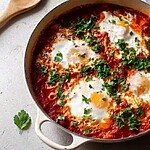
Classic Shakshuka with Smoked Paprika
This vibrant, one-pan dish features softly poached eggs nestled in a deeply savory, spiced tomato and bell pepper sauce. With a splash of lemon to brighten the richness and a generous handful of fresh herbs, it is a deeply satisfying meal designed for scooping up with warm crusty bread at any time of day.
- Total Time35 minutes
- Yield6 servings 1x
Ingredients
Scale
Tomato Sauce
- 3 tablespoons extra-virgin olive oil
- 1 large yellow onion, finely chopped (about 1 ½ cups)
- 1 large red bell pepper, seeded and chopped
- 3 large garlic cloves, minced
- 1 tablespoon tomato paste
- 1 ½ teaspoons ground cumin
- 1 ½ teaspoons smoked paprika
- ¼ teaspoon crushed red pepper flakes
- 1 (28-ounce/794g) can crushed tomatoes
- 1 teaspoon fresh lemon juice
- ½ teaspoon kosher salt, plus extra for the eggs
- ¼ teaspoon freshly ground black pepper, plus extra for the eggs
Eggs and Garnish
- 6 large eggs
- ¼ cup coarsely chopped fresh parsley
- ¼ cup coarsely chopped fresh cilantro
Instructions
- Sauté the vegetables: Heat the extra-virgin olive oil in a large, wide skillet (preferably stainless steel or enamel-coated) over medium heat. Add the chopped onion and red bell pepper. Cook, stirring occasionally, until the vegetables are very soft and the onion is translucent, about 6 to 8 minutes.
- Toast the aromatics: Push the vegetables slightly to the edges of the pan to create a hot spot in the center. Add the minced garlic, tomato paste, cumin, smoked paprika, and crushed red pepper flakes. Cook, stirring constantly, until the tomato paste darkens to a rust color and the spices are highly fragrant, about 1 minute. Stir everything together.
- Simmer the sauce: Pour in the crushed tomatoes, then stir in the lemon juice, ½ teaspoon of kosher salt, and ¼ teaspoon of black pepper. Bring the mixture to a gentle bubble, then reduce the heat to medium-low. Let the sauce simmer, uncovered, for 10 minutes to allow the flavors to meld and the sauce to thicken slightly.
- Poach the eggs: Using the back of a large spoon, press 6 shallow indentations (wells) into the simmering sauce. Crack one egg directly into each well. Season the top of each egg with a small pinch of salt and pepper. Cover the skillet tightly with a lid and cook for 4 to 6 minutes. Watch closely: the dish is done when the egg whites are completely opaque and set, but the yolks still jiggle when the pan is gently shaken.
- Garnish and serve: Remove the skillet from the heat immediately, as the eggs will continue to cook slightly in the residual heat. Scatter the fresh parsley and cilantro over the top and serve warm directly from the pan.
Notes
Why It Works
- Crushed tomatoes: Swapping traditional whole peeled tomatoes for crushed tomatoes speeds up the cooking process and creates a perfectly thick, dippable sauce without needing to mash anything by hand.
- Tomato paste and toasting: Blooming the spices and tomato paste in the hot oil before adding the canned tomatoes releases their essential oils and builds a deeper, more complex flavor profile.
- Covered poaching: Putting a lid on the skillet traps steam, which cooks the tops of the egg whites quickly and evenly before the yolks have a chance to overcook and become chalky.
Common Pitfalls to Avoid
- Overcooking the yolks: Eggs go from perfectly runny to hard-boiled very quickly. Check them at the 4-minute mark; if the whites are white and set, pull the pan off the stove immediately.
- Using raw cast iron: Simmering an acidic tomato sauce for 15+ minutes in an unenameled cast-iron skillet can strip its seasoning and give your food a metallic taste. Stick to stainless steel, anodized aluminum, or enameled cast iron.
- Watery sauce: If your sauce looks too liquidy before adding the eggs, let it simmer uncovered for a few extra minutes. The sauce needs to be thick enough to hold the indentations for the eggs.
Variations
- Spicy Shakshuka: Increase the crushed red pepper flakes to ½ teaspoon, or stir a spoonful of harissa paste into the sauce along with the crushed tomatoes.
- Cheese Finish: For a tangy, salty bite, sprinkle ⅓ cup of crumbled sheep’s milk feta over the sauce right before covering the pan to poach the eggs.
Allergy Alert
This recipe contains eggs.
Nutrition (per serving — estimates)
Calories: 185 | Total Carbs: 11g (Fiber: 3g, Sugar: 6g) | Fat: 12g (Saturated: 2g) | Protein: 8g | Potassium: 485mg
Nutritional values are approximate, based on standard reference data (USDA FoodData Central). Actual values vary by brand and exact measurements. For precision, use a tracker like MyFitnessPal or Cronometer.
- Prep Time: 10 minutes
- Cook Time: 25 minutes
- Category: Breakfast
- Method: Stovetop
- Cuisine: Middle Eastern
Nutrition
- Serving Size: 1 egg with generous ½ cup of sauce
- Calories: 185
- Sugar: 6g
- Fat: 12g
- Saturated Fat: 2g
- Carbohydrates: 11g
- Fiber: 3g
- Protein: 8g